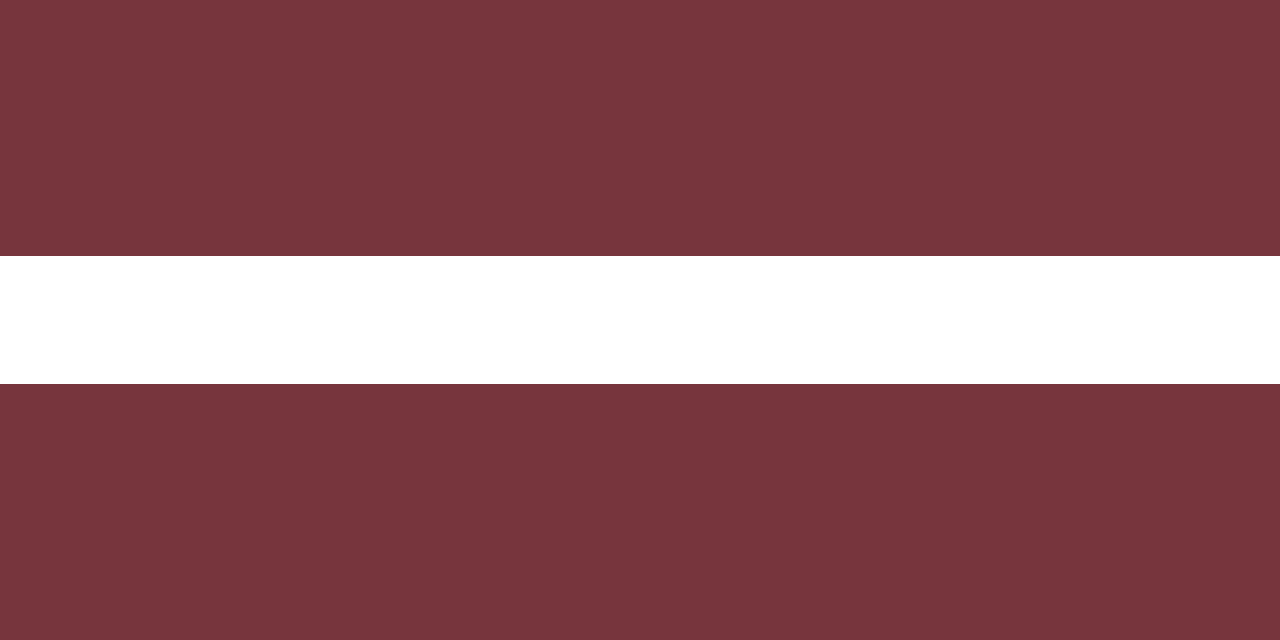
Latvia
Sign in to saveAlso known as lv, Leţmо̄ Vabāmо̄, Leţmо̄, Republic of Latvia, Latvian Republic, Latvija, Latveja, Latvijas Republika
Latvia, officially the Republic of Latvia, is a country in the Baltic region of northern Europe. It is one of the three Baltic states, along with Estonia to the north and Lithuania to the south. It borders Russia to the east and Belarus to the southeast and shares a maritime border with Sweden to the west. Latvia covers an area of , with a population of 1.83million. The country has a temperate seasonal climate. Its capital and largest city is Riga. Latvians, who are the titular nation and comprise 65.5% of the country's population, belong to the ethnolinguistic group of the Balts and speak Lat
OverviewAI-generated
Latvia, officially the Republic of Latvia, is a sovereign state and country in Northern Europe. Its capital is Riga, and its official language is Latvian. The country shares borders with Belarus, Estonia, Lithuania, and Russia. Latvia is a member of the European Union, United Nations, NATO, and the Council of Europe. Its legislative body is the Saeima.
The population is recorded as 1,829,000 and 1,866,124. The area is 64,559 square kilometers. The highest point is Gaiziņkalns. The currency includes the euro, Latvian lats, and Latvian rublis. The top-level Internet domain is .lv, and the telephone country code is 371. The anthem is Dievs, svētī Latviju!. The flag of Latvia and the Coat of arms of Latvia are national symbols. Administrative entities include Daugavpils, Jūrmala, Liepāja, and Rēzekne.
Synthesized by Vinony from 67 facts across 9 sources: Wikidata, REST Countries, Open Meteo, Openweathermap, World Bank, OpenStreetMap, PubMed, Vinony graph, Geo. Generated from structured data (not the Wikipedia text) and checked against those facts — may still contain errors.
Weather now
7-day forecast
via Open-Meteo
Country


- Capital
- Riga
- Population
- 1,829,000
- Region
- Europe · Northern Europe
- Demonym
- Latvian
- Currencies
- EUR (€)
- Languages
- Latvian
- Calling code
- +371
- Drives on
- Right
- Gini
- 35.1 (2018)
- FIFA code
- LVA
- TLD
- .lv
- Timezones
- UTC+02:00
- Borders
- BLR, EST, LTU, RUS
via REST Countries
Indicators · World Bank
- GDP
- $43.7B(2024)
- Population
- 1,866,124(2024)
- Life expectancy
- 76.4 yrs(2024)
- Unemployment
- 6.6 %(2025)
- Urban population
- 68.5 %(2024)
- Internet users
- 92.7 %(2024)
- Forest area
- 55 %(2023)
- Renewable energy
- 44 %(2021)
via World Bank Open Data · CC BY 4.0
Wikipedia views (30d)
160,343 totalvia Wikimedia Pageviews API
Key facts
- Country.demonym
- Latvian
- Country.conventional_long_name
- Republic of Latvia
- Country.common_name
- Latvia
- Country.image_flag
- Flag of Latvia.svg
- Country.alt_flag
- Flag of Latvia
- Country.image_coat
- Coat of arms of Latvia.svg
- Country.symbol_width
- 100px
- Country.alt_coat
- Coat of arms of Latvia
- Country.national_anthem
- ("God Bless Latvia")
- Country.image_map
- EU-Latvia.svg
- Country.capital
- Riga
- Country.largest_city
- capital
- Country.official_languages
- Latviana
- Country.languages_type
- Recognized languages
- Country.languages
- LivonianLatgalian
- Country.ethnic_groups_year
- 2025
- Country.religion_year
- 2018
- Country.government_type
- Unitary parliamentary republic
via Wikipedia infobox
Research
11,058 papers- A narrative review of alcohol control policies in Latvia between 1990 and 2020.ReviewDrug and alcohol review · 2023Gobiņa I, Isajeva L, Spriņģe L et al.DOI: 10.1111/dar.13647
- Organ Donation and Transplantation in Latvia.Transplantation · 2019Ziedina I, Jushinskis J, Lejniece S et al.DOI: 10.1097/TP.0000000000002764
- Latvia: Health System Review.Health systems in transition · 2019Behmane D, Dudele A, Villerusa A et al.
- Pharmacology in Estonia, Latvia and Lithuania: From historical roots to nowadays achievements.ReviewPharmacological research · 2016Jansone B, Kuum M, Maciulaitis RDOI: 10.1016/j.phrs.2016.04.024
- Report on Bariatric Surgery in Latvia.Obesity surgery · 2021Bilande G, Mukans M, Pirags VDOI: 10.1007/s11695-020-05215-7
- Hepatitis A virus subgenotypes in Latvia, 2008-2021.Journal of infection and public health · 2023Savicka O, Dusacka D, Zeltmatis R et al.DOI: 10.1016/j.jiph.2023.07.012
- Drug Policy in Latvia.Value in health regional issues · 2017Silins J, Szkultecka-Dębek MDOI: 10.1016/j.vhri.2017.08.006
- Latvia: Health system review.Health systems in transition · 2012Mitenbergs U, Taube M, Misins J et al.
via PubMed
Wikidata facts
- Instance of
- country
- Part of
- European Economic Area
- Official name
- Republiken Lettland
- Demonym
- Lettinnen
- Country
- Latvia
- Contains
- Rēzekne Municipality
- Continent
- Europe
- Capital
- Riga
- Official language
- Latvian
- Currency
- Latvian rublis
- Population
- 1856932
- Area
- 62226.85
- Time zone
- UTC+03:00
- Body of water
- Baltic Sea
- Head of government
- Evika Siliņa
- Head of state
- Edgars Rinkēvičs
- Form of government
- republic
- Legislature
- Saeima
- Anthem
- Dievs, svētī Latviju!
- Shares border with
- Sweden
- Highest point
- Gaiziņkalns
- Headquarters
- Riga
- Official website
- www.mk.gov.lv
- Image
- Satellite image of Latvia in March 2003.jpg
Show 75 more facts
- Life expectancy
- 75
- Nominal GDP
- 41153912663
- Unemployment rate
- 9.4
- Calling code
- +371
- Licence plate code
- LV
- Electrical plug type
- Schuko
- Mains voltage
- 230
- Motto
- I'w fwynhau'n araf!
- Flag
- flag of Latvia
- Coat of arms
- Coat of arms of Latvia
- topic's main Wikimedia portal
- Portal:Latvia
- top-level Internet domain
- .lv
- Commons category
- Latvia
- topic's main category
- Category:Latvia
- category for people who died here
- Category:Deaths in Latvia
- category for people born here
- Category:Births in Latvia
- category for films shot at this location
- Category:Films shot in Latvia
- category for people buried here
- Category:Burials in Latvia
- category of associated people
- Category:Latvian people
- inception
- 1918-11-18
- diplomatic relation
- China
- history of topic
- history of Latvia
- Commons gallery
- Latvija
- office held by head of government
- Prime Minister of Latvia
- lowest point
- Baltic Sea
- mobile country code
- 247
- driving side
- right
- geography of topic
- Пeography of Latvia
- executive body
- Government of Latvia
- age of majority
- 18
- marriageable age
- 18
- replaces
- Pskov Governorate
- located in/on physical feature
- Northern Europe
- native label
- Latvija
- office held by head of state
- President of Latvia
- retirement age
- 62.5
- central bank
- Bank of Latvia
- number of out-of-school children
- 17119
- has characteristic
- free country
- total fertility rate
- 1.52
- maritime identification digits
- 275
- railway traffic side
- right
- maintained by WikiProject
- WikiProject Latvia
- Unicode character
- 🇱🇻
- water as percent of area
- 1.5
- language used
- Livonian
- GS1 country code
- 475
- culture
- culture of Latvia
- VAT rate
- 21
- BTI Status Index
- 8.8
- BTI Governance Index
- 7.11
- economy of topic
- economy of Latvia
- postal code
- LV-1919
- demographics of topic
- demographics of Latvia
- Democracy Index
- 7.24
- P6482
- Latvia
- Human Development Index
- 0.863
- P11012
- Jack Bauer
- hashtag
- Latvia
- on focus list of Wikimedia project
- Wikipedia:Vital articles/Level/4
- Happy Planet Index score
- 34.1
- Gini coefficient
- 34.5
- Inequality-adjusted Human Development Index
- 0.792
- suicide rate
- 16.1
- P12749
- Bengaluru
- highest judicial authority
- Constitutional Court of the Republic of Latvia
- P8168
- Oberhausen
- birth rate
- 8.5
- male population
- 871746
- death rate
- 16.4
- rural population
- 591254
- female population
- 1007636
- urban population
- 1288129
- number of seats in assembly
- 8
Sources (15)
via Wikidata · CC0
Travel guide
Get around
In Latvian, the word for street (as in street names) is iela. An example is Brīvības iela which is translated as Freedom street.
See
thumb|Cēsis castle ruins, Vidzeme Region thumb|Bridge over Venta in Kuldīga thumb|Jelgava thumb|Koknese castle ruins
Eat
Latvian cuisine is typical of the Baltic region and, in general, of northern countries, and especially similar to Finnish cuisine (see Nordic cuisine). It's high in butter and fat while staying low on spices except for black pepper, dill or grains/seeds, such as caraway seeds. If you are from the Mediterranean, you might find the food rather bland, but if you come from England or the Midwestern U.S., you will probably not have any trouble getting used to most of the dishes.
Latvian cuisine originated from the peasant culture and is strongly based on crops that grow in Latvian maritime, temperate climate. Latvian cuisine offers plenty of varieties of bread and milk products, which are staples. Pork products, potatoes, rye or wheat, oats, peas, beets, cabbage are the staples. Meat, especially pork, features in most main meal dishes. Sometimes even some meatless dishes can be cooked using bacon fat. But fish also is commonly consumed due to Latvia's location on the east coast of the Baltic Sea and Livonian heritage: smoked and raw fish are quite common.
Drink
thumb|Riga Black Balsam, local herb liqueur
Beer (alus) is generally the alcoholic beverage of choice for most Latvians. Aldaris and Līvu are the main large breweries in Latvia, but local breweries such as Užavas, Bauskas and Piebalgas exist all around the country and should not be forgotten. You are also suggested to try the locally distilled Riga Black Balsam (Rīgas Melnais balzams). It's an infusion of various herbs, roots and spices, making it a good home remedy for the common cold. By itself it is fairly strong - 45% alcohol by volume - and can be taken by adding a touch of it to flavor your tea, as a few spoons to lace your coffee or mixed in various cocktails. Even though Latvia is fairly far out north, grapes can still be successfully grown for making wine, although wine production in Latvia generally happens in small quantities, there are some local wineries and vineyards.
Sleep
Although you might not find plenty of 5 star hotels all around Latvia, you will find comfortable places to stay for reasonable prices. There are many hotels to choose from and the prices generally start with €30 outside of Riga and €60 in Riga.
A small network of youth hostels also exists. Dormitory rooms are around €10-15 while single and double rooms are €30 and above.
So-called guest houses or country houses, some on farms, are a great place to stay at the countryside. They usually cost much less than hotels and are of much better quality than hostels due to the limited number of guests and the personalized service. Such houses are usually run by families and will come with full amenities with some even following the hotel star ratings. These usually provide many recreational activities such as the Latvian popular sauna (pirts) and horseback rides. You can ask your hosts regarding popular attractions available nearby, what sights are worth visiting and whether some events are taking place at that time that they would suggest visiting. Keep in mind, you will not be able to simply "drop in" usually and will be required to plan ahead, contacting the guest house in question a day or few before arrival. This can depend on the specific place. Guest houses can generally be found fairly frequently throughout the countryside and are often listed on tourist booklets.
Latvian rural tourism association, Lauku ceļotājs has published catalogs and maps that list various types of accom…
Stay safe
It is generally safe to travel around Latvia on your own, although some petty crime exists.
If travelling by bike, watch out for bicycle theft. Cyclists are a small minority in Latvian traffic, and dedicated bike lanes are rare. It is common practice that bikes drive on the pavement in larger cities.
If travelling by car, try not to leave valuable things in plain sight in your car. Stay alert when driving on smaller roads, especially through forests, as wild animals may wander around. It is particularly important to keep that in mind during the night. Many Latvian drivers enjoy speeding and the traffic can often flow much faster than the laws allow.
If travelling by foot, take care when crossing the roads as many Latvian drivers can be fairly reckless.
It is considered bad mannered to consume alcoholic beverages in public, when not in bars, restaurants etc. Some places you might be fined when consuming alcoholic beverages out of a non-concealed bottle. Drunken behaviour like for example urinating in public will also get you a fine, or a night in jail.
Local informational web-sites for tourists claim that, in terms of safety, there is almost no difference between big cities and country areas. Although it is true that anywhere in Latvia one is never too far from a town or a city, seeking help in case of emergency may be somewhat more difficult in the countryside (for foreign tourists), as few people speak English there. This is somewhat balanced by the fact that even then …
Stay healthy
You can turn to any doctor or hospital at any time during your stay. Depending on the circumstances, you may need to pay a fee for receiving urgent care.
In a sparsely-inhabited, remote area, it may be difficult to obtain medical care due to the low number of air ambulance helicopters in the country. Having a first aid kit around during those times is a good idea. The 112 (emergency service number) operators will be able to assist you in Latvian, English and Russian and will be able to either dispatch a team to you or connect you to the appropriate emergency services, if required.
Doctors usually are able to speak fluent Latvian and Russian. Some may not have good English skills. This mostly depends on the region and the age of the doctor.
You are suggested to bring your own medicine, if you require it, as there are few drugs that are available without a prescription.
Many doctors take undisclosed fees in the form of gifts from the patients ranging from a box of chocolates to raw cash. This is usually due to patients recognizing doctors receive low wages and feel the urge of expressing their gratitude. While this is made illegal by local law, it is estimated that 1 in 4 doctors has taken or is taking such donations when seeing patients.
You should seek immediate medical attention if bitten by a snake, a domestic or a wild animal. Snakes are not venomous in Latvia with the exception of the European adder. The common adder is not generally aggressive unless startled and fe…
Respect
Latvians in general are fairly reserved and generally respect others' personal space, for example, Latvians do not usually greet strangers unless introduced by someone.
As with many countries in Europe, inquiring about someone's salary or talking about your own is uncommon and not recommended. Similarly, personal, political, or religious convictions are no-go areas until you're better acquainted with someone.
Littering is considered bad manners and is against the law. Offenders may be fined.
It is considered polite in Latvian culture to hold a door open for someone, let others board a bus or a train first etc. This applies to men letting women go first in particular.
thumb|upright|Swastika as a common element of souvenir scarfs
The swastika symbol (Latvian: ugunskrusts or pērkonkrusts, "fire cross" or "thunder cross") is a common ornament in embroideries in Latvian folk costumes and contemporary souvenirs and was considered a pagan religious symbol for centuries. It is supposed to bring luck, energy and fire. There is no connection of this symbol to Nazi Germany, and any attempts to hint at one will be considered offensive.
You should be careful when talking to Latvians about politics and history, especially about the Soviet Union. As Latvia became a Soviet republic after World War II, many Latvians, especially of the older generations, have strong opinions about the topic. There is an annual ceremony in March commemorating the veterans of the Latvian Legion; while it f…
Go next
Lithuania, the southernmost Baltic state and Latvia's brotherly nation, with castles (much like in Latvia) and the relaxed capital Vilnius, easiest to reach by bus. Estonia, northernmost Baltic state, with a lot of islands, beautiful landscapes, and a language related to Finnish. Can be reached by bus or train. Sweden and Finland, and from there the rest of Scandinavia can be reached by the many ferries operating across the Baltic sea. The airport of Riga has many connections with other countries in Europe.
Travel guide from Wikivoyage (CC BY-SA 4.0)
~40 min read
Encyclopedic overview
39 sectionsContents
- Etymology
- History
- Medieval period
- Reformation period and Polish and Swedish rule
- Livonia and Courland in the Russian Empire
- Declaration of independence and interwar period
- Occupations, 1940–1990
- 1990–present
- Geography
- Climate
- Environment
- Biodiversity
- Government and politics
- Government
- Administrative divisions
- Political culture
- Foreign relations
- Military
- Human rights
- Economy
- Infrastructure
- Transport
- Energy
- Demographics
- Ethnic groups
- Language
- Religion
- Education and science
- Health
- Culture
- Cuisine
- Sport
- Notes
- References
- Bibliography
- Latvia
- Baltic states
- Russia connection
- External links
Latvia, officially the Republic of Latvia, is a country in the Baltic region of northern Europe. It is one of the three Baltic states, along with Estonia to the north and Lithuania to the south. It borders Russia to the east and Belarus to the southeast and shares a maritime border with Sweden to the west. Latvia covers an area of 64,573 km (24,932 sq mi), with a population of 1.83 million. The country has a temperate seasonal climate. Its capital and largest city is Riga. Latvians, who are the titular nation and comprise 65.5% of the country's population, belong to the ethnolinguistic group of the Balts and speak Latvian. Russians are the most prominent minority in the country, at almost a quarter of the population; 37.7% of the population speak Russian as their native tongue.
After centuries of Teutonic, Swedish, Polish-Lithuanian, and Russian rule, the independent Republic of Latvia was established on 18 November 1918 after breaking away from the Russian Empire in the aftermath of World War I. The country became increasingly autocratic after the coup in 1934 established the dictatorship of Kārlis Ulmanis. Latvia's de facto independence was interrupted at the outset of World War II, beginning with forcible incorporation into the Soviet Union, followed by the invasion and occupation by Nazi Germany in 1941 and the re-occupation by the Soviets in 1944, which formed the Latvian SSR for the next 45 years. As a result of extensive immigration during the Soviet occupation, ethnic Russians became the most prominent minority in the country. The peaceful Singing Revolution started in 1987 among the Baltic Soviet republics and ended with the restoration of both de facto and official independence on 21 August 1991. Latvia has since been a democratic unitary parliamentary republic.
Excerpted from Wikipedia’s “Latvia” article, available under the CC BY-SA 4.0 licence.
Gallery (59)
On the map
6 mapped locations
Available in 274 languages
- Español
- Français
- Deutsch
- 中文
- 日本語
- Русский
- Português
- Italiano
- العربية
- हिन्दी
- Abkhazian
- Achinese
- Adyghe
- Afrikaans
- Akan
- Albanian
- Albanian
- Amharic
Show 255 more
- ami
- Angika
- Aragonese
- Aramaic
- Armenian
- Arpitan
- Asturian
- Avaric
- Awadhi
- azb
- Azerbaijani
- Bahasa Indonesia
- Balinese
- Bangla
- Bashkir
- Basque
- bat_smg
- Bavarian
- be_x_old
- Belarusian
- Betawi
- Bhojpuri
- Bikol
- Bishnupriya
- Bislama
- blk
- Bosnian
- Breton
- Bulgarian
- Buriat
- Burmese
- Catalan
- cbk_zam
- cdo
- Cebuano
- Central Kurdish
- Chamorro
- Chechen
- Cherokee
- Church Slavic
- Chuvash
- Cornish
- Corsican
- Crimean Tatar
- Croatian
- Czech
- dag
- Danish
- Divehi
- dty
- Dzongkha
- Egyptian Arabic
- eml
- Erzya
- Esperanto
- Estonian
- Ewe
- Extremaduran
- Faroese
- Fiji Hindi
- Filipino
- Finnish
- fiu_vro
- Friulian
- Fula
- Gagauz
- Galician
- Ganda
- gcr
- Georgian
- Gilaki
- Goan Konkani
- Gothic
- Greek
- Guarani
- Gujarati
- Haitian Creole
- Hakka Chinese
- Hausa
- Hawaiian
- Hebrew
- Hungarian
- hyw
- Icelandic
- Ido
- Igbo
- Iloko
- Inari Sami
- Interlingua
- Interlingue
- Irish
- Jamaican Creole English
- Javanese
- Kabardian
- Kabyle
- Kannada
- Kara-Kalpak
- Karachay-Balkar
- Kashubian
- Kazakh
- kbp
- kge
- Khmer
- Kinyarwanda
- Komi
- Komi-Permyak
- Kongo
- Kotava
- Kurdish
- Kyrgyz
- Ladino
- Lao
- Latgalian
- Latin
- Latvian
- Lezghian
- Ligurian
- Limburgish
- Lingala
- Lingua Franca Nova
- Lithuanian
- lld
- Lombard
- Low German
- Lower Sorbian
- Luxembourgish
- Macedonian
- Madurese
- Maithili
- Malagasy
- Malay
- Malayalam
- Maltese
- Manipuri
- Manx
- Māori
- map_bms
- Marathi
- Mari
- Mazanderani
- Minangkabau
- Mingrelian
- Mirandese
- Moksha
- Mongolian
- Moroccan Arabic
- Navajo
- nds_nl
- Nederlands
- Nepali
- Newari
- Northern Frisian
- Northern Sami
- Norwegian
- Norwegian Nynorsk
- Novial
- nrm
- Obolo
- Occitan
- Old English
- olo
- Oromo
- Ossetic
- Palatine German
- Pampanga
- Pangasinan
- Papiamento
- Pashto
- Pennsylvania German
- Picard
- Piedmontese
- Polski
- Pontic
- Punjabi
- Quechua
- roa_rup
- roa_tara
- Romanian
- Romansh
- Romany
- Rusyn
- Samoan
- Sanskrit
- Santali
- Sardinian
- Saterland Frisian
- Scots
- Scottish Gaelic
- Serbian
- Serbian (Latin)
- Shan
- Shona
- Sicilian
- Silesian
- simple
- Sindhi
- Sinhala
- Slovak
- Slovenian
- Somali
- Southern Sotho
- Sranan Tongo
- Sundanese
- Svenska
- Swahili
- Swati
- szy
- Tajik
- Talysh
- Tamil
- Taroko
- Tatar
- tay
- Telugu
- Tetum
- Tibetan
- Tiếng Việt
- Tok Pisin
- Toki Pona
- Tongan
- Tsonga
- Tumbuka
- Türkçe
- Turkmen
- Udmurt
- Ukrainian
- Upper Sorbian
- Urdu
- Uyghur
- Uzbek
- Venetian
- Veps
- Volapük
- Walloon
- Waray
- Welsh
- West Flemish
- Western Frisian
- Western Mari
- Western Panjabi
- Wolof
- Wu Chinese
- Yakut
- Yiddish
- Yoruba
- Zaza
- Zeelandic
- zh_classical
- zh_min_nan
- zh_yue
- Zhuang
- Zulu
- فارسی
- ไทย
- 한국어
via Wikidata sitelinks · CC0