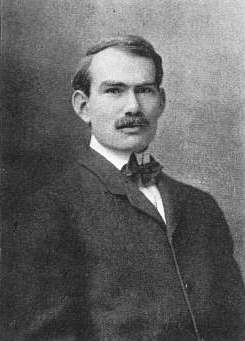
File:Lee_De_Forest.jpg · Wikimedia Commons · See Wikimedia Commons
Lee de Forest
Sign in to saveAmerican inventor (1873–1961)
OverviewAI-generated
Lee de Forest (1873–1961) was an author whose works include *Father of radio*, *How to set up an amateur radio receiving station*, *Papers of Lee De Forest*, and *Television, today and tomorrow*. He is recognized in the Hollywood Walk Of Fame and the National Inventors Hall Of Fame collections.
According to MusicBrainz data, he is listed as a male person associated with Portugal. His bibliography consists of five works, and he is referenced by 1,665 other encyclopedia articles.
Synthesized by Vinony from 21 facts across 7 sources: Wikidata, Last.fm, Crossref, MusicBrainz, Open Library, Vinony collections, Vinony graph. Generated from structured data (not the Wikipedia text) and checked against those facts — may still contain errors.
Wikidata facts
- Instance of
- human
- Given name
- Lee
- Gender
- male
- Citizenship
- United States
- Place of birth
- Council Bluffs
- Place of death
- Hollywood
- Occupation
- engineer
- Employer
- Illinois Institute of Technology
- Political party
- Republican Party (United States)
- Languages spoken
- English language
- Award
- John Scott Award
- Notable work
- triode
- Student of
- Josiah Willard Gibbs
- Field of work
- history of technology
- Official website
- www.leedeforest.org
- Image
- Formal portrait of Lee de Forest.jpg
Show 9 more facts
- Commons category
- Lee De Forest
- place of burial
- San Fernando Mission Cemetery
- Commons Creator page
- Lee De Forest
- nominated for
- Nobel Prize in Physics
- archives at
- Illinois Institute of Technology
- date of birth
- 1873-08-26
- name in native language
- Lee De Forest
- date of death
- 1961-06-30
Sources (10)
via Wikidata · CC0
~40 min read
Encyclopedic overview
Lee de Forest (August 26, 1873 – June 30, 1961) was an American inventor, electrical engineer, and early pioneer in electronics of fundamental importance. He invented the first practical electronic amplifier, the three-element "Audion" triode vacuum tube in 1908. This helped start the Electronic Age, and enabled the development of the electronic oscillator. These made radio broadcasting and long-distance telephone lines possible, and led to the development of talking motion pictures, among countless other applications.
He had over 300 patents worldwide, but also a tumultuous career – he boasted that he made, then lost, four fortunes. He was also involved in several major patent lawsuits, spent a substantial part of his income on legal bills, and was even tried (and acquitted) for mail fraud.
Excerpted from Wikipedia’s “Lee de Forest” article, available under the CC BY-SA 4.0 licence.