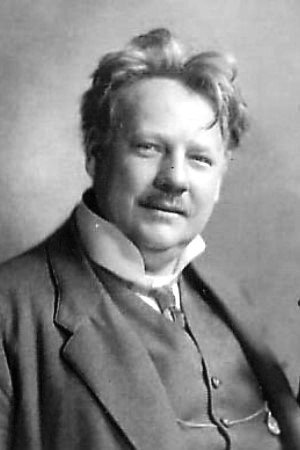
Profile via TMDB · Courtesy of TMDB
Person · Open Library
- Born
- 1873-08-18
- Died
- 1946-06-01
- Works
- 16
Top works
- World Literature 1999
- Meine sämtlichen Werke
- Mein lieber Bub
- Rückfall
- Song of motley
via Open Library + Wikidata
Film & TV
Known for
- Münchhausen — Sultan Abd ul Hamid1943
- Beloved Darling — Generaldirektor1943
- Everything for Gloria — Kammersänger Möbius1941
- Rosen in Tirol — Baron Weps1940
- Operette — Franz von Suppé1940
- Golowin geht durch die Stadt — Juranitsch, Stadtpräfekt1940
- Der Herr im Haus — Kammersänger Wolfram Schellenberg1940
- It Was a Gay Ballnight — Prof. Maxililian Hunsinger1939
- Woman at the Wheel — Generaldirektor1939
- Homeland — Rohrmoser1938
via TMDB
Music · MusicBrainz
- Type
- Person
- Gender
- Male
- Origin
- Austria
- Active from
- 1873-08-18
- Active to
- 1946-06-01
via MusicBrainz · CC0
Listeners · Last.fm
- Listeners
- 335
- Total plays
- 2,584
Tags
Leo Slezak (18 August 1873 – 1 June 1946) was a world-famous Moravian tenor. He was associated in particular with German opera as well as the title role in Verdi's Otello. Born in Šumperk (Mährisch-Schönberg), Slezak worked as a gardener, an engineer's fitter and served in the army before taking singing lessons with the first-class baritone and pedagogue Adolf Robinson. He made his debut in 1896 in Brno (Brünn) and proceeded to sing leading roles in Bohemia and Germany, appearing at Breslau and
Wikidata facts
- Instance of
- human
- Given name
- Leo
- Gender
- male
- Citizenship
- Austria
- Place of birth
- Šumperk
- Place of death
- Rottach-Egern
- Child
- Margarete Slezak
- Occupation
- writer
- Languages spoken
- German
- Field of work
- opera
- Genre
- opera
- Instrument
- voice
- Image
- Leo Slezak 1927.jpg
- Work location
- Berlin
- Voice type
- tenor
Show 7 more facts
- Commons category
- Leo Slezak
- date of birth
- 1873-08-18
- date of death
- 1946-06-01
- Fach vocal classification
- Heldentenor
- place of burial
- Rottach-Egern
- name in native language
- Leo Slezak
- P8168
- Thyia
via Wikidata · CC0
Works in European collections
36 objects attributed to Leo Slezak, held across European museums, libraries & archives · via Europeana

Prophet (opera) Prophet (opera)

The Mastersingers of Nuremberg (opera) The Mastersingers of Nuremberg (opera)

Tannhäuser (opera) Tannhäuser (opera)
![“Flieh ‘, o flieh’” [holdes Bild!]: Church scene of the Chevalier Des Grieux aus “Manon”; [3rd act]/("et)](https://api.europeana.eu/thumbnail/v2/url.json?uri=http%3A%2F%2Fmedia.slub-dresden.de%2Ffon%2Fsnp%2Fa%2F013453%2Ffon_snp_a_013453_02.jpg&type=IMAGE)
“Flieh ‘, o flieh’” [holdes Bild!]: Church scene of the Chevalier Des Grieux aus “Manon”; [3rd act]/("et)

Gram.Con.Rec. Love message from Schubert ges. v. Leo Slezak, k.u.k. Hofopernsänger Wien Seiser 769 (further production title)
![Terzett a. “Der Freischütz”/[Weber, Carl Maria von]](https://api.europeana.eu/thumbnail/v2/url.json?uri=http%3A%2F%2Fmedia.slub-dresden.de%2Ffon%2Fsnp%2Fb%2F007405%2Ffon_snp_b_007405_01.jpg&type=IMAGE)
Terzett a. “Der Freischütz”/[Weber, Carl Maria von]
![Romance from “Aida”/[Giuseppe Verdi]](https://api.europeana.eu/thumbnail/v2/url.json?uri=http%3A%2F%2Fmedia.slub-dresden.de%2Ffon%2Fsnp%2Fa%2F023117%2Ffon_snp_a_023117_01.jpg&type=IMAGE)
Romance from “Aida”/[Giuseppe Verdi]

Die Jüdin (Oper) Die Jüdin (Oper)

Ist's nicht mehr die Hand : aus "Manon" / von Massenet

"Die Hugenotten" : "Ach, welch ein reizendes Bild" / von Meyerbeer

How freezing cold is this handshake: from “Bohême”/by Puccini

Tom der Reimer: Ballad; I. Teil/(C. Loewe)

Tannhäuser (opera) Tannhäuser (opera)

“Die Die singers von Nürnberg”: Am stille Herd/(Wagner)

How freezing cold is this hanging: Arie of Rudolf from the opera “La Bohème”/v. Puccini
![“Tannhäuser” [Tannhäuser]: III. Nude, III. Scene: Rom" II [Teil]; Inbrunst im Herz/(Wagner)](https://api.europeana.eu/thumbnail/v2/url.json?uri=http%3A%2F%2Fmedia.slub-dresden.de%2Ffon%2Fsnp%2Fa%2F006824%2Ffon_snp_a_006824_02.jpg&type=IMAGE)
“Tannhäuser” [Tannhäuser]: III. Nude, III. Scene: Rom" II [Teil]; Inbrunst im Herz/(Wagner)

Manon (opera) Manon (opera)

Love song
![Auftrittslied des Assad aus "Königin von Saba" / [Karl Goldmark]](https://api.europeana.eu/thumbnail/v2/url.json?uri=http%3A%2F%2Fmedia.slub-dresden.de%2Ffon%2Fsnp%2Fb%2F007348%2Ffon_snp_b_007348_01.jpg&type=IMAGE)
Auftrittslied des Assad aus "Königin von Saba" / [Karl Goldmark]

Die Jüdin (Oper) Die Jüdin (Oper)
![Duet a. “Die Huguenots”/[Giacomo Meyerbeer]](https://api.europeana.eu/thumbnail/v2/url.json?uri=http%3A%2F%2Fmedia.slub-dresden.de%2Ffon%2Fsnp%2Fa%2F008948%2Ffon_snp_a_008948_01.jpg&type=IMAGE)
Duet a. “Die Huguenots”/[Giacomo Meyerbeer]

Quartet from “Rigoletto”/von Verdi

“The Jew”: Recha as God you once/(Halevy)

“The Mastersingers of Nuremberg”: “Morning bright in a rosy glow”/by R. Wagner
![Arie des Gerald aus “Lakme”: [But where does this suddenly come from, from the opera “Lakme,” 1st act]/[Delibes, Léo]](https://api.europeana.eu/thumbnail/v2/url.json?uri=http%3A%2F%2Fmedia.slub-dresden.de%2Ffon%2Fsnp%2Fa%2F008962%2Ffon_snp_a_008962_01.jpg&type=IMAGE)
Arie des Gerald aus “Lakme”: [But where does this suddenly come from, from the opera “Lakme,” 1st act]/[Delibes, Léo]

Auftrittslied des Raoul aus der "Hugenotten" / (Meyerbeer)

Hugenotten (Oper) Hugenotten (Oper)

Zauberflöte (Oper) Zauberflöte (Oper)

Die Jüdin (Oper) Die Jüdin (Oper)

“Othello”: Othello 's death/(Verdi)

Prophet (opera) Prophet (opera)

The Lenz: Song/(E. Hildach)
![Narrative of Assad, from “Queen of Saba”/[Karl Goldmark]](https://api.europeana.eu/thumbnail/v2/url.json?uri=http%3A%2F%2Fmedia.slub-dresden.de%2Ffon%2Fsnp%2Fa%2F015736%2Ffon_snp_a_015736_01.jpg&type=IMAGE)
Narrative of Assad, from “Queen of Saba”/[Karl Goldmark]

Das noch einmal sie erschiene : aus "Troubadour" / von Verdi

Gegrüsst sei mir die heil'ge Stätte : Cavatine aus der Oper "Margarethe" / v. Gounod

Ihr Wangenpaar aus "Die Hugenotten"