File:Wood_from_victoria_mountain_ash.jpg · Wikimedia Commons · See Wikimedia Commons
lumber
Sign in to saveAlso known as softwood lumber, saw timber tree, timbers
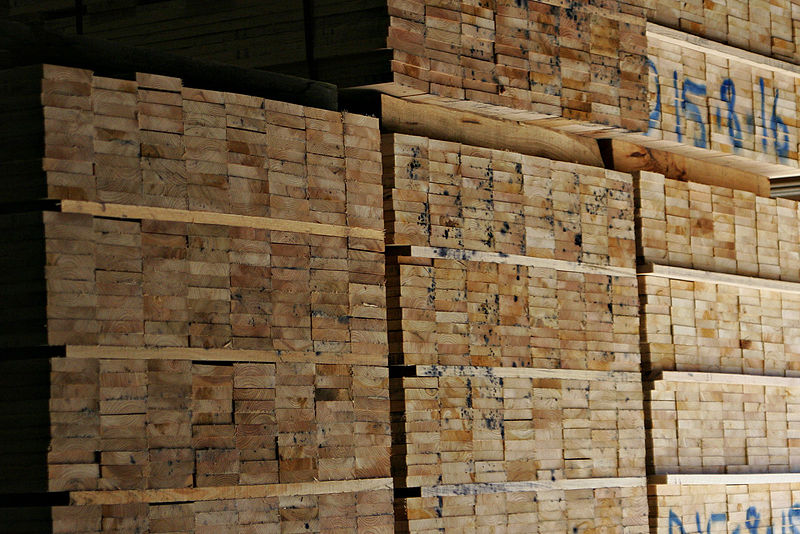
thumb|upright=1.15|Wood cut from Victorian Eucalyptus regnans thumb|upright=1.15|The harbor of Bellingham, Washington, United States, filled with logs, 1972
Wikidata facts
- Material used
- wood
- Image
- 005 Logging industry in New Zealand - tree trunk piles, timber logs stockpile.jpg
- Said to be same as
- lumber
- Has use
- breakbulk cargo
Show 4 more facts
- Commons category
- Timber
- topic's main category
- Category:Timber
- on focus list of Wikimedia project
- Wikipedia:Vital articles/Level/4
- fabrication method
- cutting
Sources (2)
via Wikidata · CC0
~42 min read
Encyclopedic overview
34 sectionsContents
- Terminology
- Re-manufactured lumber
- Plastic lumber
- Timber mark
- History
- Conversion of wood logs
- Dimensional lumber
- North American softwoods
- Grades and standards
- North American hardwoods
- Engineered lumber
- Various pieces and cuts
- Timber piles
- Historical Chinese construction
- Defects in lumber
- Conversion
- Defects due to fungi and animals
- Natural forces
- Seasoning
- Durability and service life
- Moisture control
- Preservatives
- Timber framing
- Environmental effects of lumber
- Residual wood
- Environmental impacts
- End-of-life
- In the circular economy
- Secondary raw material
- See also
- Explanatory notes
- References
- Further reading
- External links
thumb|upright=1.15|Wood cut from Victorian Eucalyptus regnans thumb|upright=1.15|The harbor of Bellingham, Washington, United States, filled with logs, 1972
Lumber, also called timber or fine wood in the United Kingdom, Australia, and New Zealand, is wood that has been processed into uniform and useful sizes (dimensional lumber), including beams and planks or boards. Lumber is mainly used for construction framing, as well as finishing (floors, wall panels, window frames). Lumber has many uses beyond home building. In some parts of the world, including the United States and Canada, the term timber refers specifically to unprocessed wood fiber, such as cut logs or standing trees that have yet to be cut.
Excerpted from Wikipedia’s “lumber” article, available under the CC BY-SA 4.0 licence.