Unnikrishnan, V.
Macrobrachium
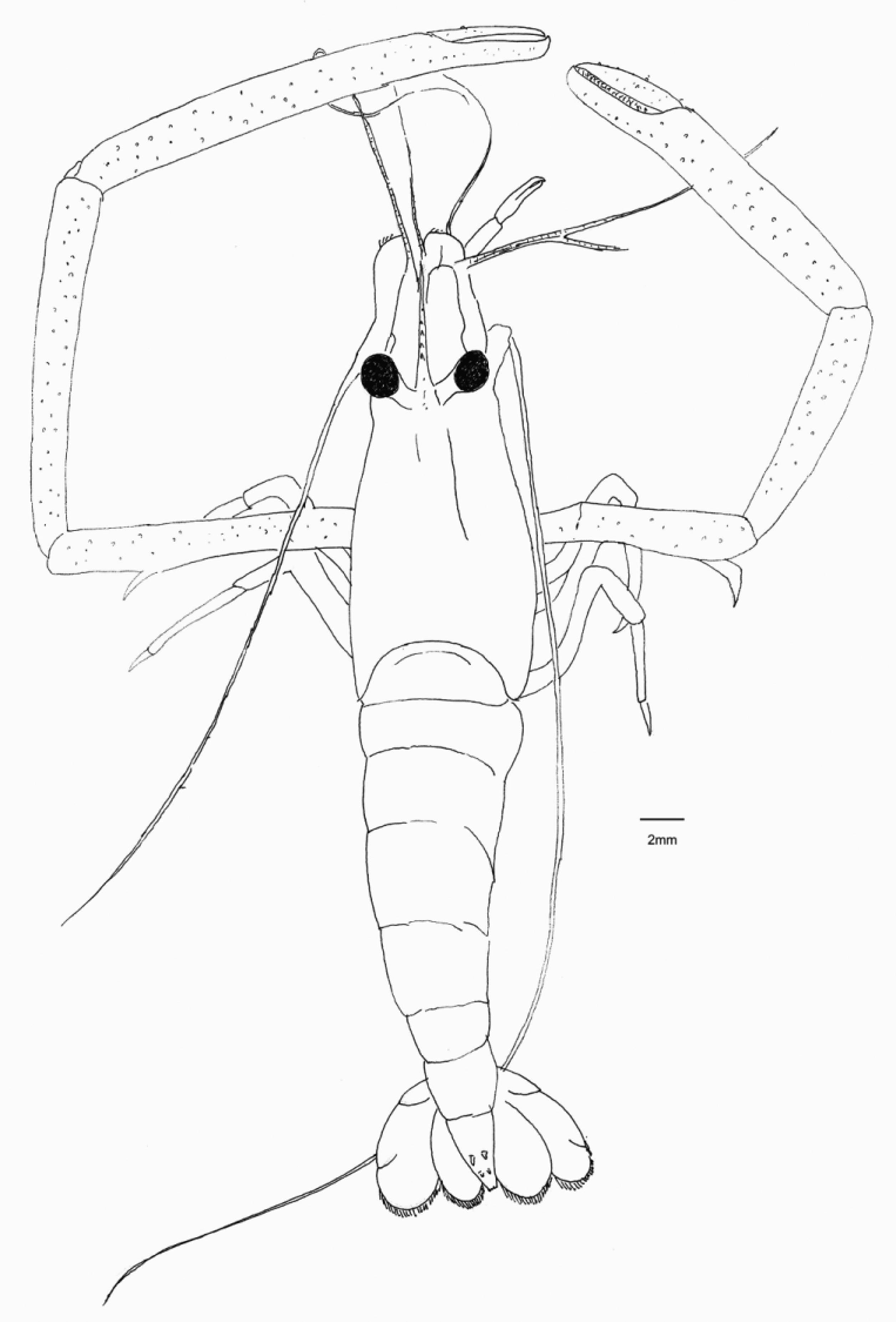
Sign in to saveMacrobrachium is a genus of freshwater prawns or shrimps characterised by the extreme enlargement of the second pair of pereiopods, at least in the male. The genus is cosmopolitan, found throughout the tropical, freshwater and estuarine ecosystems of both the Old and New Worlds. The genus has a difficult taxonomic history due to morphological conservation between its species (plesiomorphy), and conversely, variations within a single species (polymorphism), leading to the discovery of cryptic species which were only revealed through genetic analysis and morphometry.
Species
テナガエビ属
GENUS
- KingdomAnimalia
- PhylumArthropoda
- ClassMalacostraca
- OrderDecapoda
- FamilyPalaemonidae
Macrobrachium shaoi is een garnalensoort uit de familie van de Palaemonidae.[2] De wetenschappelijke naam van de soort is voor het eerst geldig gepubliceerd in 2001 door Cai & Jeng. Bronnen, noten en/of referenties ↑ (en) Macrobrachium shaoi op de IUCN Red List of Threatened Species. ↑ Fransen, C. (2012). Macrobrachium shaoi Cai & Jeng, 2001. Geraadpleegd via: World Register of Marine Species op http://www.marinespecies.org/aphia.php?p=taxdetails&id=587549 Geplaatst op:22-03-2013 Dit artikel is een beginnetje over biologie. U wordt uitgenodigd om op bewerken te klikken om uw kennis aan dit artikel toe te voegen.
via GBIF
Museum specimens
- Specimen records
- 1,683
- With media
- 421
- Family
- Palaemonidae
- Collections
- MZ-UNICACH
- Recorded in
- Mexico
Wikidata facts
- Instance of
- taxon
- Parent taxon
- Palaemonidae
- Image
- Ohio River Shrimp (Macrobrachium ohione).jpg
Show 7 more facts
- Commons category
- Macrobrachium
- taxon name
- Macrobrachium
- taxon rank
- genus
- topic's main category
- Category:Macrobrachium
- Commons gallery
- Macrobrachium
- taxon common name
- macrobrāchia
- name
- Macrobrachium
Sources (3)
via Wikidata · CC0
~13 min read
Encyclopedic overview
3 sectionsContents
- Species
- References
- External links
Macrobrachium is a genus of freshwater prawns or shrimps characterised by the extreme enlargement of the second pair of pereiopods, at least in the male. The genus is cosmopolitan, found throughout the tropical, freshwater and estuarine ecosystems of both the Old and New Worlds. The genus has a difficult taxonomic history due to morphological conservation between its species (plesiomorphy), and conversely, variations within a single species (polymorphism), leading to the discovery of cryptic species which were only revealed through genetic analysis and morphometry.
Many species of Macrobrachium are of high commercial value, especially the larger species such as those from the M. rosenbergii species group; these are both shrimped and cultivated throughout the world. Escapees of aquaculture operations have been found to have established breeding populations, though their ecological impact is little studied.
Excerpted from Wikipedia’s “Macrobrachium” article, available under the CC BY-SA 4.0 licence.