File:Om_symbol.svg · Wikimedia Commons · See Wikimedia Commons
mantra
Sign in to saveAlso known as mantram
A mantra ( ; Pali: mantra) or mantram (Devanagari: मन्त्रम्) is a sacred utterance, a numinous sound, a syllable, word or phonemes, or group of words (most often in an Indo-Iranian language like Sanskrit or Avestan) believed by practitioners to have religious, magical or spiritual powers. Some mantras have a syntactic structure and a literal meaning, while others do not.
A mantra is a sacred sound, word, or phrase—typically in languages like Sanskrit—that practitioners believe has religious, magical, or spiritual power. While some mantras have clear meanings and grammatical structure, others are valued primarily for their sound or spiritual resonance rather than literal interpretation.
AI-generated from the Wikipedia summary — may contain errors.
Wikidata facts
- Instance of
- music genre
- Country of origin
- Iran
- Image
- 353, Taiwan, 苗栗縣南庄鄉獅山村 - panoramio (2).jpg
Show 3 more facts
- topic's main category
- Category:Mantras
- Commons category
- Mantras
- inception
- 2000-00-00
via Wikidata · CC0
~54 min read
Encyclopedic overview
37 sectionsContents
- Etymology and origins
- Definition
- Hinduism
- History
- Function and structure
- Invocation
- Methods
- Kirtan (chanting)
- Examples
- Gayatri
- Pavamana
- Shanti
- Other
- In the ''Shiva Sutras''
- Buddhism
- In Early Buddhism
- Theravada
- Mahayana Buddhism
- East Asian Buddhism
- Chinese Mantrayana and Japanese Shingon
- Main Shingon Mantras
- Other Japanese Buddhist traditions
- In Northern Vajrayana Buddhism
- Om mani padme hum
- Other
- In Bon
- Zoroastrianism
- Jainism
- Namokar
- Universal compassion
- Forgiveness
- Sikhism
- Chinese religions
- See also
- Notes
- References
- External links
A mantra ( ; Pali: mantra) or mantram (Devanagari: मन्त्रम्) is a sacred utterance, a numinous sound, a syllable, word or phonemes, or group of words (most often in an Indo-Iranian language like Sanskrit or Avestan) believed by practitioners to have religious, magical or spiritual powers. Some mantras have a syntactic structure and a literal meaning, while others do not.
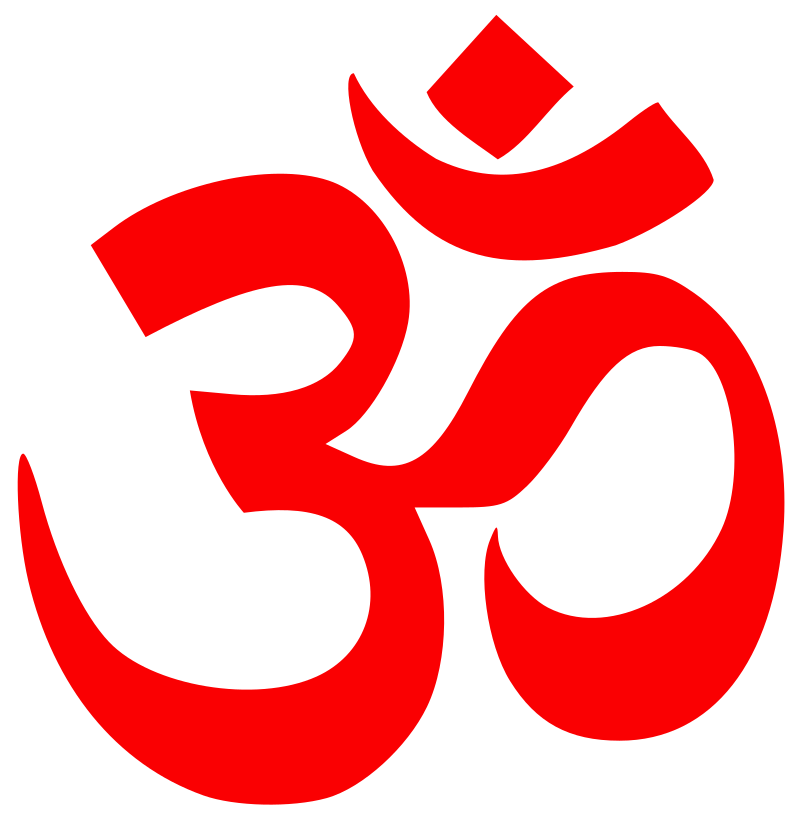
ꣽ, ॐ (Aum, Om) serves as an important mantra in various Indian religions. Specifically, it is an example of a seed syllable mantra (bijamantra). It is believed to be the first sound in Hinduism and as the sonic essence of the absolute divine reality. Longer mantras are phrases with several syllables, names and words. These phrases may have spiritual interpretations such as a name of a deity, a longing for truth, reality, light, immortality, peace, love, knowledge, and action. Examples of longer mantras include the Gayatri Mantra, the Hare Krishna mantra, Om Namah Shivaya, the Mani mantra, the Mantra of Light, the Namokar Mantra, and the Mūl Mantar. Mantras without any actual linguistic meaning are still considered to be musically uplifting and spiritually meaningful.
Excerpted from Wikipedia’s “mantra” article, available under the CC BY-SA 4.0 licence.
Gallery (42)
Available in 87 languages
- Español
- Français
- Deutsch
- 中文
- 日本語
- Русский
- Português
- Italiano
- العربية
- हिन्दी
- Afrikaans
- Albanian
- Albanian
- Armenian
- Azerbaijani
- Bahasa Indonesia
- Balinese
- Bangla
Show 68 more
- Basque
- Bavarian
- Belarusian
- Bulgarian
- Buriat
- Catalan
- Czech
- Danish
- dty
- Esperanto
- Estonian
- Finnish
- Galician
- Georgian
- Greek
- Guarani
- Gujarati
- Hebrew
- Hungarian
- Interlingua
- Kalmyk
- Kannada
- Kashmiri
- Kazakh
- Latin
- Latvian
- Lithuanian
- Lombard
- Malay
- Malayalam
- Marathi
- Minangkabau
- Mingrelian
- Mongolian
- Nederlands
- Nepali
- Newari
- Norwegian
- Norwegian Nynorsk
- Pali
- Polski
- Punjabi
- Romanian
- Sanskrit
- Scots
- Serbian
- Serbian (Latin)
- simple
- Sinhala
- Slovak
- Slovenian
- Sundanese
- Svenska
- Tamil
- Tatar
- Telugu
- Tibetan
- Tiếng Việt
- Toki Pona
- Türkçe
- Ukrainian
- Urdu
- Welsh
- Western Panjabi
- Wu Chinese
- فارسی
- ไทย
- 한국어
via Wikidata sitelinks · CC0