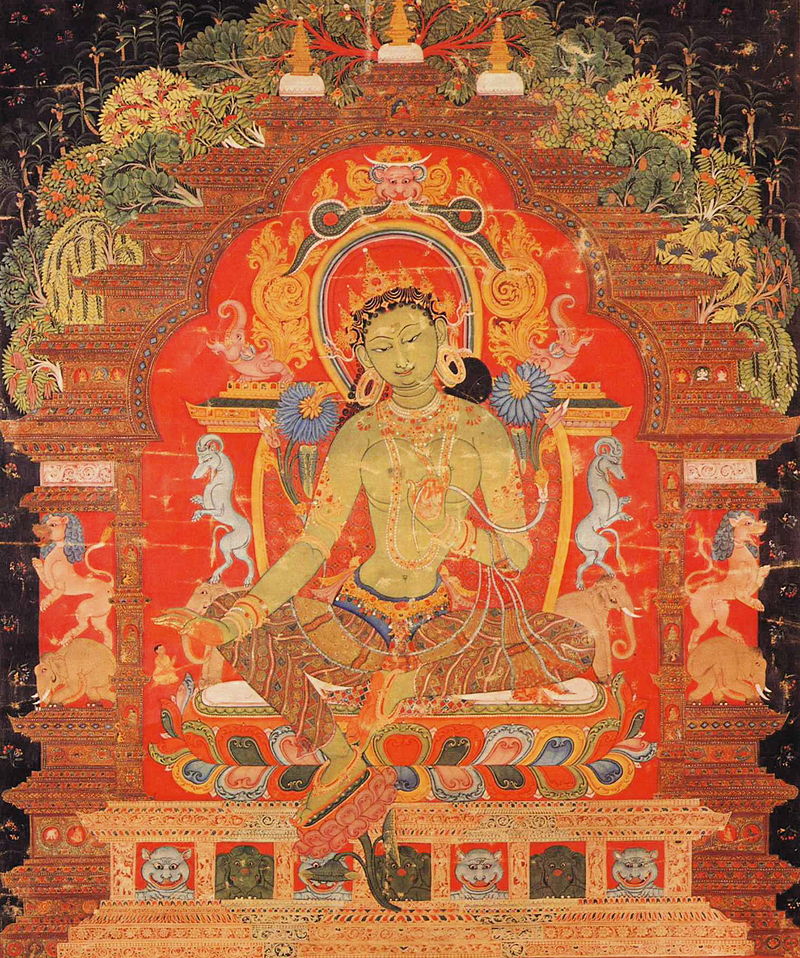
File:Old_Green_Tara.JPG · Wikimedia Commons · See Wikimedia Commons
Key facts
- Sanskrit
- तारा , Tārā
- Chinese
- (Traditional), 多羅菩薩, (Simplified), 多罗菩萨, ( Pinyin : Duōluó Púsà ), 度母, ( Pinyin : Dùmǔ )
- Japanese
- 多羅菩薩 ( たらぼさつ ) , ( romaji : Tara Bosatsu )
- Korean
- 다라보살 , ( RR : Dara Bosal )
- Mongolian
- ᠳ᠋ᠠᠷ᠋᠋᠋᠋᠋᠋ ᠠ᠂, ᠳ᠋ᠠᠷ ᠠ ᠡᠬᠡ , Дарь, Дарь эх, Dara, Dara eke
- Tagalog
- Tala
- Thai
- พระนางตารา
- Tibetan
- རྗེ་བརྩུན་སྒྲོལ་མ།།
- Vietnamese
- Đa La Bồ Tát, Độ Mẫu
- Venerated by
- Mahāyāna , Vajrayāna
via Wikipedia infobox
Wikidata facts
- Instance of
- Hindu mythology
- Gender
- female
- Image
- Green Tara, Kumbum, Gyantse, Tibet, 1993.jpg
Show 3 more facts
- Commons category
- Tārā (Buddhism)
- different from
- Tara
- incarnation of
- Avalokiteśvara
Sources (3)
via Wikidata · CC0
~40 min read
Encyclopedic overview
Tara (Sanskrit: तारा, tārā; Standard Tibetan: སྒྲོལ་མ, dölma), Ārya Tārā (Noble Tara), also known as Jetsün Dölma (Tibetan: rje btsun sgrol ma, meaning: "Venerable Mother of Liberation"), is an important female Buddha in Buddhism, especially revered in Vajrayana Buddhism and Mahayana Buddhism. She may appear as a female bodhisattva in Mahayana Buddhism. In Vajrayana Buddhism, Green Tara is a female Buddha who is a consort of Amoghasiddhi Buddha. Tārā is also known as a saviouress who hears the cries of beings in saṃsāra and saves them from worldly and spiritual danger.
In Vajrayana, she is considered to be a Buddha, and the Tārā Tantra describes her as "a mother who gives birth to the buddhas of the three times" who is also "beyond saṃsāra and nirvāṇa". She is one of the most important female deities in Vajrayana and is found in sources like the Mañjuśrīmūlakalpa, and the Guhyasamāja Tantra. Key Indic Vajrayana texts which focus on Tārā include the Tantra Which Is the Source for All the Functions of Tārā, Mother of All the Tathagatas (Skt. Sarvatathāgatamātṛtārāviśvakarmabhavanāmatantra) and Tārā's Fundamental Ritual Text (Tārāmūlakalpa).
Excerpted from Wikipedia’s “Tārā” article, available under the CC BY-SA 4.0 licence.