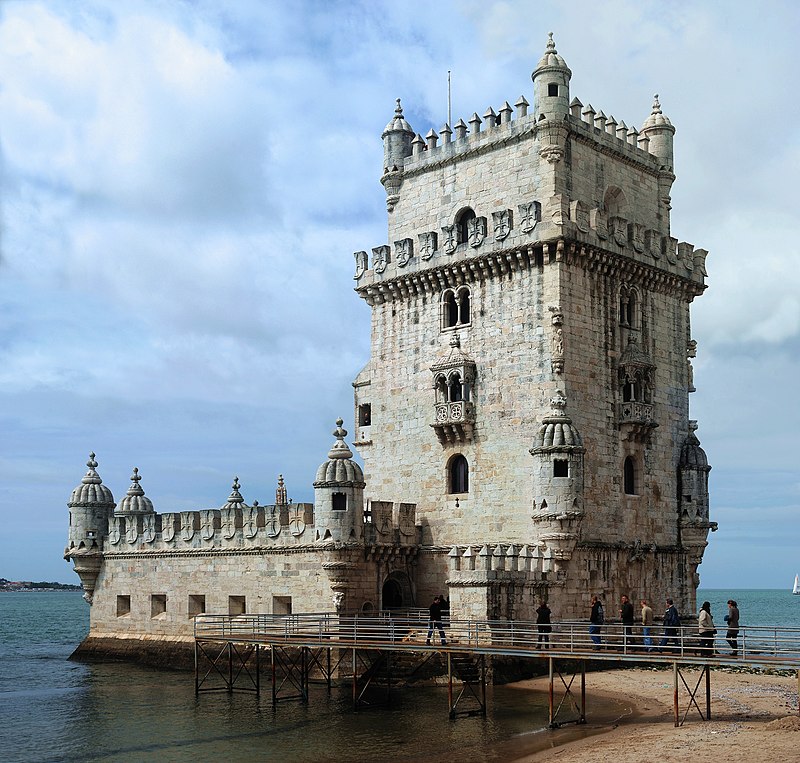
File:Torre_Belém_April_2009-4a.jpg · Wikimedia Commons · See Wikimedia Commons
Manueline
Sign in to saveAlso known as Portuguese late Gothic
The Manueline (, ), occasionally known as Portuguese late Gothic, is the sumptuous, composite Portuguese architectural style originating in the 16th century, during the Portuguese Renaissance and Age of Discoveries. Manueline architecture incorporates maritime elements and representations of the discoveries brought from the voyages of Vasco da Gama and Pedro Álvares Cabral. This innovative style synthesizes aspects of Late Gothic Flamboyant architecture with original motifs and influences of the Plateresque, Mudéjar, Italian, and Flemish architecture. It marks the transition from Late Gothic t
Key facts
- Art movement.name
- Manueline
- Art movement.caption
- Top to bottom: Belém Tower in Lisbon (1514–1519); Chapel of São Miguel at the University of Coimbra in Coimbra (1517-1522); and the altar of the church of the Monastery of Jesus of Setúbal in Setúbal (1491-1495)
- Art movement.country
- Europe, the Americas, Africa and Asia
via Wikipedia infobox
Wikidata facts
- Instance of
- architectural style
- Part of
- Gothic architecture
- Country
- Portuguese Empire
- Image
- View from the Cloisters in the Jerónimos Monastery.JPG
Show 5 more facts
- Commons category
- Manueline architecture
- Commons gallery
- Manueline
- facet of
- architecture of Portugal
- start time
- 1500-00-00
- end time
- 1600-00-00
Sources (2)
via Wikidata · CC0
~8 min read
Encyclopedic overview
8 sectionsContents
- Characteristics
- Examples
- Famous Manueline artists
- Architects
- Painters
- Gallery
- See also
- References
The Manueline (, ), occasionally known as Portuguese late Gothic, is the sumptuous, composite Portuguese architectural style originating in the 16th century, during the Portuguese Renaissance and Age of Discoveries. Manueline architecture incorporates maritime elements and representations of the discoveries brought from the voyages of Vasco da Gama and Pedro Álvares Cabral. This innovative style synthesizes aspects of Late Gothic Flamboyant architecture with original motifs and influences of the Plateresque, Mudéjar, Italian, and Flemish architecture. It marks the transition from Late Gothic to Renaissance. The construction of churches and monasteries in Manueline was largely financed by proceeds of the lucrative spice trade with Africa and India.
The style was given its name, many years later, by Francisco Adolfo de Varnhagen, Viscount of Porto Seguro, in his 1842 book Noticia historica e descriptiva do Mosteiro de Belem, com um glossario de varios termos respectivos principalmente a architectura gothica, in his description of the Jerónimos Monastery. Varnhagen named the style after King Manuel I, whose reign (1495–1521) coincided with its development. The style was much influenced by the astonishing successes of the voyages of discovery of Portuguese navigators, from the coastal areas of Africa to the discovery of Brazil and the ocean routes to the Far East.
Excerpted from Wikipedia’s “Manueline” article, available under the CC BY-SA 4.0 licence.