File:MSH80_mailboxes_along_cowlitz_river_1980.jpg · Wikimedia Commons · See Wikimedia Commons
mudflow
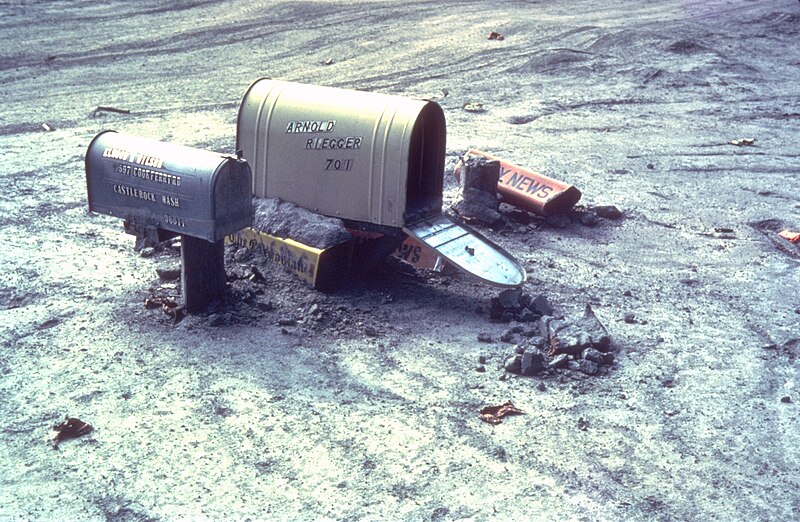
Sign in to savethumb|Mailboxes caught in a mudflow following the May 1980 Mount St. Helens volcanic eruption.
Wikidata facts
- Subclass of
- landslide
Show 1 more fact
- Commons category
- Mudflows
Sources (3)
via Wikidata · CC0
~5 min read
Encyclopedic overview
8 sectionsContents
- Triggering of mudflows
- Mudflows and landslides
- Largest recorded mudflow
- See also
- Citations
- References
- Further reading
- External links
thumb|Mailboxes caught in a mudflow following the May 1980 Mount St. Helens volcanic eruption.
A mudflow, also known as mudslide or mud flow, is a form of mass wasting involving fast-moving flow of debris and dirt that has become liquified by the addition of water. Such flows can move at speeds ranging from . Mudflows contain a significant proportion of clay, which makes them more fluid than debris flows, allowing them to travel farther and across lower slope angles. Both types of flow are generally mixtures of particles with a wide range of sizes, which typically become sorted by size upon deposition.
Excerpted from Wikipedia’s “mudflow” article, available under the CC BY-SA 4.0 licence.