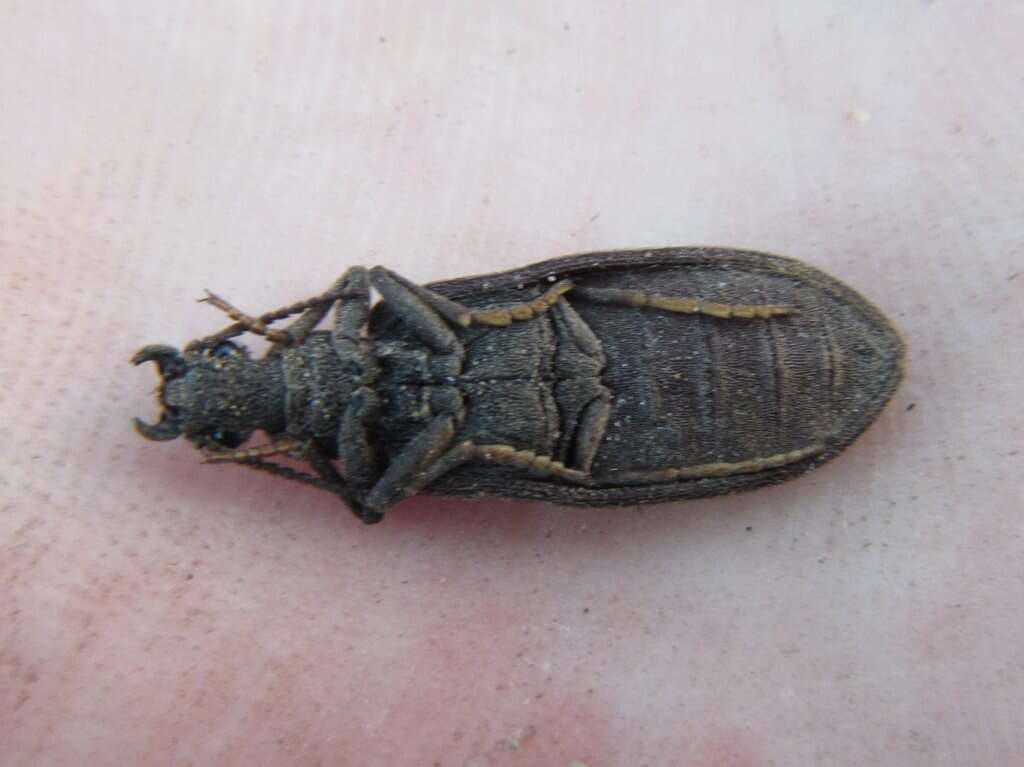
Encyclopedia of Life · EOL (see source)
Ommatidae
Sign in to saveThe Ommatidae are a family of beetles in the suborder Archostemata. The Ommatidae are considered the extant beetle family that has most ancestral characteristics. There are only seven extant species, confined to Australia and South America. However, the geographical distribution was much wider during the Mesozoic spanning across Eurasia and Australia, suggesting that they were widespread on Pangea. So far, over 26 extinct genera containing over 170 species of these beetles have been described. Three extant genera have been assigned to this family: Omma, Tetraphalerus and Beutelius. The family
Species
FAMILY
- KingdomAnimalia
- PhylumArthropoda
- ClassInsecta
- OrderColeoptera
- FamilyOmmatidae
Ommatidae (лат.) — реликтовое семейство жуков из подотряда Архостемата, в состав которого входит около 6 современных видов.
via GBIF
Wikidata facts
- Instance of
- taxon
- Image
- Omma stanleyi CCAL3.0.jpg
Show 5 more facts
- taxon name
- Ommatidae
- taxon rank
- family
- topic's main category
- Category:Ommatidae
- Commons category
- Ommatidae
- temporal range start
- Bathonian
Sources (1)
via Wikidata · CC0
~5 min read
Encyclopedic overview
6 sectionsContents
- Genera
- Extinct genera
- Extant genera
- Gallery
- References
- External links
The Ommatidae are a family of beetles in the suborder Archostemata. The Ommatidae are considered the extant beetle family that has most ancestral characteristics. There are only seven extant species, confined to Australia and South America. However, the geographical distribution was much wider during the Mesozoic spanning across Eurasia and Australia, suggesting that they were widespread on Pangea. So far, over 26 extinct genera containing over 170 species of these beetles have been described. Three extant genera have been assigned to this family: Omma, Tetraphalerus and Beutelius. The family is considered to be a subfamily of Cupedidae by some authors, but have been found to be more closely related to Micromalthidae in molecular phylogenies. A close relationship with Micromalthidae is supported by several morphological characters, including those of the mandibles and male genitalia. Due to their rarity, their ecology is obscure, it is likely that their larvae feed on deadwood.
==Genera== According to Kirejtshuk, 2020 and subsequent literature.
Excerpted from Wikipedia’s “Ommatidae” article, available under the CC BY-SA 4.0 licence.