Szénási, Valentin
Otiorhynchus
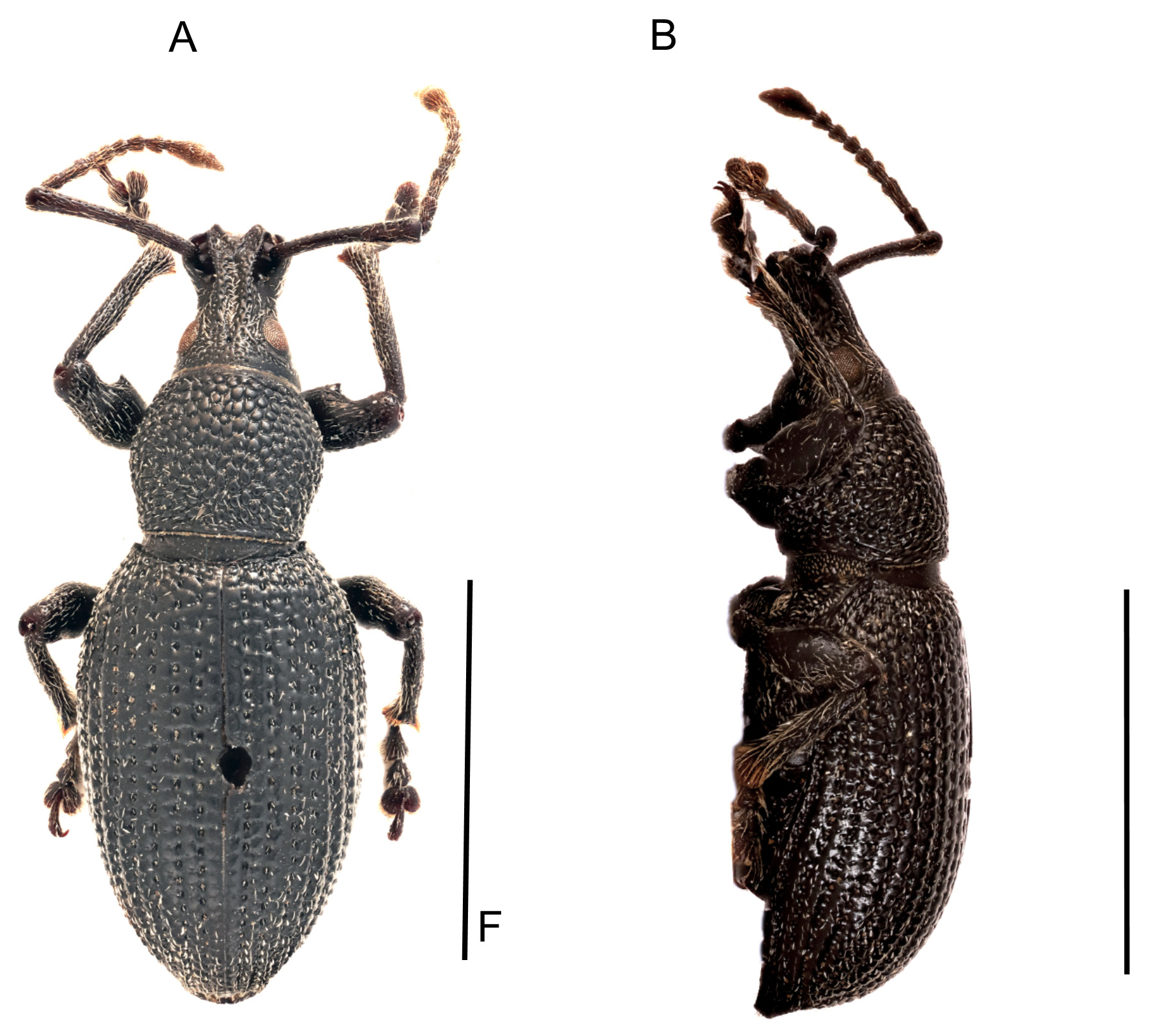
Sign in to saveOtiorhynchus (sometimes misspelled as Otiorrhynchus) is a large genus of weevils in the family Curculionidae. Many species of the genus, particularly the black vine weevil (O. sulcatus) and the strawberry root weevil (O. ovatus), are important pests, both as larvae and as adults. Larvae feed on plant roots. Adults are flightless with fused elytra and feed at night on plant foliage. In many species of the genus at least some races are polyploid and parthenogenetic, while the rest of the races and species are diploid and bisexual. Otiorhynchus weevils, particularly O. scaber, have been a popular
Species
Black Vine Weevil
GENUS
- KingdomAnimalia
- PhylumArthropoda
- ClassInsecta
- OrderColeoptera
- FamilyCurculionidae
The Coleoptera of the British islands :. London :L. Reeve & co.,1887-1913.. biodiversitylibrary.org/page/14385973
via GBIF
Museum specimens
- Specimen records
- 321
- With media
- 86
- Family
- Curculionidae
- Collections
- YPM, UOMNH, RBINS-SCIENTIFIC HERITAGE, UCM, AUM, CLEMSON UNIVERSITY ARTHROPOD COLLECTION
- Recorded in
- United States
Wikidata facts
- Instance of
- taxon
- Parent taxon
- Curculionidae
- Image
- Otiorhynchus sulcatus 23-8-2007 20-10-41.JPG
Show 6 more facts
- Commons category
- Otiorhynchus
- taxon rank
- genus
- taxon name
- Otiorhynchus
- topic's main category
- Category:Otiorhynchus
- taxon common name
- Lapsnuitkevers
- described by source
- Brockhaus and Efron Encyclopedic Dictionary
Sources (1)
via Wikidata · CC0
~2 min read
Encyclopedic overview
3 sectionsContents
- Species
- References
- Further reading
Otiorhynchus (sometimes misspelled as Otiorrhynchus) is a large genus of weevils in the family Curculionidae. Many species of the genus, particularly the black vine weevil (O. sulcatus) and the strawberry root weevil (O. ovatus), are important pests, both as larvae and as adults. Larvae feed on plant roots. Adults are flightless with fused elytra and feed at night on plant foliage. In many species of the genus at least some races are polyploid and parthenogenetic, while the rest of the races and species are diploid and bisexual. Otiorhynchus weevils, particularly O. scaber, have been a popular subject for studies of the evolution of parthenogenesis. The genus is native to the Palearctic region. However, sixteen species were inadvertently introduced to North America and have become widespread there. thumb|right|180px|Otiorhynchus sp. A number of species are troglobites, cave-dwelling animals that lack eyes.
There are over 1,500 species in this genus, which is divided into at least 110 subgenera.
Excerpted from Wikipedia’s “Otiorhynchus” article, available under the CC BY-SA 4.0 licence.
Gallery (5)
Available in 19 languages
- Español
- Français
- Deutsch
- Русский
- Italiano
- العربية
- Cebuano
- Egyptian Arabic
- Finnish
- Icelandic
- Lithuanian
- Nederlands
- Norwegian
- Polski
- Svenska
- Tiếng Việt
- Türkçe
- Waray
via Wikidata sitelinks · CC0