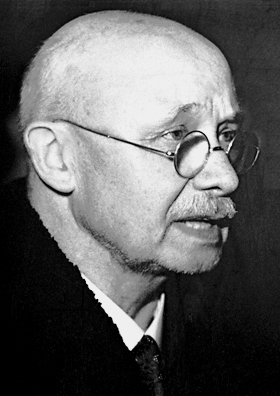
File:Otto_Paul_Hermann_Diels.jpg · Wikimedia Commons · See Wikimedia Commons
OverviewAI-generated
Otto Diels (1876–1954) was a German chemist and university teacher. Born in Hamburg and dying in Kiel, he worked at Humboldt-Universität zu Berlin and Kiel University. He was educated at Humboldt-Universität zu Berlin under doctoral advisor Emil Fischer. His doctoral students included Karl Wilhelm Rosenmund and Kurt Alder.
Diels received the Nobel Prize in Chemistry. He was nominated for the award and is recognized in the Nobel Laureates collection and the Nobel Chemistry collection. He was a member of the German Academy of Sciences Leopoldina, the Bavarian Academy of Sciences and Humanities, and the Göttingen Academy of Sciences and Humanities in Lower Saxony.
He spoke German and was described by the Armenian Soviet Encyclopedia. His father was Hermann Diels, and his siblings were Ludwig Diels and Paul Diels. He had an Erdős number of 7.
Synthesized by Vinony from 26 facts across 3 sources: Wikidata, Nobel Prize, Vinony collections. Generated from structured data (not the Wikipedia text) and checked against those facts — may still contain errors.
Nobel Prize
- The Nobel Prize in Chemistry1950
“for their discovery and development of the diene synthesis”
Shared · 1/2 portion
Wikidata facts
- Instance of
- human
- Given name
- Otto
- Gender
- male
- Citizenship
- Germany
- Place of birth
- Hamburg
- Place of death
- Kiel
- Father
- Hermann Diels
- Sibling
- Paul Diels
- Occupation
- university teacher
- Educated at
- Humboldt-Universität zu Berlin
- Employer
- Humboldt-Universität zu Berlin
- Languages spoken
- German
- Doctoral advisor
- Emil Fischer
- Student of
- Emil Fischer
- Doctoral student
- Kurt Alder
- Field of work
- chemistry
- Image
- Otto Paul Hermann Diels.jpg
Show 10 more facts
- date of birth
- 1876-01-23
- date of death
- 1954-03-07
- Commons category
- Otto Diels
- Erdős number
- 7
- described by source
- Armenian Soviet Encyclopedia
- nominated for
- Nobel Prize in Chemistry
- name in native language
- Otto Diels
- P8168
- Diversidoris
- interested in
- chemistry
via Wikidata · CC0
~3 min read
Encyclopedic overview
Otto Paul Hermann Diels ( German pronunciation: [ˈɔto ˈdiːls] ; 23 January 1876 – 7 March 1954) was a German chemist. His most notable work was done with Kurt Alder on the Diels–Alder reaction, a method for cyclohexene synthesis. The pair was awarded the Nobel Prize in Chemistry in 1950 for their work. Their method of synthesizing cyclic organic compounds proved valuable for the manufacture of synthetic rubber and plastic. He completed his education at the University of Berlin, where he later worked. Diels was employed at the University of Kiel when he completed his Nobel Prize-winning work, and remained there until he retired in 1945. Diels was married, with five children.
Early life
Excerpted from Wikipedia’s “Otto Diels” article, available under the CC BY-SA 4.0 licence.
Gallery (3)
Available in 68 languages
- Español
- Français
- Deutsch
- 中文
- 日本語
- Русский
- Português
- Italiano
- العربية
- Afrikaans
- Albanian
- Armenian
- azb
- Azerbaijani
- Bahasa Indonesia
- Bangla
- Basque
- Belarusian
Show 49 more
- Bulgarian
- Catalan
- Czech
- Danish
- Egyptian Arabic
- Esperanto
- Finnish
- Galician
- Georgian
- Greek
- Hakka Chinese
- Hebrew
- Hungarian
- hyw
- Ido
- Irish
- Kannada
- Latin
- Lithuanian
- Luxembourgish
- Malay
- Mazanderani
- Mingrelian
- Nederlands
- Norwegian
- Occitan
- Polski
- Romanian
- Scottish Gaelic
- Serbian
- Serbian (Latin)
- skr
- Slovak
- Svenska
- Swahili
- Tamil
- Tatar
- Tiếng Việt
- Türkçe
- Ukrainian
- Urdu
- Uzbek
- Western Panjabi
- Wu Chinese
- Yoruba
- zh_min_nan
- zh_yue
- فارسی
- 한국어
via Wikidata sitelinks · CC0