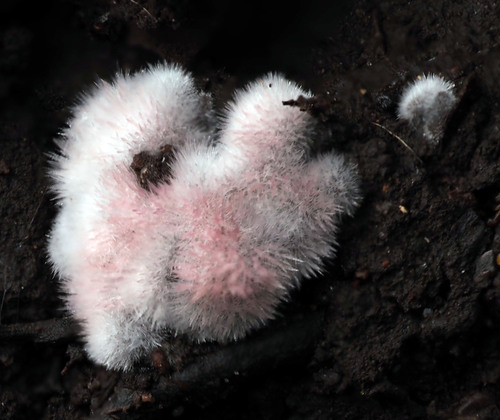
(c) Liz Weinstein // A.K.A. mushroomphotography, some rights reserved (CC BY-NC-ND), uploaded by Liz Weinstein // A.K.A. mushroomphotography · cc-by-nc-nd
Pachyphlodes
Sign in to savePachyphlodes, formerly Pachyphloeus, is a genus of Ascomycete fungi (Pezizales, Pezizaceae) that forms hypogeous fruit bodies, aka truffles. Pachyphloeus citrinus is known as the "berry truffle" and Pachyphloeus austro-oregonensis is known as the "southern Oregon berry truffle". The genus forms ectomycorrhizal mutualisms with tree roots, usually oaks. Truffles require animals to dig them up and eat them, in order to disperse their spores.
In the Vinony graph
Vinony's link graph records 3 inbound references to Pachyphlodes, and connects out to fungi, Quercus and Wikidata.
It is catalogued under topics including Pezizaceae, Pezizales genera and Taxonbars with multiple manual Wikidata items.
Vinony links it to 3 Wikipedia language editions.
Species
GENUS
- KingdomFungi
- PhylumAscomycota
- ClassPezizomycetes
- OrderPezizales
- FamilyPezizaceae
via GBIF
Museum specimens
- Specimen records
- 160
- With media
- 22
- Family
- Pezizaceae
- Collections
- DUKE, FLAS, CUP
- Recorded in
- Mexico, United States
Wikidata facts
- Instance of
- taxon
- Parent taxon
- Pezizaceae
- Image
- Pachyphlodes brunnea (10.3897-mycokeys.82.67685) Figure 2.jpg
Show 4 more facts
- taxon name
- Pachyphlodes
- taxon rank
- genus
- Commons category
- Pachyphlodes
- taxon author citation
- Zobel
Sources (1)
via Wikidata · CC0
~1 min read
Encyclopedic overview
2 sectionsContents
- Species
- References
Pachyphlodes, formerly Pachyphloeus, is a genus of Ascomycete fungi (Pezizales, Pezizaceae) that forms hypogeous fruit bodies, aka truffles. Pachyphloeus citrinus is known as the "berry truffle" and Pachyphloeus austro-oregonensis is known as the "southern Oregon berry truffle". The genus forms ectomycorrhizal mutualisms with tree roots, usually oaks. Truffles require animals to dig them up and eat them, in order to disperse their spores.
==Species== Pachyphloeus austro-oregonensis Pachyphloeus carneus Pachyphloeus citrinus Pachyphloeus conglomeratus Pachyphloeus depressus – China Pachyphloeus lateritius Pachyphloeus ligericus Pachyphloeus macrosporus Pachyphloeus marroninus Pachyphloeus melanoxanthus Pachyphloeus prieguensis Pachyphloeus saccardoi Pachyphloeus thysellii Pachyphloeus virescens
Excerpted from Wikipedia’s “Pachyphlodes” article, available under the CC BY-SA 4.0 licence.