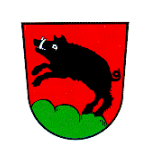
File:Wappen_Parkstein.png · Wikimedia Commons · See Wikimedia Commons
Parkstein
Sign in to saveParkstein (; Northern Bavarian: Parkstoa) is a municipality in the district of Neustadt an der Waldnaab in Bavaria in Germany. In 2020, it counted approximately 2,300 inhabitants. The origins of its castle, built atop a conical shaped mountain, also called the Parkstein, date back to around the year 1000. A first written account of its existence can be traced back to the year 1053 in the documentations of the monks of Niederalteich of the Reichstag in Merseburg. Parkstein was chartered in 1435.
Key facts
- German location.image_coa
- Wappen_Parkstein.png
- German location.image_plan
- Parkstein in NEW.svg
- German location.state
- Bayern
- German location.region
- Oberpfalz
- German location.district
- Neustadt a.d.Waldnaab
- German location.Verwaltungsgemeinschaft
- Neustadt an der Waldnaab
- German location.elevation
- 547
- German location.area
- 30.84
- German location.postal_code
- 92711
- German location.area_code
- 09602
- German location.licence
- NEW
- German location.Gemeindeschlüssel
- 09 3 74 144
- German location.divisions
- 13 Ortsteile
- German location.website
- www.parkstein.de
- German location.mayor
- Reinhard Sollfrank
- German location.leader_term
- 2020–26
via Wikipedia infobox
Wikidata facts
- Country
- Germany
- Located in
- Landkreis Neustadt an der Waldnaab
- Population
- 2359
- Area
- 30.84
- Elevation
- 547
- Time zone
- UTC+02:00
- Official website
- www.parkstein.de
- Image
- St Pankratius - Parkstein 010.jpg
- Households
- 647
- Dialing code
- 09602
- Licence plate code
- NEW
Show 6 more facts
- Commons category
- Parkstein
- postal code
- 92711
- number of houses
- 457
- P8168
- Hans Deppe
- P12749
- Markus Husterer
- hashtag
- Parkstein
Sources (9)
via Wikidata · CC0
~1 min read
Encyclopedic overview
2 sectionsContents
- References
- External links
Parkstein (; Northern Bavarian: Parkstoa) is a municipality in the district of Neustadt an der Waldnaab in Bavaria in Germany. In 2020, it counted approximately 2,300 inhabitants. The origins of its castle, built atop a conical shaped mountain, also called the Parkstein, date back to around the year 1000. A first written account of its existence can be traced back to the year 1053 in the documentations of the monks of Niederalteich of the Reichstag in Merseburg. Parkstein was chartered in 1435.
Most likely in November 1796, Alexander von Humboldt called the 24-million-year-old basalt formation the most beautiful he had encountered in Europe. According to the Bavarian State Geology Office, during the Cenozoic, from Paleocene to the Pliocene epochs, a number of active volcanoes produced liquid magma in Northern Bavaria, mostly due to the continental collision of Europe and Africa. As a result, not only the Alps but a number of fissures and cracks began to form throughout central Europe where magma could rise. Most of the Parkstein's magma cooled below the surface, leading to the crystalline column formation that is now exposed as a result of erosion.
Excerpted from Wikipedia’s “Parkstein” article, available under the CC BY-SA 4.0 licence.
Gallery (2)
On the map
2 mapped locations