File:Eino_Niemisen_pahoinpitely.jpg · Wikimedia Commons · See Wikimedia Commons
persecution
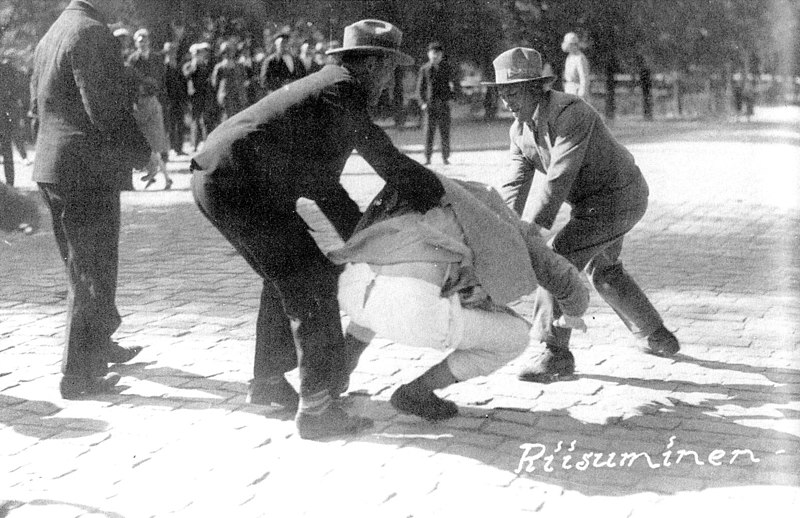
Sign in to savethumb|Members of the right-wing Lapua Movement assault a former Red officer and the publisher of the communist newspaper at the [[Vaasa riot on June 4, 1930, in Vaasa, Finland.]] Persecution is the systematic mistreatment of an individual or group by another individual or group. The most common forms are religious persecution, racism, and political persecution, though there is naturally some overlap between these terms. The inflicting of suffering, harassment, imprisonment, internment, fear or pain are all factors that may establish persecution, but not all suffering will necessarily establish
Wikidata facts
- Subclass of
- occurrence
Show 4 more facts
- topic's main category
- Category:Persecution
- Commons category
- Persecution
- in opposition to
- group of humans
- P8168
- Andy Sutton
via Wikidata · CC0
~40 min read
Encyclopedic overview
38 sectionsContents
- International law
- Religious
- Atheists
- Baháʼís
- Buddhists
- Christians
- Church of Jesus Christ of Latter-day Saints (Mormonism)
- Jehovah's Witnesses
- Copts
- Dogons
- Druze
- Falun Gong
- Hindus
- Jews
- Muslims
- Pagans
- Philosophers
- Serers
- Sikhs
- Yazidis
- Zoroastrians
- Ethnic
- African Americans
- Assyrians
- Hazara people
- Roma
- Rohingyas
- Sri Lankan Tamils
- Uyghurs
- Based on genetics
- People with albinism
- People with autism
- LGBT
- See also
- Notes
- References
- Sources
- External links
thumb|Members of the right-wing Lapua Movement assault a former Red officer and the publisher of the communist newspaper at the [[Vaasa riot on June 4, 1930, in Vaasa, Finland.]] Persecution is the systematic mistreatment of an individual or group by another individual or group. The most common forms are religious persecution, racism, and political persecution, though there is naturally some overlap between these terms. The inflicting of suffering, harassment, imprisonment, internment, fear or pain are all factors that may establish persecution, but not all suffering will necessarily establish persecution. The threshold of severity has been a topic of much debate.
==International law== As part of the Nuremberg Principles, crimes against humanity are part of international law. Principle VI of the Nuremberg Principles states that
Excerpted from Wikipedia’s “persecution” article, available under the CC BY-SA 4.0 licence.