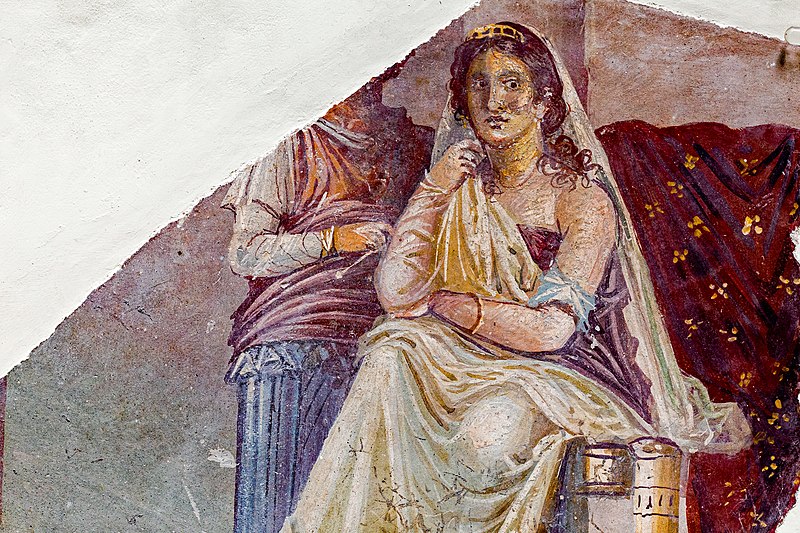
File:Wall_painting_-_Phaidra_and_her_nurse_-_Pompeii_-_London_BM_GR_1856-0625-5_-_02.jpg · Wikimedia Commons · See Wikimedia Commons
Phaedra
Sign in to savewife of Theseus in Greek mythology
Key facts
- Abode
- Crete, later Athens
- Parents
- Minos and Pasiphae or Crete
- Siblings
- Catreus , Ariadne , Androgeus , Xenodice , Acacallis , Glaucus and Deucalion ; the Minotaur
- Spouse
- Theseus
- Offspring
- Acamas and Demophon
via Wikipedia infobox
Wikidata facts
- Gender
- female
- Spouse
- Theseus
- Child
- Acamas
- Father
- Minos
- Mother
- Pasiphaë
- Sibling
- Deucalion of Crete
- Image
- Jozef Geirnaert - Phaedra and Hippolytus.jpg
Show 5 more facts
- Commons category
- Phaedra
- manner of death
- Suicide
- different from
- Fedra
- name in native language
- Φαίδρα
- worshipped by
- Greek mythology
Sources (2)
via Wikidata · CC0
~9 min read
Encyclopedic overview
In Greek mythology, Phaedra (/ˈfiːdrə, ˈfɛdrə/; Ancient Greek: Φαίδρα, romanized: Phaídra) was a Cretan princess. Her name derives from the Greek word φαιδρός (phaidros), which means "bright". According to legend, she was the daughter of Minos and Pasiphaë, and the wife of Theseus. Later in life, Phaedra fell in love with her stepson, Hippolytus. After he rejected her advances, she accused him of trying to rape her. In response, Theseus prayed to Poseidon and asked the god to kill Hippolytus, which he did. Phaedra then committed suicide.
The story of Phaedra is told in Euripides's play Hippolytus, Seneca the Younger's Phaedra, and Ovid's Heroides. It has inspired many modern works of art and literature, including a play by Jean Racine.
Excerpted from Wikipedia’s “Phaedra” article, available under the CC BY-SA 4.0 licence.