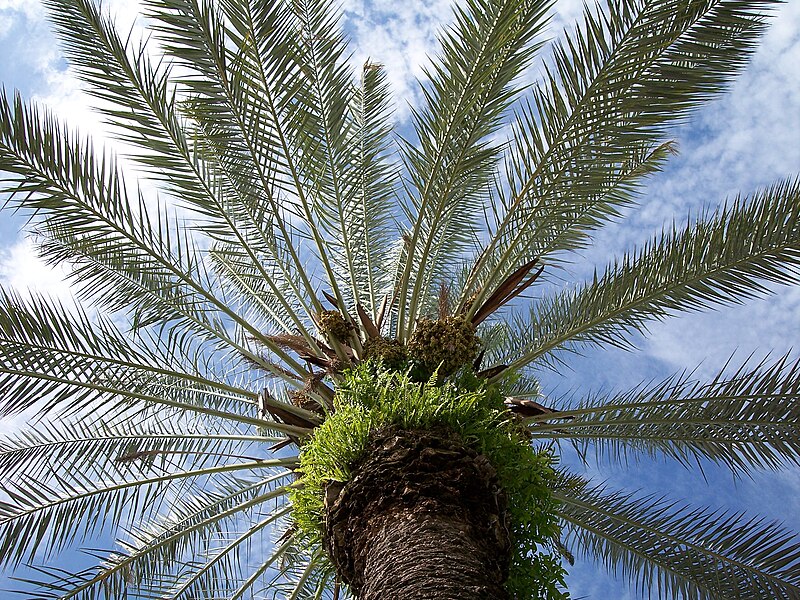
File:Phoenix_dactylifera100_4209.JPG · Wikimedia Commons · See Wikimedia Commons
Phoenix is a genus of palm trees found in warm regions of Africa, Asia, and the Middle East, most famously represented by the date palm which has been cultivated for thousands of years. It matters because date palms provide an important food source and have deep cultural and economic significance in many parts of the world.
AI-generated from the Wikipedia summary — may contain errors.
Species
Canary Island palm
Genus
- PhylumTracheophyta
- ClassMagnoliopsida
- OrderArecales
- FamilyArecaceae
刺葵属(学名:Phoenix)又名海枣属,是棕榈目棕榈科下的一个属,为灌木或乔木植物。该属共有约17种,分布于热带非洲和亚洲。
via · Kew POWO
Museum specimens
- Specimen records
- 371
- With media
- 183
- Family
- Arecaceae
- Collections
- INECOL, NMMNHS, US, RSA, SD, CDA
- Recorded in
- Mexico, United States, Brazil, Cuba, India, Argentina, Comoros, Japan
Wikidata facts
- Instance of
- taxon
- Image
- Phoenix dactylifera100 4209.JPG
Show 8 more facts
- taxon rank
- genus
- Commons category
- Phoenix (Arecaceae)
- taxon name
- Phoenix
- topic's main category
- Category:Phoenix (plant)
- taxon common name
- 海棗屬
- taxonomic type
- Phoenix dactylifera
- different from
- Phoenix
via Wikidata · CC0
~6 min read
Encyclopedic overview
Phoenix is a genus of 14 species of palms, native to an area starting from the Canary Islands in the west, across northern and central Africa, to the extreme southeast of Europe (Crete), and continuing throughout southern Asia, from Anatolia east to southern China and Malaysia. The diverse habitats they occupy include swamps, deserts, and mangrove sea coasts. Most Phoenix species originate in semi-arid regions, but usually occur near high groundwater levels, rivers, or springs. The genus is unusual among members of subfamily Coryphoideae in having pinnate, rather than palmate leaves; tribe Caryoteae also have pinnate or bipinnate leaves. The palms were more numerous and widespread in the past than they are at present. Some Phoenix palms have become naturalised in other parts of the world; in particular, the date palm's long history of cultivation means that escaped plants in the past have long-since become ingrained into the native ecosystems of countries far from its original range in the Middle East.
Etymology
Excerpted from Wikipedia’s “Phoenix” article, available under the CC BY-SA 4.0 licence.