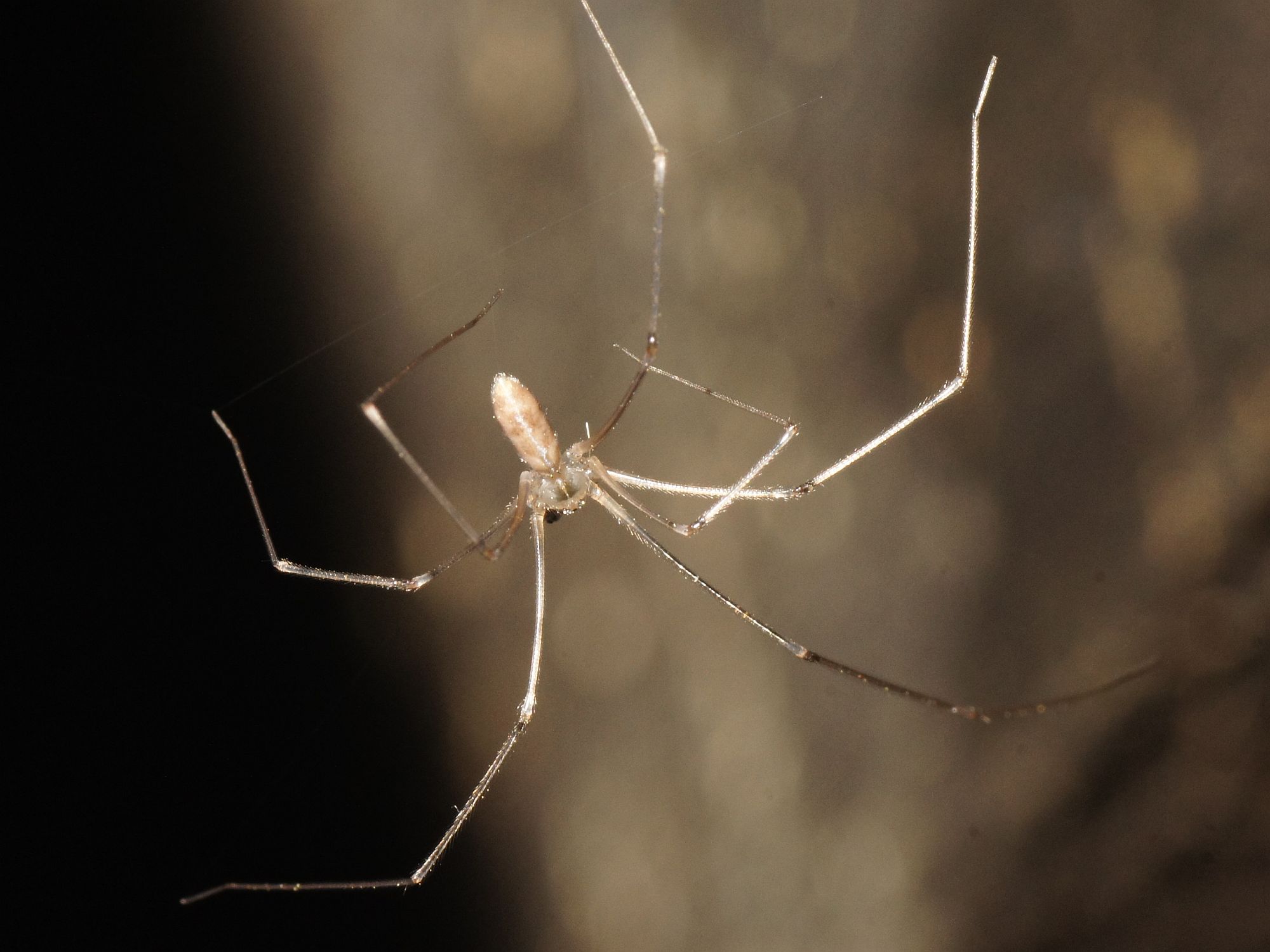
Image from GBIF · CC BY-NC-ND
Pholcus phalangioides
Sign in to saveAlso known as long-bodied cellar spider, skull spider, daddy long-legs spider
species of arachnid
OverviewAI-generated
Pholcus phalangioides is a species of arachnid belonging to the family Pholcidae. It is classified within the order Araneae, class Arachnida, and phylum Arthropoda. The taxon was described by Fuesslin in 1775 and is currently accepted as a valid species. Common names for this organism include Long-bodied Cellar Spider, daddy long legs, Mejeredderkop, Große Zitterspinne, and Torvatrøll.
Records of this species have been documented in Thisted Municipality and Texas. Institutional collections holding records for Pholcus phalangioides include UAM, DMNS, USNM, ISM, and CHAS, with specimens found in the United States and Slovenia.
Synthesized by Vinony from 37 facts across 7 sources: Wikidata, GBIF, iNaturalist, Gbif Occ, WoRMS, iDigBio, Vinony graph. Generated from structured data (not the Wikipedia text) and checked against those facts — may still contain errors.
Species
daddy long legs
SPECIES
- KingdomAnimalia
- PhylumArthropoda
- ClassArachnida
- OrderAraneae
- FamilyPholcidae
Die Große Zitterspinne (Pholcus phalangioides) ist eine Webspinnenart aus der Familie der Zitterspinnen (Pholcidae). Der Name „Zitterspinne“ leitet sich vom Defensiv-Verhalten dieser Spinnen ab. Fühlen sie sich bedroht, beginnen sie, sich und damit ihr Netz in Schwingung zu versetzen. Dadurch verschwimmt ihr Körper vor dem Hintergrund und sie werden fast unsichtbar (vor den hellen, ungemusterten Wänden in Häusern funktioniert das weniger gut). Die Ausprägung dieses Verhaltens nimmt mit zunehmendem Alter der Tiere und durch Kontakt mit Menschen ab. Die Große Zitterspinne entstammt den Subtropen und hat sich von dort aus nahezu weltweit verbreitet. Lediglich in kühlen und kalten Klimaten fehlt sie. Als ausgesprochene Höhlenart ist sie heute in fast jedem Gebäude, besonders in Kellern, zu finden. Von der Arachnologischen Gesellschaft wurde die Große Zitterspinne zur Spinne des Jahres 2003 gewählt. Inhaltsverzeichnis 1 Verbreitungsgebiet 2 Erscheinungsbild 3 Ernährung 4 Fortpflanzung 5 Literatur 6 Weblinks Verbreitungsgebiet Verbreitung der Großen Zitterspinne Die Große Zitterspinne ist in allen gemäßigten Klimazonen der Erde vertreten. In der Wüste und jenseits des Polarkreises kommt
via GBIF
Museum specimens
- Specimen records
- 855
- With media
- 14
- Family
- Pholcidae
- Collections
- UAM, DMNS, USNM, ISM, CHAS
- Recorded in
- United States, Slovenia
Wikidata facts
Show 8 more facts
Sources (8)
via Wikidata · CC0
~22 min read
Encyclopedic overview
Pholcus phalangioides, commonly known as the cosmopolitan cellar spider, long-bodied cellar spider, or one of various types called a daddy long-legs spider, is a spider of the family Pholcidae. It was first described in 1775 by the Swiss entomologist Johann Kaspar Füssli (his surname is also spelled Fuesslin) as Aranea phalangoides. Its common name of "daddy long-legs" should not be confused with a different arachnid group with the same common name, the harvestman (Opiliones), or the crane flies of the superfamily Tipuloidea.
Females have a body length of about 8 mm while males tend to be slightly smaller. The length of the spider's legs are on average 5 or 6 times the length of its body. Pholcus phalangioides has a habit of living on the ceilings of rooms, caves, garages or cellars.
Excerpted from Wikipedia’s “Pholcus phalangioides” article, available under the CC BY-SA 4.0 licence.