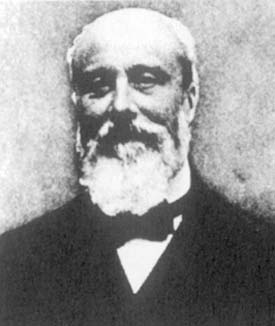
File:Pierre_Duhem.jpg · Wikimedia Commons · See Wikimedia Commons
Pierre Duhem
Sign in to saveAlso known as Pierre Maurice Marie Duhem, Pierre Maurice Duhem
French physicist and historian of science (1861-1916)
OverviewAI-generated
Pierre Duhem was a French philosopher, physicist, chemist, and university teacher born in the 2nd arrondissement of Paris in 1861. He was educated at the École Normale Supérieure and Collège Stanislas de Paris. His professional career included teaching positions at the University of Lille, University of Rennes, and University of Bordeaux. He was a member of the Ligue de la Patrie Française and the French Academy of Sciences.
Duhem’s work focused on the philosophy of science and epistemology. He was influenced by Blaise Pascal and Ernst Mach. His notable publications include *The Aim and Structure of Physical Theory*, *Théories de la Chaleur*, *Système du Monde*, *Estudos Sobre Leonardo Da Vinci*, and *Essai sur la notion de théorie physique de Platon à Galilée*. He was nominated for the Nobel Prize in Physics. Duhem died in Cabrespine in 1916.
Synthesized by Vinony from 24 facts across 2 sources: Wikidata, Open Library. Generated from structured data (not the Wikipedia text) and checked against those facts — may still contain errors.
Person · Open Library
- Works
- 14
Top works
- The Aim and Structure of Physical Theory
- Théories de la Chaleur
- Système du Monde
- Estudos Sobre Leonardo Da Vinci
- Essai sur la notion de théorie physique de Platon à Galilée
via Open Library + Wikidata
Key facts
- Born
- Pierre Maurice Marie Duhem , ( 1861-06-09 ) 9 June 1861, Paris, France
- Died
- 14 September 1916 (1916-09-14) (aged 55), Cabrespine , France
- Education
- École Normale Supérieure ( licentiate , 1884) University of Paris (doctorate, 1888)
- Known for
- Clausius–Duhem inequality , Gibbs–Duhem equation , Duhem–Margules equation , Duhem–Quine thesis , Confirmation holism , Thermodynamic potential , Energeticism , Historical epistemology , Conventionalism
- Fields
- Thermodynamics , philosophy of science , history of science
- Institutions
- University of Bordeaux
- Thesis
- De l'aimantation par influence (1888)
via Wikipedia infobox
Wikidata facts
- Instance of
- human
- Given name
- Pierre
- Gender
- male
- Citizenship
- France
- Place of birth
- 2nd arrondissement of Paris
- Place of death
- Cabrespine
- Occupation
- historian
- Educated at
- Collège Stanislas de Paris
- Employer
- University of Bordeaux
- Languages spoken
- French
- Religion
- Catholic Church
- Field of work
- philosophy of science
- Image
- Pierre Duhem.jpg
Show 12 more facts
- date of birth
- 1861-06-10
- date of death
- 1916-09-14
- member of
- French Academy of Sciences
- Commons category
- Pierre Duhem
- influenced by
- Ernst Mach
- nominated for
- Nobel Prize in Physics
- name in native language
- Pierre Duhem
- pseudonym
- Ch. Clérice
- writing language
- French
- Commons Creator page
- Pierre Duhem
- contributed to creative work
- Popular Science
- maintained by WikiProject
- WikiProject Mathematics
via Wikidata · CC0
~24 min read
Encyclopedic overview
Pierre Maurice Marie Duhem ( French: [pjɛʁ mɔʁis maʁi dy.ɛm, moʁ-] ; 9 June 1861 – 14 September 1916) was a French theoretical physicist who made significant contributions to thermodynamics, hydrodynamics, and the theory of elasticity. Duhem was also a prolific historian of science, noted especially for his pioneering work on the European Middle Ages. As a philosopher of science, Duhem is credited with the "Duhem–Quine thesis" on the indeterminacy of experimental criteria. Duhem's opposition to positivism was partly informed by his traditionalist Catholicism, an outlook that put him at odds with the dominant academic currents in France during his lifetime.
Early life and education
Excerpted from Wikipedia’s “Pierre Duhem” article, available under the CC BY-SA 4.0 licence.