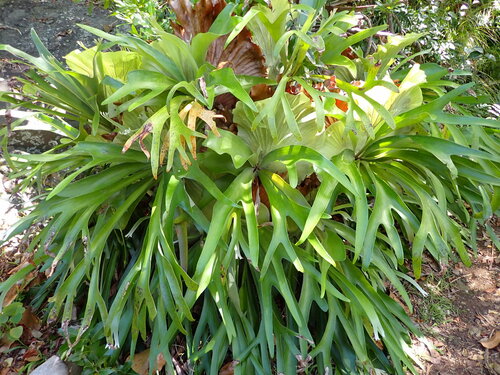
(c) Leon Perrie, some rights reserved (CC BY), uploaded by Leon Perrie · cc-by
Platycerium
Sign in to saveAlso known as Staghorn fern, Stagshorn fern
Platycerium is a genus of about 18 fern species in the polypod family, Polypodiaceae. Ferns in this genus are widely known as staghorn or elkhorn ferns due to their uniquely shaped fronds. This genus is epiphytic and is native to tropical and temperate areas of South America, Africa, Southeast Asia, Australia, and New Guinea.
Species
Elkhorn fern
GENUS
- KingdomPlantae
- PhylumTracheophyta
- ClassPolypodiopsida
- OrderPolypodiales
- FamilyPolypodiaceae
via GBIF
Museum specimens
- Specimen records
- 321
- With media
- 310
- Family
- Polypodiaceae
- Collections
- INECOL, MICH, US, GH, UFERSA, A
- Recorded in
- United States, Malaysia, Bolivia, Papua New Guinea, Brasil, Indonesia
Wikidata facts
- Instance of
- taxon
- Image
- Platycerium bifurcatum.jpg
Show 7 more facts
- Commons category
- Platycerium
- taxon rank
- genus
- taxon name
- Platycerium
- topic's main category
- Category:Platycerium
- taxon common name
- 鹿角蕨属
- taxonomic type
- Platycerium alcicorne
Sources (2)
via Wikidata · CC0
~6 min read
Encyclopedic overview
5 sectionsContents
- Description
- Species
- Cultivation
- Gallery
- References
Platycerium is a genus of about 18 fern species in the polypod family, Polypodiaceae. Ferns in this genus are widely known as staghorn or elkhorn ferns due to their uniquely shaped fronds. This genus is epiphytic and is native to tropical and temperate areas of South America, Africa, Southeast Asia, Australia, and New Guinea.
==Description== Platycerium sporophytes (adult plants) have tufted roots, growing from a short rhizome, and bear two types of fronds - basal and fertile fronds. Basal fronds are sterile, shield- or kidney-shaped, and laminate against the tree, to protect the fern's roots from damage and desiccation. In some Platycerium species, the top margin of these fronds will grow into an open crown of lobes; catching rainwater, falling forest litter, bird/animal droppings, and even an occasional fallen deceased animal, these plants build up their own "compost" system of nutrition over many years.
Excerpted from Wikipedia’s “Platycerium” article, available under the CC BY-SA 4.0 licence.