Encyclopedia of Life · EOL (see source)
Species
Least ConcernMaximum longevity: 17.2 years (wild) Observations: Though some animals may breed at age 1, most only breed after age 2. The average longevity in the wild is about 2.5 years. The IMR was estimated based on data from wild populations (http://www.fs.fed.us/database/feis/). In captivity, animals might live up to 20 years, though these claims have not been verified.
via IUCN
Wikidata facts
Show 8 more facts
- taxon rank
- species
- IUCN conservation status
- Least Concern
- Commons category
- Falco mexicanus
- taxon name
- Falco mexicanus
- Commons gallery
- Falco mexicanus
- taxon common name
- prerijski sokol
- diel cycle
- diurnality
- short name
- F. mexicanus
Sources (2)
via Wikidata · CC0
~25 min read
Encyclopedic overview
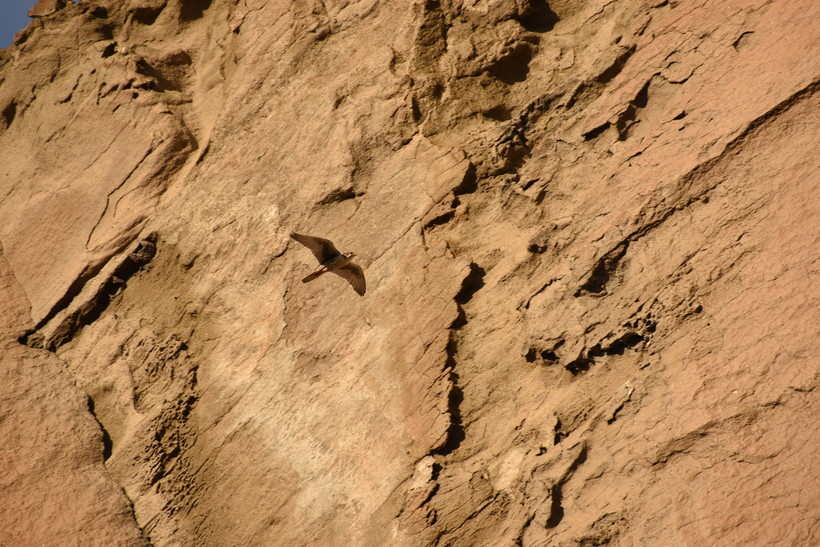
A prairie falcon in Arizona.
The prairie falcon (Falco mexicanus) is a medium-sized falcon found in Western North America. A separate species from the peregrine falcon, with which it shares some visual similarities, the prairie falcon is, essentially, an arid-climate divergence of earlier peregrine falcon lineage. It is thus able to thrive on a more meager, opportunistic diet compared to that of the peregrine, and is generally lighter in weight than a peregrine of similar wingspan. Having evolved in harsher and desert environments, often with low prey density, the prairie falcon has developed into an aggressive and opportunistic hunter of a wide range of both mammalian and avian prey, as well as occasional reptiles. It will regularly take prey from the size of sparrows or finches to birds approximately its own weight, and occasionally much larger.
Excerpted from Wikipedia’s “prairie falcon” article, available under the CC BY-SA 4.0 licence.