Encyclopedia of Life · EOL (see source)
Proscylliidae
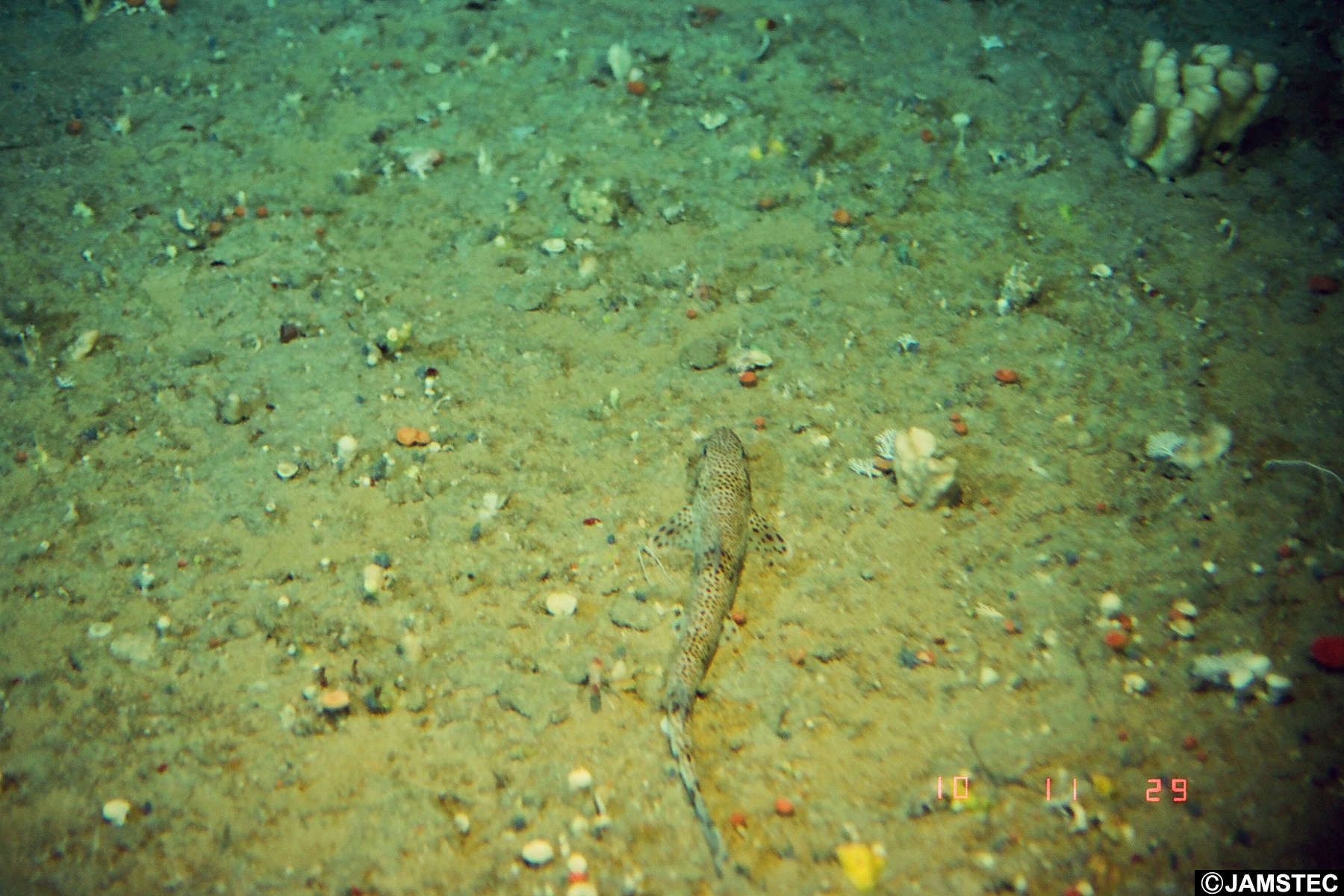
Sign in to saveThe finback catsharks are a small family, the Proscylliidae, of ground sharks. They can be found in warm seas worldwide and are often the most numerous and common shark in tropical regions. They are generally less than 1 m in length, and are slow-moving predators that feed on bony fish and small invertebrates. Although some bear live young, the majority lay eggs with almost fully developed young; these egg cases, known as "mermaid's purses", are unique in appearance to each species.
Species
finback catsharks
FAMILY
- KingdomAnimalia
- PhylumChordata
- ClassElasmobranchii
- OrderCarcharhiniformes
- FamilyProscylliidae
タイワンザメ科 Proscylliidae はメジロザメ目の下位分類群の一つ。
via GBIF
Wikidata facts
- Instance of
- taxon
- Parent taxon
- Carcharhiniformes
- Image
- Gollum attenuatus (Slender smooth-hound).gif
Show 5 more facts
- Commons category
- Proscylliidae
- taxon rank
- family
- taxon name
- Proscylliidae
- Code of nomenclature
- International Code of Zoological Nomenclature
- topic's main category
- Category:Proscylliidae
Sources (1)
via Wikidata · CC0
~4 min read
Encyclopedic overview
9 sectionsContents
- Taxonomy
- Genus ''[[Proscyllium]]'' <small>[[Franz Martin Hilgendorf|Hilgendorf]] 1904</small>
- Genus ''[[Eridacnis]]'' <small>[[Hugh McCormick Smith|H. M. Smith]], 1913</small>
- Genus ''[[Ctenacis]]'' <small>[[Leonard Compagno|Compagno]], 1973</small>
- Distribution
- Lifecycle
- Reproduction
- Human interactions
- References
The finback catsharks are a small family, the Proscylliidae, of ground sharks. They can be found in warm seas worldwide and are often the most numerous and common shark in tropical regions. They are generally less than 1 m in length, and are slow-moving predators that feed on bony fish and small invertebrates. Although some bear live young, the majority lay eggs with almost fully developed young; these egg cases, known as "mermaid's purses", are unique in appearance to each species.
== Taxonomy ==
Excerpted from Wikipedia’s “Proscylliidae” article, available under the CC BY-SA 4.0 licence.