Encyclopedia of Life · EOL (see source)
Pseudowintera
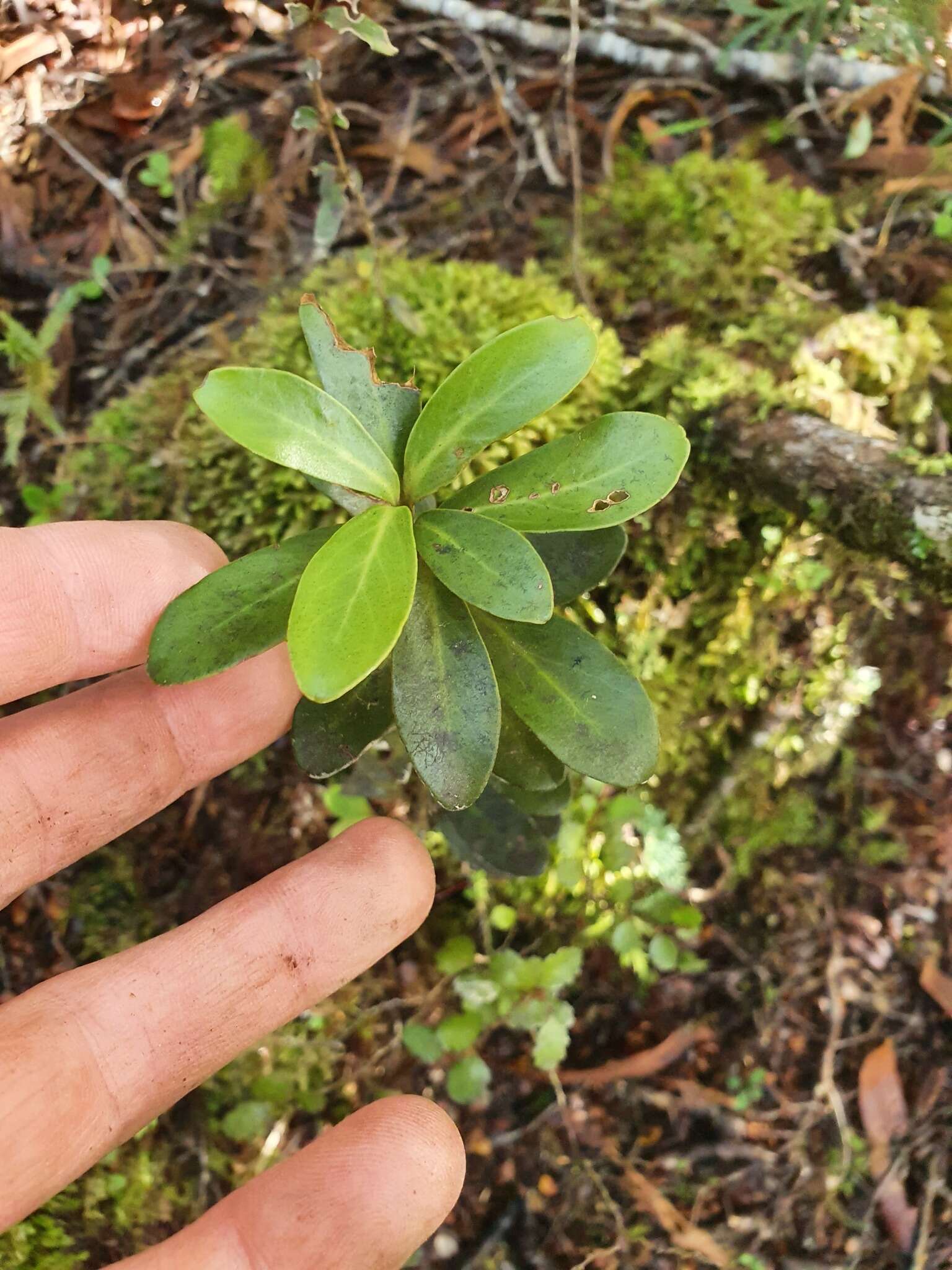
Sign in to savePseudowintera, commonly known as horopito, is a genus of woody evergreen flowering trees and shrubs, part of family Winteraceae. The species of Pseudowintera are native to New Zealand. Winteraceae are magnoliids, associated with the humid Antarctic flora of the southern hemisphere. Horopito can be chewed for a hot, peppery taste.
Species
GENUS
- KingdomPlantae
- PhylumTracheophyta
- ClassMagnoliopsida
- OrderCanellales
- FamilyWinteraceae
Pseudowintera es un género de árboles y arbustos leñosos siempreverdes, pertenecientes a la familia de las winteráceas. Las especies de Pseudowintera son nativas de Nueva Zelanda.
via GBIF · Kew POWO
Museum specimens
- Specimen records
- 6
- With media
- 2
- Family
- Winteraceae
- Collections
- CHRB, LSU, BPBM, BRIT, K
- Recorded in
- New Zealand
Research
17 papers- The complete plastome sequences of Pseudowintera colorata and Tasmannia lanceolata (Winteraceae - Canellales).Mitochondrial DNA. Part B, Resources · 2021
- Chemotaxonomy of Pseudowintera: sesquiterpene dialdehyde variants are species markers.Phytochemistry · 2010
- Fungicidal sesquiterpene dialdehyde cinnamates from Pseudowintera axillaris.Journal of agricultural and food chemistry · 2006
- Fungal Communities in the Native New Zealand Medicinal Plant Pseudowintera colorata (Horopito) Are Determined by Plant Organ Type and Host Maturity with Key Members Promoting Plant Growth.Microorganisms · 2021
- Red leaf margins indicate increased polygodial content and function as visual signals to reduce herbivory in Pseudowintera colorata.The New phytologist · 2012
via PubMed
Wikidata facts
- Instance of
- taxon
- Parent taxon
- Winteraceae
- Image
- Pseudowinteracolorata.jpg
Show 5 more facts
- Commons category
- Pseudowintera
- taxon name
- Pseudowintera
- taxon rank
- genus
- topic's main category
- Category:Pseudowintera
Sources (1)
via Wikidata · CC0
~3 min read
Encyclopedic overview
5 sectionsContents
- Species
- Cultivation
- Pharmaceutical use
- Use and history
- References
Pseudowintera, commonly known as horopito, is a genus of woody evergreen flowering trees and shrubs, part of family Winteraceae. The species of Pseudowintera are native to New Zealand. Winteraceae are magnoliids, associated with the humid Antarctic flora of the southern hemisphere. Horopito can be chewed for a hot, peppery taste.
==Species== Pseudowintera axillaris, is known as the lowland horopito. It is a shrub or small tree growing up to eight metres tall in lowland and lower montane forests from 35° to 42° South. In the South Island it grows West of the Main Divide. Pseudowintera colorata, or mountain horopito, is an evergreen shrub or small tree (1–2.5 m) commonly called pepperwood because its leaves have a very hot bite. Its yellow and green leaves are blotched with red; new leaves in the spring are bright red. It is widespread throughout New Zealand, from lowland forests to higher montane forests, and from 36° 30' South as far southwards as Stewart Island / Rakiura. Because of its various uses, both medicinal and culinary, the name horopito when used in common speech normally refers to the colorata species. Pseudowintera insperata, a rare species first identified in 2006, found in the Northland Region. Pseudowintera traversii, or Travers horopito, is a compact shrub up to one metre tall. It grows naturally only in the northwest corner of the South Island, from Collingwood to Westport.
Excerpted from Wikipedia’s “Pseudowintera” article, available under the CC BY-SA 4.0 licence.
Gallery (3)
Available in 10 languages
via Wikidata sitelinks · CC0