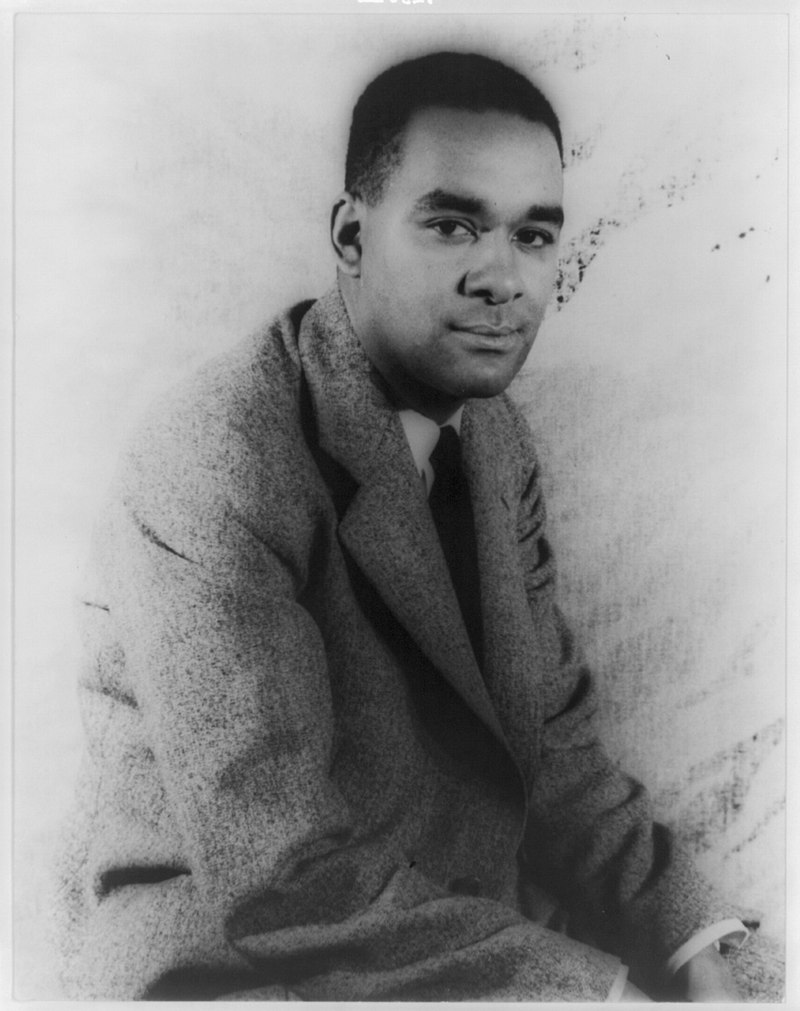
File:Richard_Wright.jpg · Wikimedia Commons · See Wikimedia Commons
Richard Wright
Sign in to saveAlso known as Richard Nathaniel Wright
American novelist and poet (1908–1960)
OverviewAI-generated
Richard Wright was an American poet, novelist, autobiographer, and short story writer. Born Richard Nathan Paul Wright on September 4, 1908, in Roxie, Mississippi, he wrote in English and was a member of the Communist Party of the United States of America. His notable works include the novels *Native Son* and *Black Boy*. He was influenced by Gertrude Stein and Sinclair Lewis.
Wright received the Spingarn Medal and a Guggenheim Fellowship. His archives are held at the Beinecke Rare Book & Manuscript Library. He died of a myocardial infarction due to natural causes in Paris on November 28, 1960.
Synthesized by Vinony from 30 facts across 3 sources: Wikidata, TMDb, Open Library. Generated from structured data (not the Wikipedia text) and checked against those facts — may still contain errors.
Person · Open Library
- Born
- 1908
- Died
- 1960
- Works
- 107
Top works
- Black boy
- Geographies of Migration
- D.C. Noir 2. The Classics
- Prentice Hall Literature--Timeless Voices, Timeless Themes--Gold Level
- Prentice Hall Literature--Timeless Voices, Timeless Themes--Gold
via Open Library + Wikidata
Film & TV
Roxie, Mississippi, USA
His powerful, eloquent work examined the injustices African-Americans face in a white society. He won immediate fame for his first novel, "Native Son" (1940). It tells the story of Bigger Thomas, a young chauffeur whose inarticulate rage over his lot ultimately erupts into violence. "Native Son" was adapted into a play directed by Orson Welles in 1941, filmed in 1951 with Wright himself playing…
Known for
- Richard Wright: Native Son, Author and Activist — Self2009
- Native Son — Bigger Thomas1951
via TMDB
Key facts
- Born
- Richard Nathaniel Wright , ( 1908-09-04 ) September 4, 1908, Plantation, Roxie, Mississippi , U.S.
- Died
- November 28, 1960 (1960-11-28) (aged 52), Paris , France
- Occupation
- Novelist poet essayist short story writer
- Period
- 1938–60
- Genre
- Drama, fiction, non-fiction, autobiography
- Notable works
- Uncle Tom's Children , Native Son , Black Boy , The Outsider
- Spouse
- Dhimah Rose Meidman ( married</span>"}]]}'>m. 1939 ; divorced</span>"}]]}'>div. 1940 ) Ellen Poplar ( married</span>"}]]}'>m. 1941 )
via Wikipedia infobox
Wikidata facts
- Instance of
- human
- Given name
- Richard
- Family name
- Wright
- Gender
- male
- Citizenship
- United States
- Place of birth
- Roxie
- Place of death
- Paris
- Occupation
- autobiographer
- Political party
- Communist Party of the United States of America
- Languages spoken
- English language
- Participant in
- Asian–African Conference
- Field of work
- non-fiction literature
- Genre
- autobiography
- Image
- Richard Wright.jpg
- Residence
- Paris
Show 10 more facts
- Commons category
- Richard Wright (author)
- cause of death
- myocardial infarction
- manner of death
- natural causes
- ethnic group
- African Americans
- archives at
- Beinecke Rare Book & Manuscript Library
- birth name
- Richard Nathaniel Wright
- date of birth
- 1908-09-04
- date of death
- 1960-11-28
- writing language
- English language
- influenced by
- Sinclair Lewis
Sources (7)
via Wikidata · CC0
~37 min read
Encyclopedic overview
Richard Nathaniel Wright (1908–1960) was an American author of novels, short stories, poems, and non-fiction. Much of his literature concerns racial themes, especially related to the plight of African Americans during the late 19th to mid 20th centuries suffering discrimination and violence. His best known works include the novella collection Uncle Tom's Children (1938), the novel Native Son (1940), and the memoir Black Boy (1945). Literary critics believe his work helped change race relations in the United States in the mid-20th century.
Early life and education
Excerpted from Wikipedia’s “Richard Wright” article, available under the CC BY-SA 4.0 licence.