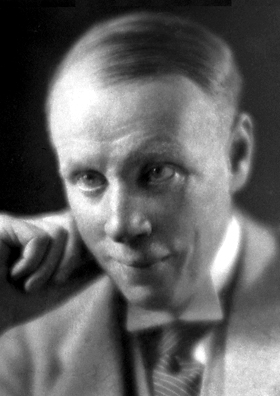
File:Sinclair_Lewis_1930.jpg · Wikimedia Commons · See Wikimedia Commons
Sinclair Lewis
Sign in to saveAmerican writer and playwright (1885–1951)
OverviewAI-generated
Sinclair Lewis was a male author from the United States who lived from 1885 to 1951. He also used the pseudonym Tom Graham. Lewis was recognized in the Nobel Literature collection and received one Nobel Prize. His works include Mr. Wrenn, Free air, Les parents prodigues, A letter from the Queen, and 王孙梦. He had two children.
Lewis is associated with the genres of fiction and literature. He is listed as similar to Margaret Atwood, Toni Morrison, Jarett Kobek, Herman Melville, and The Roundtable Podcast. His quotes include remarks about writers and the country. He is referenced by 1,002 other encyclopedia articles.
Synthesized by Vinony from 28 facts across 10 sources: Wikidata, Last.fm, Crossref, Wikiquote, Europeana Sparql, MusicBrainz, Open Library, Nobel Prize, Vinony collections, Vinony graph. Generated from structured data (not the Wikipedia text) and checked against those facts — may still contain errors.
Nobel Prize
- The Nobel Prize in Literature1930
“for his vigorous and graphic art of description and his ability to create, with wit and humour, new types of characters”
Wikidata facts
- Instance of
- human
- Family name
- Lewis
- Gender
- male
- Citizenship
- United States
- Place of birth
- Sauk Centre
- Place of death
- Rome
- Spouse
- Dorothy Thompson
- Occupation
- writer
- Languages spoken
- English language
- Religion
- atheism
- Notable work
- Babbitt
- Field of work
- literature
- Movement
- literary realism
- Image
- Sinclair Lewis by Oscar Whiite, Pach Brothers Studio, c. 1945, gelatin silver print, from the National Portrait Gallery - NPG-NPG 93 388 23 (cropped).jpg
- Number of children
- 2
Show 14 more facts
- birth name
- Harry Sinclair Lewis
- Commons category
- Sinclair Lewis
- date of birth
- 1885-05-07
- date of death
- 1951-01-10
- topic's main category
- Category:Sinclair Lewis
- archives at
- Beinecke Rare Book & Manuscript Library
- member of
- American Academy of Arts and Letters
- nominated for
- Nobel Prize in Literature
- pseudonym
- Tom Graham
- name in native language
- Sinclair Lewis
- writing language
- English language
- on focus list of Wikimedia project
- Wikipedia:Vital articles/Level/4
- Commons Creator page
- Sinclair Lewis
- P8168
- predatory lending
Sources (8)
via Wikidata · CC0
Works in European collections
1 object attributed to Sinclair Lewis, held across European museums, libraries & archives · via Europeana
~29 min read
Encyclopedic overview
Harry Sinclair Lewis (February 7, 1885 – January 10, 1951) was an American novelist, short-story writer, and playwright. In 1930, he became the first author from the United States (and the first from the Americas) to receive the Nobel Prize in Literature, which was awarded "for his vigorous and graphic art of description and his ability to create, with wit and humor, new types of characters." Lewis wrote six popular novels: Main Street (1920), Babbitt (1922), Arrowsmith (1925), Elmer Gantry (1927), Dodsworth (1929), and It Can't Happen Here (1935).
Several of his notable works were critical of American capitalism and materialism during the interwar period. Lewis is respected for his strong characterizations of modern working women. H. L. Mencken wrote of him, "[If] there was ever a novelist among us with an authentic call to the trade ... it is this red-haired tornado from the Minnesota wilds."
Excerpted from Wikipedia’s “Sinclair Lewis” article, available under the CC BY-SA 4.0 licence.
Gallery (8)
Available in 94 languages
- Español
- Français
- Deutsch
- 中文
- 日本語
- Русский
- Português
- Italiano
- العربية
- हिन्दी
- Albanian
- Aragonese
- Armenian
- Assamese
- Asturian
- azb
- Azerbaijani
- Bahasa Indonesia
Show 75 more
- Bangla
- Basque
- be_x_old
- Belarusian
- Breton
- Bulgarian
- Catalan
- Cornish
- Croatian
- Czech
- Danish
- Egyptian Arabic
- Esperanto
- Estonian
- Filipino
- Finnish
- Galician
- Georgian
- Greek
- Hakka Chinese
- Hebrew
- Hungarian
- Icelandic
- Ido
- Iloko
- Irish
- Javanese
- Kannada
- Kazakh
- Kotava
- Kurdish
- Latin
- Latvian
- Lingua Franca Nova
- Lithuanian
- Luxembourgish
- Macedonian
- Malagasy
- Malay
- Malayalam
- Mazanderani
- Mingrelian
- Nederlands
- Norwegian
- Norwegian Nynorsk
- Occitan
- Polski
- Punjabi
- Romanian
- Scottish Gaelic
- Serbian
- Serbian (Latin)
- simple
- Slovak
- Slovenian
- Svenska
- Swahili
- Tajik
- Tamil
- Tatar
- Tiếng Việt
- Türkçe
- Ukrainian
- Urdu
- Uzbek
- Waray
- Western Frisian
- Western Panjabi
- Wu Chinese
- Yoruba
- zh_min_nan
- zh_yue
- فارسی
- ไทย
- 한국어
via Wikidata sitelinks · CC0