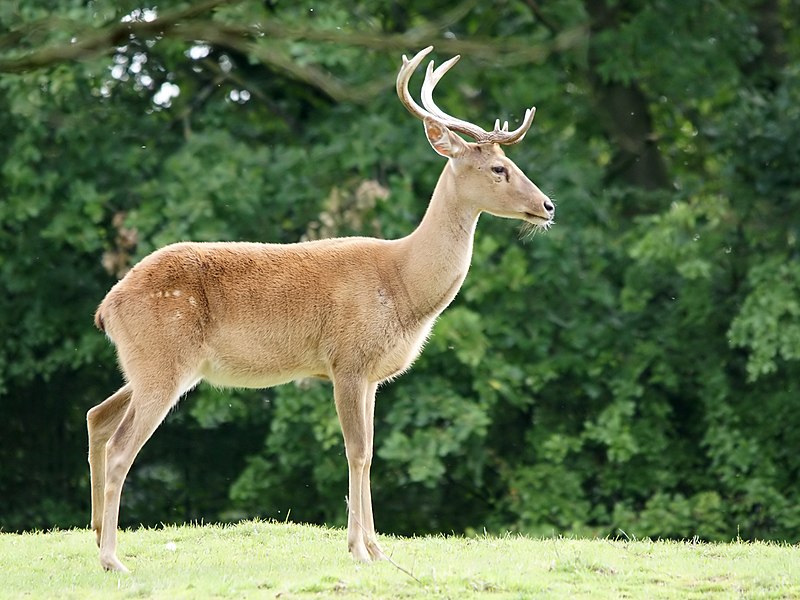
File:Panolia_eldii_thamin.jpg · Wikimedia Commons · See Wikimedia Commons
OverviewAI-generated
Rucervus eldii, commonly known as Eld’s deer or brow-antlered deer, is a species of mammal within the family Cervidae. It belongs to the order Artiodactyla, class Mammalia, phylum Chordata, and kingdom Animalia. The species has an IUCN conservation status of Endangered, a designation recorded in 2015, and is listed in Appendix I of CITES.
The gestation period for this taxon is 7.5 months, with the longest observed lifespan reaching 20.5 years. Historical records indicate the species was first discovered in Manipur in 1839. While occurrence data is available from institutions such as LACM, USNM, YPM, MNHN, and GNM, specific locality records include Thailand, France, and India, alongside entries marked as Locality Unknown.
Synthesized by Vinony from 28 facts across 7 sources: Wikidata, GBIF, Gbif Occ, Encyclopedia of Life, IUCN Red List, iDigBio, Vinony graph. Generated from structured data (not the Wikipedia text) and checked against those facts — may still contain errors.
Species
EndangeredSPECIES
- KingdomAnimalia
- PhylumChordata
- ClassMammalia
- OrderArtiodactyla
- FamilyCervidae
坡鹿(Cervus eldii),又名海南坡鹿,是東南亞特有的一種鹿。牠們最初是於1839年在曼尼普爾發現的。
via GBIF · IUCN
Museum specimens
- Specimen records
- 85
- With media
- 3
- Family
- Cervidae
- Collections
- LACM, USNM, YPM, MNHN, GNM
- Recorded in
- Locality Unknown, Thailand, France, India
Wikidata facts
- Instance of
- taxon
- Image
- Cervus eldii4.jpg
Show 10 more facts
- taxon rank
- species
- IUCN conservation status
- Endangered status
- taxon name
- Rucervus eldii
- Commons category
- Cervus eldii
- Commons gallery
- Cervus eldii
- taxon common name
- thamin
- gestation period
- 7.5
- longest observed lifespan
- 20.5
- CITES Appendix
- Appendix I of CITES
- short name
- R. eldii
Sources (1)
via Wikidata · CC0
~17 min read
Encyclopedic overview
Eld's deer (Rucervus eldii or Panolia eldii), also known as the thamin or brow-antlered deer, is an Endangered species of deer endemic to South and Southeast Asia. It inhabits wetlands and marshlands. It is active during the day and mates from October to the end of December. Three subspecies are recognised. All three are threatened by hunting and deforestation.
Taxonomy
Excerpted from Wikipedia’s “Rucervus eldii” article, available under the CC BY-SA 4.0 licence.