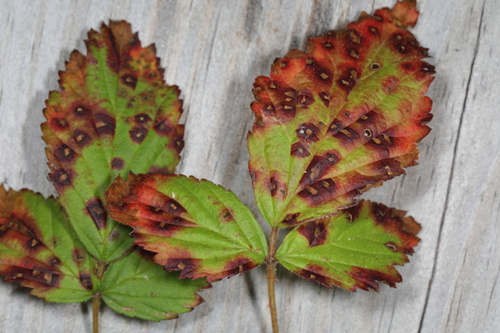
(c) John Plischke, some rights reserved (CC BY-NC), uploaded by John Plischke · cc-by-nc
Septoria
Sign in to saveSeptoria is a genus of fungal plant pathogens in the phylum Ascomycota. They cause necrotic leaf spots on the leaves of their hosts, producing filiform or cylindrical conidia inside pycnidia embedded in the leaves. Economically important species cause diseases on field crops, forages, and vegetables. The genus is widespread, and estimated to contain 1072 species.
Species
GENUS
- KingdomFungi
- PhylumAscomycota
- ClassDothideomycetes
- OrderMycosphaerellales
- FamilyMycosphaerellaceae
via GBIF
Museum specimens
- Specimen records
- 6,323
- With media
- 4,517
- Family
- Mycosphaerellaceae
- Collections
- FESI-UNAM
- Recorded in
- Mexico
Wikidata facts
- Instance of
- taxon
- Parent taxon
- Mycosphaerellaceae
- Image
- Septoria-tritici.jpg
Show 6 more facts
- Commons category
- Septoria
- taxon rank
- genus
- taxon name
- Septoria
- topic's main category
- Category:Septoria
- taxonomic type
- Septoria cytisi
- taxon author citation
- Sacc.
via Wikidata · CC0
~2 min read
Encyclopedic overview
5 sectionsContents
- Notable species
- Dispersal
- Taxonomy
- Gallery
- References
Septoria is a genus of fungal plant pathogens in the phylum Ascomycota. They cause necrotic leaf spots on the leaves of their hosts, producing filiform or cylindrical conidia inside pycnidia embedded in the leaves. Economically important species cause diseases on field crops, forages, and vegetables. The genus is widespread, and estimated to contain 1072 species.
==Notable species== Septoria apiicola is the cause of late blight of celery. It can survive on seeds, causing disease in the seedlings when they germinate.
Excerpted from Wikipedia’s “Septoria” article, available under the CC BY-SA 4.0 licence.