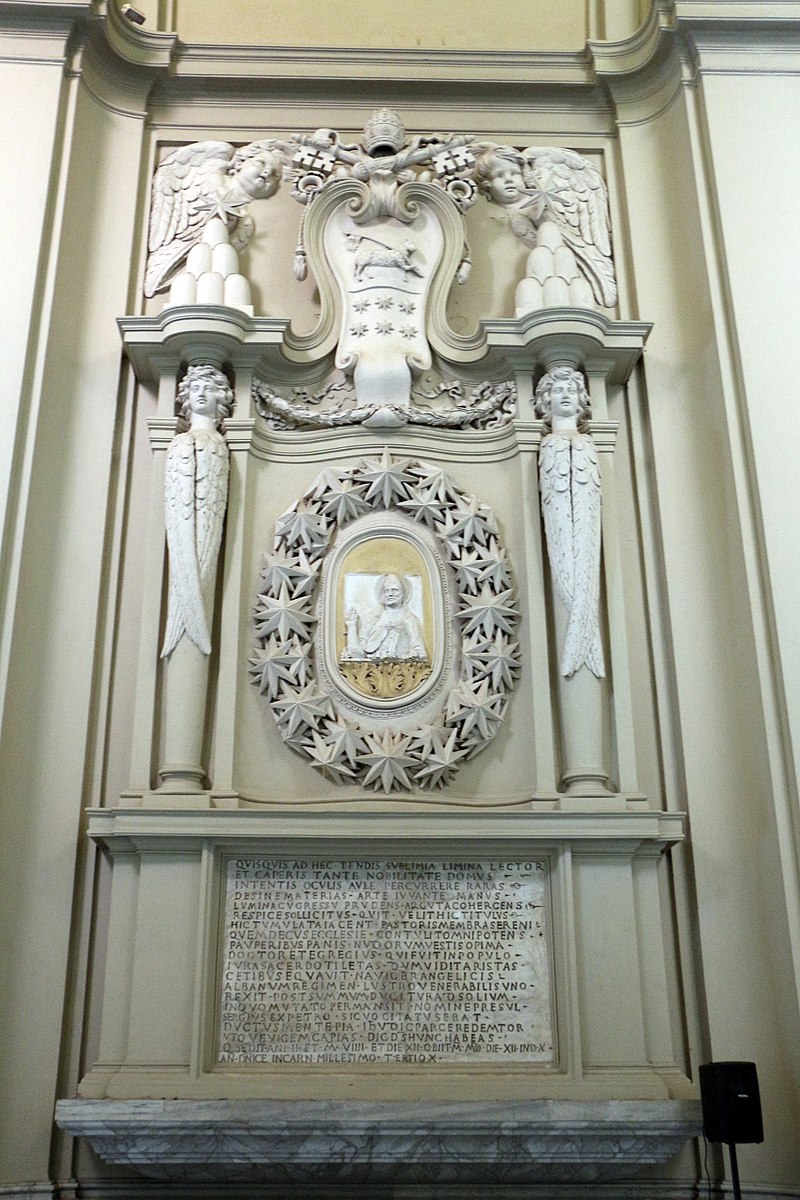
File:San_giovanni_in_laterano,_interno,_navata_interna_dx,_sepolcro_settecentesco_di_sergio_IV,_m._1012.jpg · Wikimedia Commons · See Wikimedia Commons
Sergius IV
Sign in to saveAlso known as Pietro Martino Buccaporci, Pope Sergius IV
Pope from 1009 to 1012
OverviewAI-generated
Sergius IV was a male Catholic priest and bishop who served as Pope and cardinal within the Catholic Church. A member of the Benedictines religious order, he held his positions in Rome and the Papal States, where he was also a citizen. Born in Rome in 970, he worked as a diocesan bishop and held the papal office until his death.
Sergius IV died in Rome on May 12, 1012, from poison. He is buried in the Archbasilica of St. John Lateran. His life and role are described in the Brockhaus and Efron Encyclopedic Dictionary. He is recognized in the Popes collection and is referred to in his native language as Sergius PP. IV.
Synthesized by Vinony from 18 facts across 2 sources: Wikidata, Vinony collections. Generated from structured data (not the Wikipedia text) and checked against those facts — may still contain errors.
Wikidata facts
- Instance of
- human
- Given name
- Sergius
- Gender
- male
- Citizenship
- Papal States
- Place of birth
- Rome
- Place of death
- Rome
- Occupation
- Catholic bishop
- Position held
- cardinal
- Religion
- Catholic Church
- Image
- Sergius IV (Saint Paul Outside the Walls).png
- Work location
- Papal States
- Religious order
- Benedictines
Show 7 more facts
- place of burial
- Archbasilica of St. John Lateran
- Commons category
- Sergius IV
- date of death
- 1012-05-12
- date of birth
- 0970-00-00
- cause of death
- poison
- described by source
- Wikitólica
- name in native language
- Sergius PP. IV
via Wikidata · CC0
~7 min read
Encyclopedic overview
Pope Sergius IV (died 12 May 1012) was the bishop of Rome and nominal ruler of the Papal States from 31 July 1009 to his death. His temporal power was eclipsed by the patrician John Crescentius. Sergius IV may have called for the expulsion of Muslims from the Holy Land, but this is disputed. Since his time, the practice that the person who has been elected to the office of pope takes on a new name became a tradition.
Early life
Excerpted from Wikipedia’s “Sergius IV” article, available under the CC BY-SA 4.0 licence.
Gallery (2)
Available in 67 languages
- Español
- Français
- Deutsch
- 中文
- 日本語
- Русский
- Português
- Italiano
- العربية
- Afrikaans
- Albanian
- Albanian
- Bahasa Indonesia
- Basque
- Belarusian
- Breton
- Bulgarian
- Catalan
Show 48 more
- cdo
- Croatian
- Czech
- Egyptian Arabic
- Estonian
- Filipino
- Finnish
- Galician
- Georgian
- Greek
- Hakka Chinese
- Hebrew
- Hungarian
- Ido
- Iloko
- Irish
- Javanese
- Latin
- Lithuanian
- Macedonian
- Malay
- Marathi
- Mazanderani
- Nederlands
- Norwegian
- Occitan
- Polski
- Romanian
- Serbian
- Serbian (Latin)
- Sicilian
- simple
- Slovak
- Slovenian
- Svenska
- Swahili
- Tiếng Việt
- Türkçe
- Ukrainian
- Urdu
- Waray
- Wu Chinese
- Yoruba
- Zaza
- zh_min_nan
- zh_yue
- فارسی
- 한국어
via Wikidata sitelinks · CC0