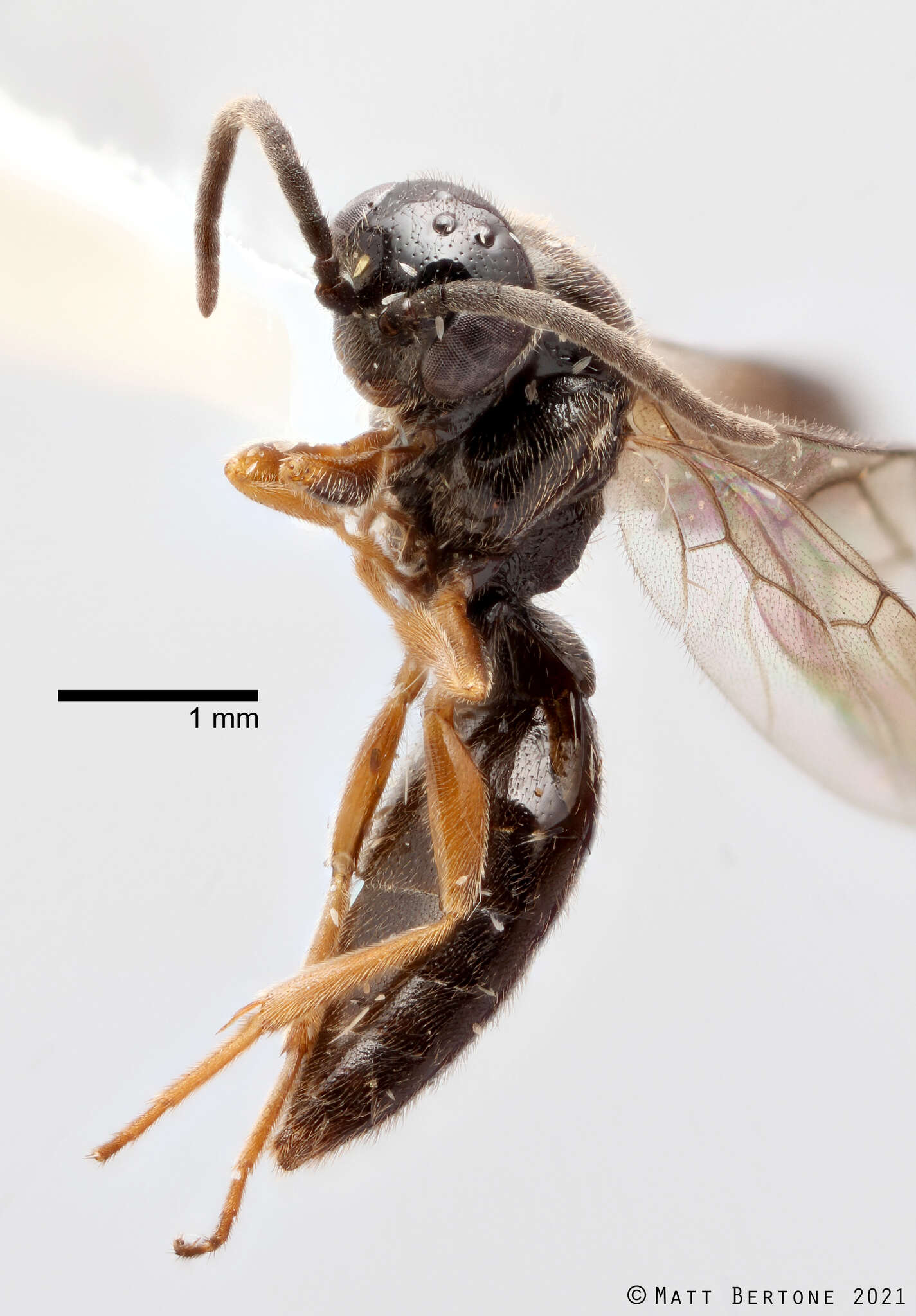
Encyclopedia of Life · EOL (see source)
Sierolomorphidae
Sign in to saveThe Sierolomorphidae are a family of 13 extant species of wasps, in the genera Sierolomorpha and Proscleroderma, mostly found in the Northern Hemisphere. They are rare and very little is known of their biology. A fossil species Loreisomorpha nascimbenei has also been placed in the family.
Species
FAMILY
- KingdomAnimalia
- PhylumArthropoda
- ClassInsecta
- OrderHymenoptera
- FamilySierolomorphidae
This is a primitive scolioid group whose closest relationship appears to be with the Tiphiidae. Until recently the family was known only from a single genus Sierolomorpha which is entirely Nearctic in distribution except for one, possibly adventive species in Hawaii. However, during 1975 males of an undescribed, more primitive genus were collected in Sri Lanka. ~There is no information on host relationships, but the lack of a tarsal pecten in Sierolomorpha females suggests that they are not fossorial in habit.
via GBIF
Museum specimens
- Specimen records
- 121
- Family
- Sierolomorphidae
- Collections
- MNA, UNIVERSITY OF CENTRAL FLORIDA COLLECTION OF ARTHOPODS (UCFC)
- Recorded in
- United States
~2 min read
Encyclopedic overview
5 sectionsContents
- Diversity
- Extant taxa
- Extinct taxa
- References
- External links
The Sierolomorphidae are a family of 13 extant species of wasps, in the genera Sierolomorpha and Proscleroderma, mostly found in the Northern Hemisphere. They are rare and very little is known of their biology. A fossil species Loreisomorpha nascimbenei has also been placed in the family.
The coxa (basal segment of the leg) of the hind and midlegs are next to each other, and the hindwing does not have claval or jugal lobes. The first metasomal segment does not have a true node, but can appear like that of the ants. The metasomal sternum of the first segment is separated from the second by a constriction. Sexual dimorphism varies among species from slight to marked, with both males and females having wings, but females are sometimes wingless. Adults are predominantly dark brown or black in colour. They are solitary and the larvae are suspected to be ectoparasitoids of other insects.
Excerpted from Wikipedia’s “Sierolomorphidae” article, available under the CC BY-SA 4.0 licence.
Available in 11 languages
via Wikidata sitelinks · CC0