File:PartsOfStencil.png · Wikimedia Commons · See Wikimedia Commons
stencil
Sign in to saveAlso known as stencilling
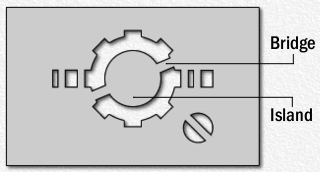
thumb|320px|right|Parts of a stencil thumb|320px|Stenciled warning sign in Singapore thumb|Stencilled Gaelic type thumb|320px|Japanese Ise-katagami stencil for printing textiles Stencilling produces an image or pattern on a surface by applying pigment to a surface through an intermediate object, with designed holes in the intermediate object. The holes allow the pigment to reach only some parts of the surface creating the design. The stencil is both the resulting image or pattern and the intermediate object; the context in which stencil is used makes clear which meaning is intended. In practic
Wikidata facts
Show 3 more facts
- described by source
- Encyclopædia Britannica 11th edition
- Commons category
- Stencils
- Commons gallery
- Stencil
Sources (2)
via Wikidata · CC0
~12 min read
Encyclopedic overview
17 sectionsContents
- History
- Book illustration
- Aerosol stencils
- Official use
- Stencil graffiti
- Home stenciling
- Military stenciling
- Silk screening
- Micro- and nanostencil
- Other stencil forms
- Screen printing
- Airbrushing
- Wall stencils
- Rock art
- See also
- References
- External links
thumb|320px|right|Parts of a stencil thumb|320px|Stenciled warning sign in Singapore thumb|Stencilled Gaelic type thumb|320px|Japanese Ise-katagami stencil for printing textiles Stencilling produces an image or pattern on a surface by applying pigment to a surface through an intermediate object, with designed holes in the intermediate object. The holes allow the pigment to reach only some parts of the surface creating the design. The stencil is both the resulting image or pattern and the intermediate object; the context in which stencil is used makes clear which meaning is intended. In practice, the (object) stencil is usually a thin sheet of material, such as paper, plastic, wood or metal, with letters or a design cut from it, used to produce the letters or design on an underlying surface by applying pigment through the cut-out holes in the material.
The key advantage of a stencil is that it can be reused to repeatedly and rapidly produce the same letters or design. Although aerosol or painting stencils can be made for one-time use, typically they are made with the intention of being reused. To be reusable, they must remain intact after a design is produced and the stencil is removed from the work surface. With some designs, this is done by connecting stencil islands (sections of material that are inside cut-out "holes" in the stencil) to other parts of the stencil with bridges (narrow sections of material that are not cut out).
Excerpted from Wikipedia’s “stencil” article, available under the CC BY-SA 4.0 licence.