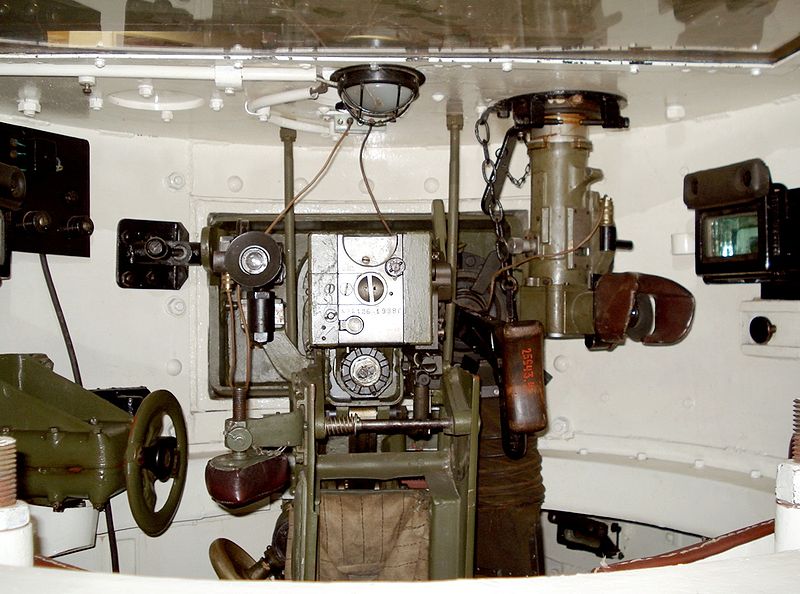
File:T26_parola_7.jpg · Wikimedia Commons · See Wikimedia Commons
Key facts
- Weapon.name
- T-26
- Weapon.image
- T-26 in Kirovsk.JPG
- Weapon.image_size
- 300
- Weapon.caption
- T-26 mod. 1933 at the "Breaching of the Leningrad Blockade" museum near Kirovsk, Leningrad Oblast. This tank was raised from the river bottom at Nevsky Pyatachok in May 2003.
- Weapon.origin
- Soviet Union
- Weapon.type
- Light tank
- Weapon.is_vehicle
- yes
- Weapon.is_UK
- yes
- Weapon.used_by
- See Operators
- Weapon.designer
- Vickers-Armstrongs, OKMO of Bolshevik Plant in Leningrad
- Weapon.design_date
- 1928–31
- Weapon.manufacturer
- K.E. Voroshilov factory No. 174, Leningrad, Stalingrad Tractor Factory
- Weapon.production_date
- 1931–41
- Weapon.number
- 10,300 tanks and 1,701 other vehicles
- Weapon.spec_label
- T-26 mod. 1933
- Weapon.crew
- 3 (commander, gunner, driver)
- Weapon.primary_armament
- 45 mm 20K mod. 1932–34 tank gun (122 rounds)
- Weapon.secondary_armament
- 7.62 mm DT machine gun (2,961 rounds)
via Wikipedia infobox
Wikidata facts
- Subclass of
- light tank
- Country of origin
- Soviet Union
- Followed by
- BT-series tank
- Mass
- 9.4
- Manufacturer
- Obukhov State Plant
- Designed by
- Vickers-Armstrongs
- Conflict
- Winter War
- Image
- T-26 model 1935 - Central Armed Forces Museum, Moscow (37954394925).jpg
- Height
- 2.41
- Width
- 3.41
- Length
- 4.88
- Speed
- 28
Show 6 more facts
- Commons category
- T-26
- Commons gallery
- T-26
- service entry
- 1931-01-01
- powered by
- straight engine
- service retirement
- 1945-08-00
- total produced
- 10300
via Wikidata · CC0
~54 min read
Encyclopedic overview
22 sectionsContents
- British origin
- Design
- Series production
- The beginning
- Production in Stalingrad
- Modernization and repair
- Production in 1941
- Combat history
- Variants
- Twin-turreted tanks
- Single-turreted tanks
- Artillery tanks
- Armoured combat vehicles
- Foreign variants
- Survivors
- Operators
- See also
- Notes
- References
- Published sources
- External links
- Video
The T-26 tank was a Soviet light tank used during many conflicts of the Interwar period and in World War II. It was a development of the British Vickers 6-Ton tank and was one of the most successful tank designs of the 1930s until its light armour became vulnerable to newer anti-tank guns. It was produced in greater numbers than any other tank of the period, with more than 11,000 units manufactured, giving it the title of the most produced tank during the interwar period. During the 1930s, the USSR developed 53 variants of the T-26, including flame-throwing tanks, combat engineer vehicles, remotely controlled tanks, self-propelled guns, artillery tractors, and armoured carriers. Twenty-three of these were series-produced; others were experimental models.
The T-26 and BT were the main tanks of the Red Army's armoured forces during the interwar period. The T-26 was the most important tank of the Spanish Civil War and played a significant role during the Battle of Lake Khasan in 1938, as well as in the Winter War in 1939–40. Though nearly obsolete by the beginning of World War II, the T-26 was the most numerous tank in the Red Army's armoured force during the German invasion of the Soviet Union in June 1941. The T-26 fought the Germans and their allies during the Battle of Moscow in 1941–42, the Battle of Stalingrad and the Battle of the Caucasus in 1942–1943; some tank units of the Leningrad Front used their T-26s until 1944. Soviet T-26 light tanks last saw use in August 1945, during the defeat of the Japanese Kwantung Army in Manchuria.
Excerpted from Wikipedia’s “T-26” article, available under the CC BY-SA 4.0 licence.