Tasmannia · Kew POWO · Kew Plants of the World Online
Tasmannia
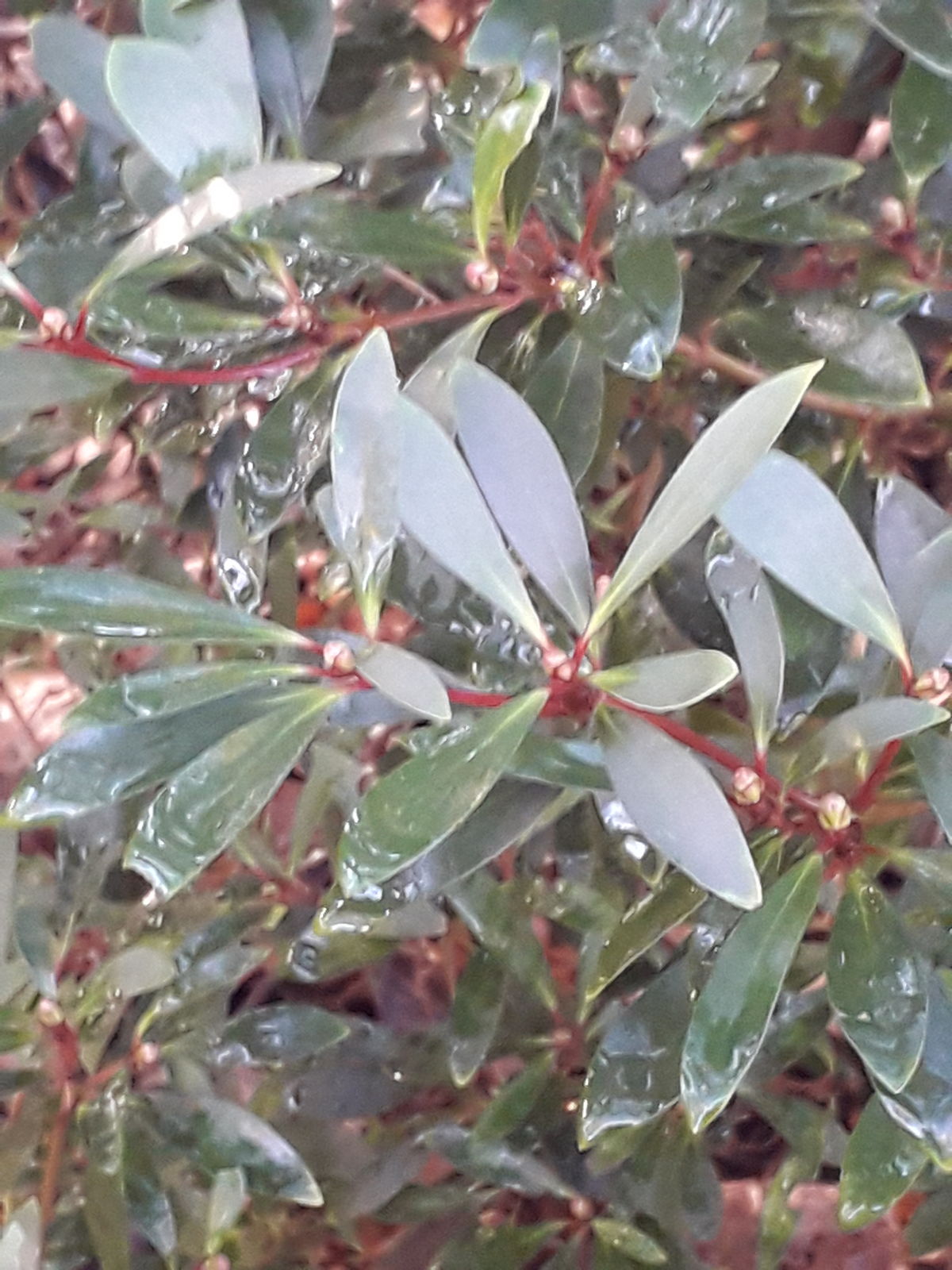
Sign in to saveTasmannia is a genus of about 36 species of flowering plants in the family Winteraceae, and is native to Australia and New Guinea, with one species (Tasmannia piperita) also found in parts of Southeast Asia. Plants in the genus Tasmannia are shrubs or small trees, usually dioecious with simple leaves, mostly white, sometimes yellow flowers, and one to many clusters of berries.
Species
GENUS
- KingdomPlantae
- PhylumTracheophyta
- ClassMagnoliopsida
- OrderCanellales
- FamilyWinteraceae
General: sections with sect. Tasmannia in the Old World with unisexual
via GBIF · Kew POWO
Museum specimens
- Specimen records
- 78
- With media
- 58
- Family
- Winteraceae
- Collections
- MEL, BRIT, US, NY, UNIVERSITY OF ALBERTA MUSEUMS
- Recorded in
- Australia, Philippines, Papua New Guinea, Indonesia, New Zealand, Malaysia
Wikidata facts
- Instance of
- taxon
- Parent taxon
- Winteraceae
- Image
- Tasmannia lanceolata.jpg
Show 5 more facts
- taxon rank
- genus
- Commons category
- Tasmannia
- taxon name
- Tasmannia
- taxon common name
- 单性林仙属
Sources (1)
via Wikidata · CC0
~3 min read
Encyclopedic overview
8 sectionsContents
- Description
- Taxonomy
- Species list
- Distribution and habitat
- See also
- References
- Bibliography
- External links
Tasmannia is a genus of about 36 species of flowering plants in the family Winteraceae, and is native to Australia and New Guinea, with one species (Tasmannia piperita) also found in parts of Southeast Asia. Plants in the genus Tasmannia are shrubs or small trees, usually dioecious with simple leaves, mostly white, sometimes yellow flowers, and one to many clusters of berries.
==Description== Plants in the genus Tasmannia are shrubs or small trees that are usually dioecious, with simple, aromatic leaves arranged alternately along the branchlets, and have fine oil dots. There are no stipules. The flowers are usually white, sometimes yellow and arranged singly in the axils of bud scales, appearing like an umbel, later becoming like a whorl. The sepals are joined, completely enclosing the flower bud, later splitting into lobes. The fruit is a berry arranged singly or in clusters of up to 6.
Excerpted from Wikipedia’s “Tasmannia” article, available under the CC BY-SA 4.0 licence.
Gallery (2)
Available in 10 languages
via Wikidata sitelinks · CC0