
File:Thomas_Mann_1929.jpg · Wikimedia Commons · See Wikimedia Commons
Thomas Mann
Sign in to saveAlso known as Paul Thomas Mann
German novelist and Nobel Prize laureate (1875–1955)
Thomas Mann was a German novelist who lived from 1875 to 1955 and won the Nobel Prize for his literary achievements. He is considered one of the most important writers of the 20th century, known for exploring complex themes of art, society, and human nature in his novels.
AI-generated from the Wikipedia summary — may contain errors.
Film & TV
Lübeck, Germany
Known for
- The Magic Mountain: Thomas Mann's Emblematic Novel — Self - Writer (archive footage)2024
- Hitler: A Career — Self (archive footage)1977
- Thomas Mann — Self
via TMDB
Authority record · VIAF
- Lifespan
- 1875–1955
- Nationality
- DE, CH, US, JP, USA
- Role / Field
- Forfatter, Ecrivains, Authors, Writer, Vysokoskolsti ucitele, Literatura
- Language
- ger, deu
- Gender
- Male
Recorded by 46 libraries
via VIAF · OCLC
Nobel Prize
- The Nobel Prize in Literature1929
“principally for his great novel, Buddenbrooks, which has won steadily increased recognition as one of the classic works of contemporary literature”
Wikidata facts
- Instance of
- human
- Given name
- Thomas
- Family name
- Mann
- Gender
- male
- Citizenship
- United States
- Place of birth
- Lübeck
- Place of death
- Zurich
- Spouse
- Katia Mann
- Child
- Michael Mann
- Mother
- Júlia da Silva Bruhns
- Occupation
- writer
- Educated at
- Katharineum
- Employer
- Simplicissimus
- Political party
- German Democratic Party
- Languages spoken
- German
- Native language
- German
- Religion
- Lutheranism
- Field of work
- essay
- Image
- Thomas Mann 1929.jpg
- Work location
- Princeton
Show 22 more facts
- Commons gallery
- Thomas Mann
- Commons category
- Thomas Mann
- date of birth
- 1875-06-06
- date of death
- 1955-08-12
- topic's main category
- Category:Thomas Mann
- birth name
- Paul Thomas Mann
- member of
- Accademia Nazionale dei Lincei
- archives at
- University and State Library Düsseldorf
- nominated for
- Nobel Prize in Literature
- Commons Creator page
- Thomas Mann
- name in native language
- Thomas Mann
- writing language
- German
- influenced by
- Johann Wolfgang von Goethe
- P8168
- Orleans
- start of work period
- 1890-01-01
- end of work period
- 1955-01-01
- on focus list of Wikimedia project
- Wikipedia:Vital articles/Level/4
- manner of death
- natural causes
- cause of death
- aneurysm
- topic has template
- Template:Thomas Mann
- P12674
- The Piano
- relative
- Alfred Pringsheim
Sources (13)
via Wikidata · CC0
Works in European collections
18 objects attributed to Thomas Mann, held across European museums, libraries & archives · via Europeana
Letter from Hedwig Fischer, Samuel Fischer, Annette Kolb and Thomas Mann to Gerhart Hauptmann and Margarete Hauptmann.

Egy szélhámos vallomásai

Law

Elbeszélések

Mario és a varázsló

A varázshegy

József és testvérei

József és testvérei

Regény

Válogatott elbeszélések

Magyar Vakok és Gyengénlátók Országos Szövetségének hangoskönyvtára
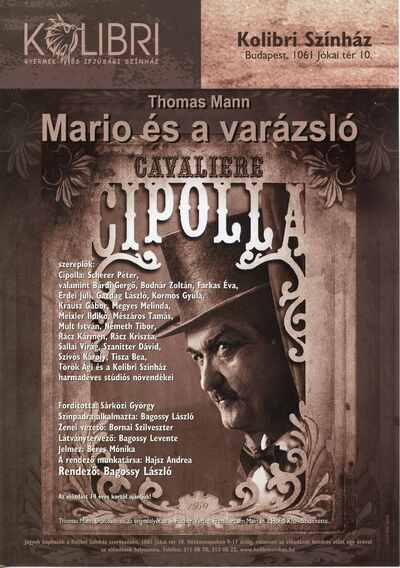
Untitled
Untitled
Untitled
Untitled
Untitled
Untitled
Untitled
~40 min read
Encyclopedic overview
Paul Thomas Mann (6 June 1875 – 12 August 1955) was a German novelist, short story writer, social critic, philanthropist, essayist, and the 1929 Nobel Prize in Literature laureate. His highly symbolic and ironic epic novels and novellas are noted for their insight into the psychology of the artist and the intellectual. His analysis and critique of the European and German soul used modern versions of German and Biblical stories, as well as the ideas of Johann Wolfgang von Goethe, Friedrich Nietzsche, and Arthur Schopenhauer.
The Mann family was part of the Hanseatic class. He portrayed both his family and the influential class in his first novel, Buddenbrooks (1901). Late major novels include The Magic Mountain (1924), the tetralogy Joseph and His Brothers (1933–1943), and Doctor Faustus (1947). He also wrote short stories and novellas, including Death in Venice (1912).
Excerpted from Wikipedia’s “Thomas Mann” article, available under the CC BY-SA 4.0 licence.
Gallery (13)
Available in 119 languages
- Español
- Français
- Deutsch
- 中文
- 日本語
- Русский
- Português
- Italiano
- العربية
- हिन्दी
- Afrikaans
- Albanian
- Albanian
- Aragonese
- Armenian
- Assamese
- Asturian
- Aymara
Show 100 more
- azb
- Azerbaijani
- Bahasa Indonesia
- Bangla
- Bashkir
- Basque
- Bavarian
- be_x_old
- Belarusian
- Bosnian
- Breton
- Bulgarian
- Catalan
- Central Kurdish
- Chuvash
- Cornish
- Croatian
- Czech
- Danish
- Egyptian Arabic
- Esperanto
- Estonian
- Extremaduran
- Faroese
- Finnish
- Galician
- Georgian
- Goan Konkani
- Greek
- Haitian Creole
- Hakka Chinese
- Hebrew
- Hungarian
- Icelandic
- Ido
- Iloko
- Interlingua
- Interlingue
- Irish
- Javanese
- Kannada
- Kashubian
- Kazakh
- Kotava
- Kurdish
- Kyrgyz
- Latin
- Latvian
- Lingua Franca Nova
- Lithuanian
- Low German
- Luxembourgish
- Macedonian
- Malagasy
- Malay
- Malayalam
- Marathi
- Mazanderani
- Mingrelian
- Nederlands
- Newari
- Norwegian
- Norwegian Nynorsk
- Occitan
- Pampanga
- Piedmontese
- Polski
- Punjabi
- Quechua
- Romanian
- Scots
- Scottish Gaelic
- Serbian
- Serbian (Latin)
- simple
- Slovak
- Slovenian
- Svenska
- Swahili
- Tajik
- Tamil
- Tatar
- Tiếng Việt
- Türkçe
- Ukrainian
- Urdu
- Uzbek
- Volapük
- Waray
- Welsh
- Western Frisian
- Western Mari
- Western Panjabi
- Wu Chinese
- Yoruba
- zh_min_nan
- zh_yue
- فارسی
- ไทย
- 한국어
via Wikidata sitelinks · CC0