
File:Thomas_Mann_1929.jpg · Wikimedia Commons · See Wikimedia Commons
Thomas Mann
Sign in to saveAlso known as Paul Thomas Mann
deutscher Schriftsteller und Nobelpreisträger (1875–1955)
Thomas Mann was a German novelist who lived from 1875 to 1955 and won the Nobel Prize for his literary achievements. He is considered one of the most important writers of the 20th century, known for exploring complex themes of art, society, and human nature in his novels.
AI-generated from the Wikipedia summary — may contain errors.
Film & TV
Lübeck, Germany
Known for
- The Magic Mountain: Thomas Mann's Emblematic Novel — Self - Writer (archive footage)2024
- Hitler: A Career — Self (archive footage)1977
- Thomas Mann — Self
via TMDB
Authority record · VIAF
- Lifespan
- 1875–1955
- Nationality
- DE, CH, US, JP, USA
- Role / Field
- Forfatter, Ecrivains, Authors, Writer, Vysokoskolsti ucitele, Literatura
- Language
- ger, deu
- Gender
- Male
Recorded by 46 libraries
via VIAF · OCLC
Nobel Prize
- The Nobel Prize in Literature1929
“principally for his great novel, Buddenbrooks, which has won steadily increased recognition as one of the classic works of contemporary literature”
Wikidata facts
- Instance of
- human
- Given name
- Thomas
- Family name
- Mann
- Gender
- male
- Citizenship
- United States
- Place of birth
- Lübeck
- Place of death
- Zurich
- Spouse
- Katia Mann
- Child
- Michael Mann
- Mother
- Júlia da Silva Bruhns
- Occupation
- writer
- Educated at
- Katharineum
- Employer
- Simplicissimus
- Political party
- German Democratic Party
- Languages spoken
- German
- Native language
- German
- Religion
- Lutheranism
- Field of work
- essay
- Image
- Thomas Mann 1929.jpg
- Work location
- Princeton
Show 22 more facts
- Commons gallery
- Thomas Mann
- Commons category
- Thomas Mann
- date of birth
- 1875-06-06
- date of death
- 1955-08-12
- topic's main category
- Category:Thomas Mann
- birth name
- Paul Thomas Mann
- member of
- Accademia Nazionale dei Lincei
- archives at
- University and State Library Düsseldorf
- nominated for
- Nobel Prize in Literature
- Commons Creator page
- Thomas Mann
- name in native language
- Thomas Mann
- writing language
- German
- influenced by
- Johann Wolfgang von Goethe
- P8168
- Orleans
- start of work period
- 1890-01-01
- end of work period
- 1955-01-01
- on focus list of Wikimedia project
- Wikipedia:Vital articles/Level/4
- manner of death
- natural causes
- cause of death
- aneurysm
- topic has template
- Template:Thomas Mann
- P12674
- The Piano
- relative
- Alfred Pringsheim
Sources (13)
via Wikidata · CC0
Works in European collections
18 objects attributed to Thomas Mann, held across European museums, libraries & archives · via Europeana
Letter from Hedwig Fischer, Samuel Fischer, Annette Kolb and Thomas Mann to Gerhart Hauptmann and Margarete Hauptmann.

Egy szélhámos vallomásai

Law

Elbeszélések

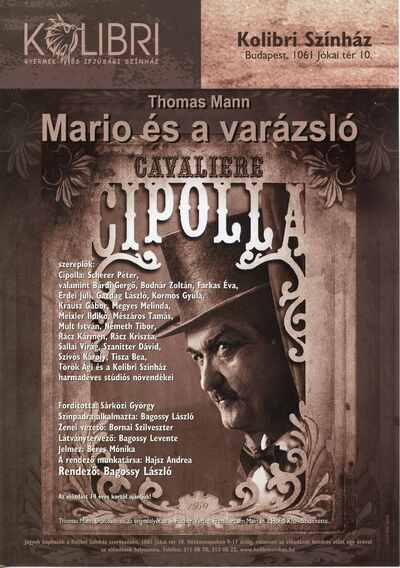
Mario és a varázsló

A varázshegy

József és testvérei

József és testvérei

Regény

Válogatott elbeszélések

Magyar Vakok és Gyengénlátók Országos Szövetségének hangoskönyvtára
Untitled
Untitled
Untitled
Untitled
Untitled
Untitled
Untitled
Article · Deutsch
Paul Thomas Mann (* 6. Juni 1875 in Lübeck; † 12. August 1955 in Zürich, Schweiz) war ein deutscher Schriftsteller und einer der bedeutendsten Erzähler des 20. Jahrhunderts. Er wurde 1929 mit dem Nobelpreis für Literatur ausgezeichnet. Dem 1901 erschienenen ersten Roman Buddenbrooks folgten Novellen und Erzählungen wie Tonio Kröger, Tristan und Der Tod in Venedig. Der 1924 veröffentlichte Roman Der Zauberberg, mit dem er die Tradition des europäischen Bildungsromans fortführte, zeigt Manns Gestaltungskunst: Der Erzähler wahrt eine skeptisch-ironische Distanz zu den Figuren, typische Konstellationen kehren leitmotivisch wieder, und es herrscht ein syntaktisch komplexer, anspruchsvoller Stil. Diese Merkmale prägen auch die folgenden Veröffentlichungen, unter denen die Novelle Mario und der Zauberer, die Romantetralogie Joseph und seine Brüder sowie das Spätwerk Doktor Faustus hervorzuheben sind. Weithin Beachtung fanden auch seine Essays und Stellungnahmen zu aktuellen politischen, gesellschaftlichen und kulturellen Fragen. Stand er der westlichen Demokratie zunächst skeptisch gegenüber, wandelte er sich zu Beginn der 1920er Jahre zu einem überzeugten Verteidiger der Weimarer Republik. Während der nationalsozialistischen Herrschaft emigrierte er 1933 in die Schweiz und 1938 in die USA, deren Staatsbürgerschaft er 1944 annahm. Von 1952 bis zu seinem Tod lebte er wieder in der Schweiz. Thomas Mann entstammte der angesehenen Lübecker Patrizier- und Kaufmannsfamilie Mann. Sein älterer Bruder Heinrich und vier seiner sechs Kinder, Erika, Klaus, Golo und Monika, waren ebenfalls Schriftsteller.
Abstract from DBpedia / Wikipedia · CC BY-SA
Gallery (13)
Available in 119 languages
- Español
- Français
- Deutsch
- 中文
- 日本語
- Русский
- Português
- Italiano
- العربية
- हिन्दी
- Afrikaans
- Albanian
- Albanian
- Aragonese
- Armenian
- Assamese
- Asturian
- Aymara
Show 100 more
- azb
- Azerbaijani
- Bahasa Indonesia
- Bangla
- Bashkir
- Basque
- Bavarian
- be_x_old
- Belarusian
- Bosnian
- Breton
- Bulgarian
- Catalan
- Central Kurdish
- Chuvash
- Cornish
- Croatian
- Czech
- Danish
- Egyptian Arabic
- Esperanto
- Estonian
- Extremaduran
- Faroese
- Finnish
- Galician
- Georgian
- Goan Konkani
- Greek
- Haitian Creole
- Hakka Chinese
- Hebrew
- Hungarian
- Icelandic
- Ido
- Iloko
- Interlingua
- Interlingue
- Irish
- Javanese
- Kannada
- Kashubian
- Kazakh
- Kotava
- Kurdish
- Kyrgyz
- Latin
- Latvian
- Lingua Franca Nova
- Lithuanian
- Low German
- Luxembourgish
- Macedonian
- Malagasy
- Malay
- Malayalam
- Marathi
- Mazanderani
- Mingrelian
- Nederlands
- Newari
- Norwegian
- Norwegian Nynorsk
- Occitan
- Pampanga
- Piedmontese
- Polski
- Punjabi
- Quechua
- Romanian
- Scots
- Scottish Gaelic
- Serbian
- Serbian (Latin)
- simple
- Slovak
- Slovenian
- Svenska
- Swahili
- Tajik
- Tamil
- Tatar
- Tiếng Việt
- Türkçe
- Ukrainian
- Urdu
- Uzbek
- Volapük
- Waray
- Welsh
- Western Frisian
- Western Mari
- Western Panjabi
- Wu Chinese
- Yoruba
- zh_min_nan
- zh_yue
- فارسی
- ไทย
- 한국어
via Wikidata sitelinks · CC0