File:Status_iucn3.1_LC.svg · Wikimedia Commons · See Wikimedia Commons
The Tibetan fox is a small wild dog species found on the high plateaus of Tibet and neighboring regions in Central Asia. This fox is scientifically notable for its unusual square-shaped head and is an important part of its high-altitude ecosystem, primarily hunting small rodents across the sparse grasslands where it lives.
AI-generated from the Wikipedia summary — may contain errors.
In the Vinony graph
Within Vinony's link graph, Tibetan fox is referenced by 497 other articles, and connects out to Hyaenidae, sea lion and Phocinae.
It sits within the topics Fauna of Ladakh, Fauna of Sikkim and IUCN Red List least concern species.
Its subject is documented across 54 Wikipedia language editions.
Species
Least Concern藏狐(Vulpes ferrilata)為狐屬下的一種生物,分布于青藏高原地带。
via IUCN
Wikidata facts
Show 8 more facts
- taxon rank
- species
- IUCN conservation status
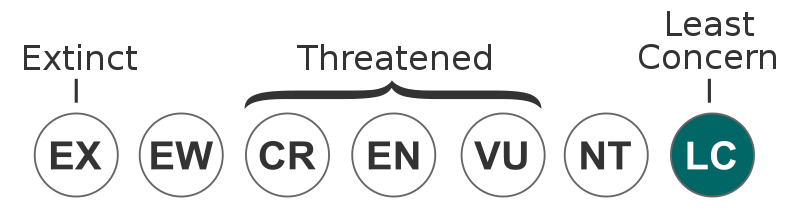
- Least Concern
- Commons category
- Vulpes ferrilata
- taxon name
- Vulpes ferrilata
- taxon common name
- 藏狐
- gestation period
- 52
- habitat
- grassland
- short name
- V. ferrilata
Sources (1)
via Wikidata · CC0
~6 min read
Encyclopedic overview
The Tibetan fox (Vulpes ferrilata), also known as the Tibetan sand fox, is a species of true fox endemic to the high Tibetan Plateau and Bhutan, China, India and Nepal up to elevations of about 5,300 m (17,400 ft). It is listed as Least Concern in the IUCN Red List, on account of its widespread range in the Tibetan Plateau's steppes and semi-deserts.
Characteristics
Excerpted from Wikipedia’s “Tibetan fox” article, available under the CC BY-SA 4.0 licence.