File:Mono_lake_tufa.JPG · Wikimedia Commons · See Wikimedia Commons
tufa
Sign in to saveAlso known as tuff, limestone tuff, calcareous
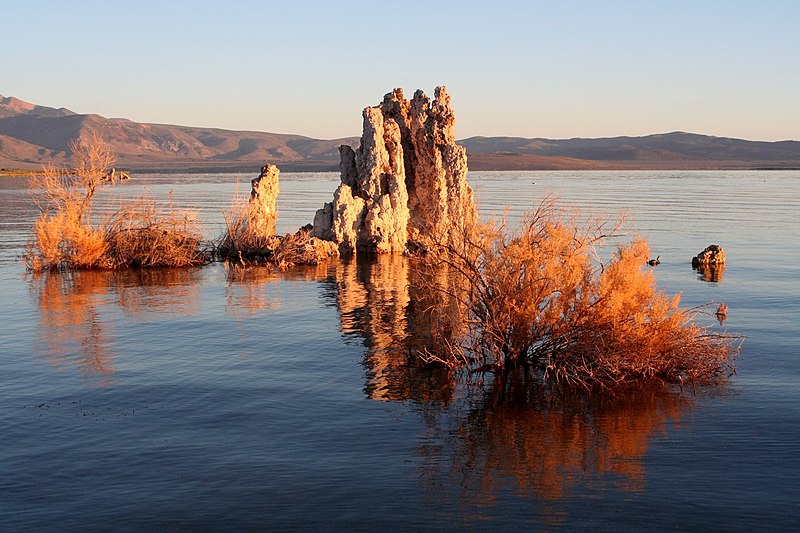
thumb|right|Tufa columns at Mono Lake, [[California]] Tufa is a variety of limestone formed when carbonate minerals precipitate out of water in unheated rivers or lakes. Geothermally heated hot springs sometimes produce similar (but less porous) carbonate deposits, which are known as travertine or thermogene travertine. Tufa is sometimes referred to as meteogene travertine.
Wikidata facts
Show 4 more facts
- Commons category
- Tufa
- topic's main category
- Category:Tufa
- Commons gallery
- Tufa
- different from
- tuff
Sources (3)
via Wikidata · CC0
~6 min read
Encyclopedic overview
14 sectionsContents
- Classification and features
- Fluvial deposits
- Lacustrine deposits
- Calcareous sinter
- Speleothems
- Columns
- Biology
- Geochemistry
- Occurrence
- Dinaric karst watercourses
- Uses
- See also
- References
- External links
thumb|right|Tufa columns at Mono Lake, [[California]] Tufa is a variety of limestone formed when carbonate minerals precipitate out of water in unheated rivers or lakes. Geothermally heated hot springs sometimes produce similar (but less porous) carbonate deposits, which are known as travertine or thermogene travertine. Tufa is sometimes referred to as meteogene travertine.
==Classification and features== Modern and fossil tufa deposits abound with wetland plants; as such, many tufa deposits are characterised by their large macrobiological component, and are highly porous. Tufa forms either in fluvial channels or in lacustrine environments. Ford and Pedley (1996) provide a review of tufa systems worldwide. thumb|Barrage Tufa at Cwm Nash, South Wales
Excerpted from Wikipedia’s “tufa” article, available under the CC BY-SA 4.0 licence.