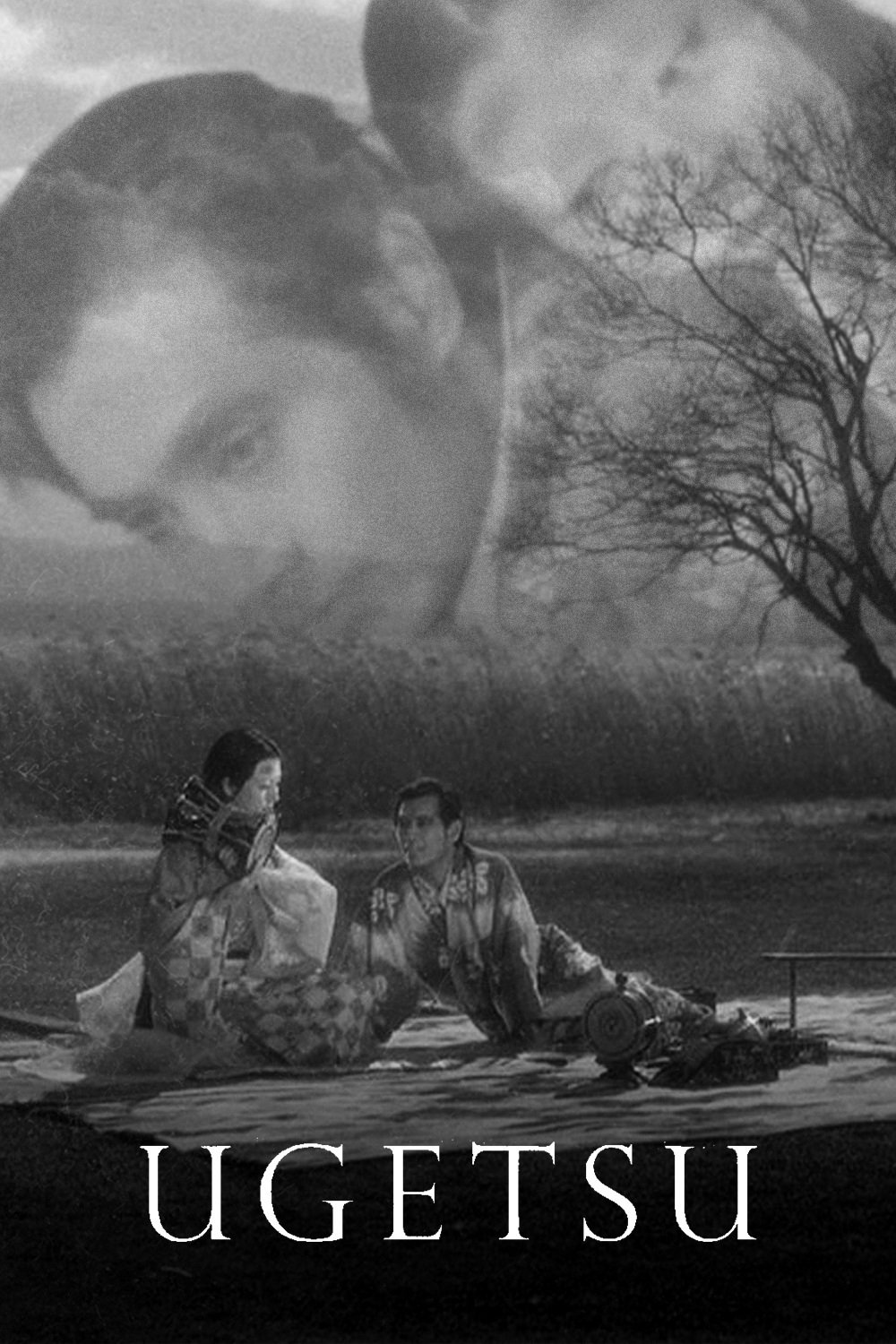
Poster from TMDB
Ugetsu
Sign in to saveAlso known as Ugetsu monogatori
Ugetsu (雨月物語, Ugetsu Monogatari, lit. "Rain-moon tales") is a 1953 Japanese period fantasy film directed by Kenji Mizoguchi starring Masayuki Mori and Machiko Kyō. It is based on the stories "The House in the Thicket" and "The Lust of the White Serpent" from Ueda Akinari's 1776 book Ugetsu Monogatari, combining elements of the jidaigeki (period drama) genre with a ghost story.
OverviewAI-generated
Ugetsu is a Japanese black-and-white fantasy drama film directed by Kenji Mizoguchi. The screenplay was written by Matsutarō Kawaguchi and Yoshikata Yoda, based on Tales of Moonlight and Rain by Ueda Akinari. The cast includes Masayuki Mori, Machiko Kyō, Kinuyo Tanaka, and Eitarō Ozawa. The film was produced by Masaichi Nagata and Kadokawa Pictures, with music composed by Fumio Hayasaka and Ichirō Saitō.
Filmed in Japan, the narrative is set in Japan and features themes of samurai, greed, and bigamy. The runtime is 96 minutes. It was distributed by Daiei Film and Netflix, with availability on platforms such as HBO Max, Amazon Channel, and Criterion Channel. The film received the Silver Lion award. It has been assessed using the Bechdel test.
Synthesized by Vinony from 36 facts across 3 sources: Wikidata, TMDb, IMDb. Generated from structured data (not the Wikipedia text) and checked against those facts — may still contain errors.
Film · TMDB
8.0In 16th century Japan, peasants Genjuro and Tobei sell their earthenware pots to a group of soldiers in a nearby village, in defiance of a local sage's warning against seeking to profit from warfare. Genjuro's pursuit of both riches and the mysterious Lady Wakasa, as well as Tobei's desire to become a samurai, run the risk of destroying both themselves and their wives, Miyagi and Ohama.
Cast
- Machiko Kyō as Lady Wakasa
- Mitsuko Mito as Ohama
- Kinuyo Tanaka as Miyagi
- Masayuki Mori as Genjurô
- Eitarō Ozawa as Tôbei
- Sugisaku Aoyama as Old Priest
Themes
- japan
- samurai
- based on novel or book
- greed
- bigamy
- tragedy
- rural area
- black and white
- ghost
- jidaigeki
This product uses the TMDB API but is not endorsed or certified by TMDB.
Key facts
- Film.name
- Ugetsu
- Film.image
- Ugetsu monogatari poster.jpg
- Film.caption
- Theatrical release poster
- Film.director
- Kenji Mizoguchi
- Film.producer
- Masaichi Nagata
- Film.music
- Fumio Hayasaka
- Film.cinematography
- Kazuo Miyagawa
- Film.editing
- Mitsuzō Miyata
- Film.studio
- Daiei Film
- Film.distributor
- Daiei Film
- Film.runtime
- 96 minutes
- Film.country
- Japan
- Film.language
- Japanese
via Wikipedia infobox
Wikidata facts
- Instance of
- film
- Award
- Silver Lion
- Genre
- drama film
- Country of origin
- Japan
- Original language
- Japanese
- Based on
- Tales of Moonlight and Rain
- Director
- Kenji Mizoguchi
- Screenwriter
- Yoshikata Yoda
- Composer
- Ichirō Saitō
- Producer
- Masaichi Nagata
- Production company
- Kadokawa Pictures
- Cinematographer
- Kazuo Miyagawa
- Narrative location
- Japan
- Filming location
- Japan
- Duration
- 96
- FilmAffinity ID
- 568981
- Distribution format
- video on demand
- Image
- Machiko Kyō and Masayuki Mori in Ugetsu monogatori, 1953.jpg
Show 8 more facts
- publication date
- 1954-09-07
- title
- 雨月物語
- distributed by
- Netflix
- color
- black-and-white
- after a work by
- Ueda Akinari
- assessment
- Bechdel test
- review score
- 100%
- Commons category
- Ugetsu monogatori
Sources (10)
via Wikidata · CC0
~22 min read
Encyclopedic overview
18 sectionsContents
- Plot
- Cast
- Production
- Development
- Casting
- Filming
- Music
- Themes
- Release
- Home media
- Reception
- Critical reception
- Accolades
- Legacy
- See also
- References
- Bibliography
- External links
Ugetsu (雨月物語, Ugetsu Monogatari, lit. "Rain-moon tales") is a 1953 Japanese period fantasy film directed by Kenji Mizoguchi starring Masayuki Mori and Machiko Kyō. It is based on the stories "The House in the Thicket" and "The Lust of the White Serpent" from Ueda Akinari's 1776 book Ugetsu Monogatari, combining elements of the jidaigeki (period drama) genre with a ghost story.
Drawing from Ueda's tales, the film is set in Japan's civil war–torn Azuchi–Momoyama period (1568–1600). In a small rural community, a potter leaves his wife and young son behind to make money selling pottery and ends up being seduced by a spirit that makes him forget all about his family. A subplot, inspired by Guy de Maupassant's 1883 short story "How He Got the Legion of Honor" ("Décoré !"), involves his brother-in-law, who dreams of becoming a samurai and chases this goal at the unintended expense of his wife.
Excerpted from Wikipedia’s “Ugetsu” article, available under the CC BY-SA 4.0 licence.