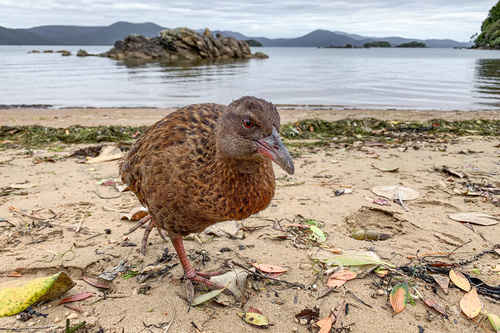
(c) Indra Bone, some rights reserved (CC BY-NC), uploaded by Indra Bone · cc-by-nc
Weka
Sign in to saveAlso known as Gallirallus australis
The weka, also known as the Māori hen or woodhen (Gallirallus australis) is a flightless bird species of the rail family. It is endemic to New Zealand. Some authorities consider it as the only extant member of the genus Gallirallus. Four subspecies are recognized but only two (northern/southern) are supported by genetic evidence.
Species
VulnerableWeka
species
Gallirallus australis Le Râle wéka ou Weka (Gallirallus australis), aussi retrouvé sous le nom d'Ocydrome (ayant été décrit sous le nom de Ocydromus australis), est une espèce de grands oiseaux de la famille des rallidés qui vit en Nouvelle-Zélande. Aujourd'hui en situation de sérieux déclin, le Weka fait l'objet de mesures de protection très restrictives par le Department of Conservation, à l'exception notables des îles Chatham, où considéré comme espèce invasive, il peut légalement être consommé. Malgré l'importance de la figure du Weka dans la culture populaire néo-zélandaise, il demeure relativement peu étudié. Les informations qui seront données dans cet article font état de connaissances actuelles souvent partielles.
via IUCN
Wikidata facts
- Instance of
- taxon
- Parent taxon
- Gallirallus
- Image
- Gallirallus australis 2.jpg
Show 13 more facts
- taxon rank
- species
- IUCN conservation status
- Vulnerable
- Commons category
- Gallirallus australis
- taxon name
- Gallirallus australis
- Commons gallery
- Gallirallus australis
- taxon common name
- frango-de-água-neozelandês
- means of locomotion
- bipedalism
- endemic to
- New Zealand
- litter size
- 2.8
- egg incubation period
- 27
- different from
- Weka
- short name
- G. australis
- described by source
- Encyclopædia Britannica 11th edition
via Wikidata · CC0
~8 min read
Encyclopedic overview
11 sectionsContents
- Description
- Taxonomy and distribution
- Behaviour
- Habitat and diet
- Breeding and Nesting
- Conservation status
- Threats
- Human interaction
- Incidents
- References
- External links
The weka, also known as the Māori hen or woodhen (Gallirallus australis) is a flightless bird species of the rail family. It is endemic to New Zealand. Some authorities consider it as the only extant member of the genus Gallirallus. Four subspecies are recognized but only two (northern/southern) are supported by genetic evidence.
The weka are sturdy brown birds about the size of a chicken. As omnivores, they feed mainly on invertebrates and fruit. Weka usually lay eggs between August and January; both sexes help to incubate.
Excerpted from Wikipedia’s “Weka” article, available under the CC BY-SA 4.0 licence.