
File:Zagreb_(29255640143).jpg · Wikimedia Commons · See Wikimedia Commons
Zagreb
Sign in to saveAlso known as Agram, Zágráb, Zagabria, Agranum
Zagreb ( ; ) is the capital and largest city of Croatia. It is in the north of the country, along the Sava river, at the southern slopes of the Medvednica mountain. Zagreb stands near the international border between Croatia and Slovenia at an elevation of approximately above sea level. At the 2021 census, the city itself had a population of 767,131, while the population of Zagreb metropolitan area is 1,086,528.
Zagreb is the capital and largest city of Croatia, located in the northern part of the country along the Sava river where it meets the Medvednica mountain. With a population of over 767,000 people in the city itself and more than 1 million in its metropolitan area, it serves as Croatia's primary urban and economic center.
AI-generated from the Wikipedia summary — may contain errors.
Key facts
- Settlement.official_name
- City of Zagreb
- Settlement.name
- Zagreb
- Settlement.settlement_type
- Capital city and county
- Settlement.image_flag
- Flag of Zagreb.svg
- Settlement.flag_size
- 130px
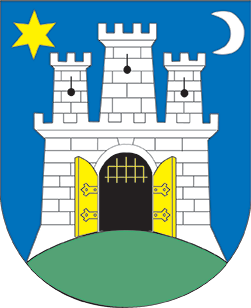
- Settlement.image_shield
- Coat of arms of Zagreb.svg
- Settlement.shield_size
- 90px
- Settlement.mapframe
- yes
- Settlement.mapframe shape
- yes
- Settlement.mapframe shape fill opacity
- 0
- Settlement.mapframe frame height
- 240
- Settlement.pushpin_map
- Croatia#Europe
- Settlement.pushpin_map_caption
- Location of Zagreb in Croatia
- Settlement.pushpin_relief
- 1
- Settlement.subdivision_type
- Country
- Settlement.subdivision_type1
- Region
- Settlement.subdivision_name1
- Central Croatia(Prigorje, Posavina)
- Settlement.subdivision_type2
- County
via Wikipedia infobox
Official website
Grad Zagreb službene stranice
zagreb.hr →Link to the official site · 18,812 chars · not written by Vinony
Wikidata facts
- Official name
- Zagreb
- Demonym
- Zagabrese
- Population
- 767131
- Area
- 305.8
- Elevation
- 127
- Official website
- www.zagreb.hr
- Image
- Zagreb (29255640143).jpg
- Dialing code
- 01
- Licence plate code
- ZG
Show 11 more facts
- Commons category
- Zagreb
- postal code
- 10000
- Commons gallery
- Zagreb
- inception
- 1094-00-00
- native label
- Zagreb
- time of earliest written record
- 1094-00-00
- P8168
- Heinz Kinigadner
- P11012
- Portugal
- P12749
- Calabria
- Serbo-Croatian preferred project code
- hr
- number of viewers/listeners
- 574076
Sources (12)
via Wikidata · CC0
~76 min read
Article
57 sectionsContents
- Name
- History
- Early Zagreb
- Relationship between Kaptol and Gradec throughout history
- 16th to 18th centuries
- 19th to mid-20th century
- Contemporary era
- Geography
- Climate
- Cityscape
- Surroundings
- Demographics
- City districts
- Settlements
- Politics and government
- City governance
- Minority councils and representatives
- International relations
- Twin towns – sister cities
- Partner cities
- Culture
- Tourism
- Gastronomy
- Cultural institutions
- Events
- Performing arts
- Recreation and sports
- Parks
- Sports
- Religion
- Economy
- Transport
- Highways
- Roads
- Bridges
- Cycling
- Public transportation
- Tram network
- Rail
- Commuter rail
- Air traffic
- Education
- University of Zagreb
- Notable people
- Artists
- Footballers
- Other sportspeople
- Military
- Music
- Religion
- Science and humanities
- Writers
- See also
- Notes
- References
- Further reading
- External links
Zagreb ( ; ) is the capital and largest city of Croatia. It is in the north of the country, along the Sava river, at the southern slopes of the Medvednica mountain. Zagreb stands near the international border between Croatia and Slovenia at an elevation of approximately above sea level. At the 2021 census, the city itself had a population of 767,131, while the population of Zagreb metropolitan area is 1,086,528.
The oldest settlement in the vicinity of the city was the Roman Andautonia, in today's Šćitarjevo. The historical record of the name "Zagreb" dates from 1134, in reference to the foundation of the settlement at Kaptol in 1094. Zagreb became a free royal city in 1242. In 1851, Janko Kamauf became Zagreb's first mayor. Zagreb has special status as a Croatian administrative division—it comprises a consolidated city-county (but separate from Zagreb County), and is administratively subdivided into 17 city districts. Most of the city districts lie at a low elevation along the valley of the river Sava, whereas northern and northeastern city districts, such as Podsljeme and Sesvete districts are spread out across the foothills of the Medvednica mountain, making the city's geographical image rather diverse. The city spans about 30 km from east to west, while stretching about 20 km from north to south. Zagreb ranks as a global city, with a 'Beta-' rating from the Globalization and World Cities Research Network.
Gallery (53)
On the map
3 mapped locations
Available in 188 languages
- Español
- Français
- Deutsch
- 中文
- 日本語
- Русский
- Português
- Italiano
- العربية
- हिन्दी
- Afrikaans
- Akan
- Albanian
- Albanian
- Amharic
- Aragonese
- Armenian
- Arpitan
Show 169 more
- Asturian
- Azerbaijani
- Bahasa Indonesia
- Balinese
- Bangla
- Bashkir
- Basque
- bat_smg
- Bavarian
- be_x_old
- Belarusian
- Betawi
- Bikol
- Bosnian
- Breton
- Bulgarian
- Catalan
- cdo
- Cebuano
- Central Kurdish
- Chechen
- Church Slavic
- Chuvash
- Cornish
- Corsican
- Crimean Tatar
- Croatian
- Czech
- Danish
- Egyptian Arabic
- Esperanto
- Estonian
- Faroese
- Fiji Hindi
- Fijian
- Filipino
- Finnish
- fiu_vro
- Gagauz
- Galician
- Georgian
- Greek
- Haitian Creole
- Hakka Chinese
- Hausa
- Hebrew
- Hungarian
- Icelandic
- Ido
- Iloko
- Inari Sami
- Interlingua
- Interlingue
- Irish
- Javanese
- Kabyle
- Kara-Kalpak
- Kazakh
- kge
- Kinyarwanda
- Komi
- Kotava
- Kurdish
- Kyrgyz
- Lao
- Latin
- Latvian
- Ligurian
- Limburgish
- Lingala
- Lingua Franca Nova
- Lithuanian
- Lombard
- Low German
- Lower Sorbian
- Luxembourgish
- Macedonian
- Malagasy
- Malay
- Malayalam
- Maltese
- Manx
- Māori
- Marathi
- Mari
- Mazanderani
- Minangkabau
- Mingrelian
- mnw
- Moksha
- Mongolian
- Moroccan Arabic
- Navajo
- Nederlands
- Nepali
- Northern Frisian
- Northern Sami
- Norwegian
- Norwegian Nynorsk
- Novial
- Nyanja
- Occitan
- Old English
- olo
- Ossetic
- Papiamento
- Pennsylvania German
- Piedmontese
- Polski
- Punjabi
- Quechua
- Romanian
- Romansh
- Rusyn
- Sardinian
- Saterland Frisian
- Scots
- Scottish Gaelic
- Serbian
- Serbian (Latin)
- Shona
- Sicilian
- Silesian
- simple
- Sindhi
- Sinhala
- Slovak
- Slovenian
- Southern Sotho
- Standard Moroccan Tamazight
- Svenska
- Swahili
- szy
- Tajik
- Talysh
- Tamil
- Tatar
- Tibetan
- Tiếng Việt
- Türkçe
- Turkmen
- Udmurt
- Ukrainian
- Upper Sorbian
- Urdu
- Uyghur
- Uzbek
- Venetian
- Veps
- Volapük
- Walloon
- Waray
- Welsh
- West Flemish
- Western Frisian
- Western Panjabi
- Wolof
- Wu Chinese
- Xhosa
- Yakut
- Yiddish
- Yoruba
- Zaza
- zh_min_nan
- zh_yue
- Zhuang
- فارسی
- ไทย
- 한국어
via Wikidata sitelinks · CC0