Category
page 1Books of Kings locations

Dead Sea
lake with no outflow (sea) in Western Asia

Babylon
Babylon ( ) was an ancient city located on the lower Euphrates river in southern Mesopotamia, within modern-day Hillah, Iraq, about south of modern-day Baghdad. Babylon functioned as the main cultural and political centre of the Akkadian-speaking region of Babylonia. Its rulers established two important empires in antiquity, the 19th–16th century BC Old Babylonian Empire, and the 7th–6th century BC Neo-Babylonian Empire. Babylon was also used as a regional capital of other empires, such as the Achaemenid Empire. Babylon was one of the most important urban centres of the ancient Near East, unti

Jordan River
river in West Asia which flows to the Dead Sea

Palmyra
Palmyra (, ; ; ) is an ancient city in central Syria. It is located in the eastern part of the Levant, and archaeological finds date back to the Neolithic period, and documents first mention the city in the early second millennium BCE. Palmyra changed hands on a number of occasions between different empires before becoming a subject of the Roman Empire in the first century CE.

Jericho
Jericho ( ; , ; Hebrew: יריחו) is a city in the West Bank, Palestine, and the capital of the Jericho Governorate. The city is located in the Jordan Valley, with the Jordan River to the east and Jerusalem to the west.

Beersheba
Beersheba ( ), officially '''Be'er-Sheva''' ( ), is the largest city in the Negev desert of southern Israel. Often referred to as the "Capital of the Negev", it is the centre of the fourth-most populous metropolitan area in Israel, the eighth-most populous Israeli city with a population of , and the second-largest city in the area (after Jerusalem), with a total area of .

Sidon
Sidon ( ), or Saida ( ; ), is the third-largest city in Lebanon. It is located on the Mediterranean coast in the South Governorate, of which it is the capital. Tyre, to the south, and the Lebanese capital of Beirut, to the north, are each about away. Sidon has a population of about 80,000 within the city limits, while its metropolitan area has more than a quarter-million inhabitants.

Nablus
Nablus ( ) is a city in the West Bank, Palestine, and the capital of the Nablus Governorate. It is located approximately north of Jerusalem, between Mount Ebal and Mount Gerizim with a population of 156,906. The city is a commercial and cultural centre of Palestine, home to An-Najah National University, one of the largest institutions of higher learning in Palestine, and the Palestine Stock Exchange. Nablus is under the administration of the Palestinian National Authority (PNA).
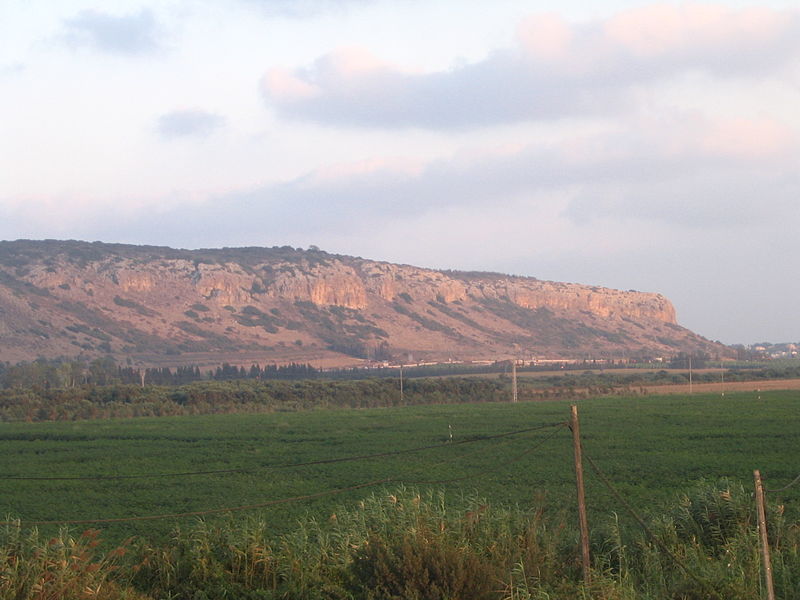
Mount Carmel
mountain in Israel

Mount Zion
hill in Jerusalem

Samaria
Samaria (), the Hellenized form of the Hebrew name Shomron (), is used as a historical and biblical name for the central region of the Land of Israel. It is bordered by Judea to the south, Galilee to the north, the Jordan River to the east, and the Mediterranean Sea to the west. The region is known in Arabic under two names, Samirah (, as-Sāmira), and Mount Nablus (جَبَل نَابُلُس, Jabal Nābulus).

City of David
archaeological site in Palestine

Edom
Edom (; ; ; ; Ancient Egyptian: jdwmꜥ) was an ancient kingdom that stretched across areas in the south of present-day Jordan, Palestine and Israel. Edom and the Edomites appear in several written sources relating to the late Bronze Age and to the Iron Age in the Levant, including the list of the Egyptian pharaoh Seti I from c. 1215 BC as well as in the chronicle of a campaign by Ramesses III (r. 1186–1155 BC), and the Hebrew Bible.

Moab
Moab () was an ancient Levantine kingdom whose territory is today located in southern Jordan. The land is mountainous and lies alongside much of the eastern shore of the Dead Sea. The existence of the Kingdom of Moab is attested to by numerous archaeological findings, most notably the Mesha Stele, which describes the Moabite victory over an unnamed son of King Omri of Israel, an episode also noted in 2 Kings 3. The Moabite capital was Dibon. According to the Hebrew Bible, Moab was often in conflict with its Israelite neighbours to the west.

Beit Shemesh
city in Israel

Tel Megiddo
site of an ancient city in northern Israel's Jezreel valley

Afula
thumb|right|The historic train station of Afula in 2006

Bethel
thumb|The ruins of Beitin, the site of ancient Bethel, during the 19th century

Sheba
Sheba, or Saba, was an ancient South Arabian kingdom that existed in Yemen before 275 CE. It likely began to exist between c. 1000 BCE and c. 800 BCE. Its inhabitants were the Sabaeans, who, as a people, were indissociable from the kingdom itself for much of the 1st millennium BCE. Modern historians agree that the heartland of the Sabaean civilization was located in the region around Marib and Sirwah. In some periods, they expanded to much of modern Yemen and even parts of the Horn of Africa, particularly Eritrea and Ethiopia. The kingdom's native language was Sabaic, which was a variety of Ol
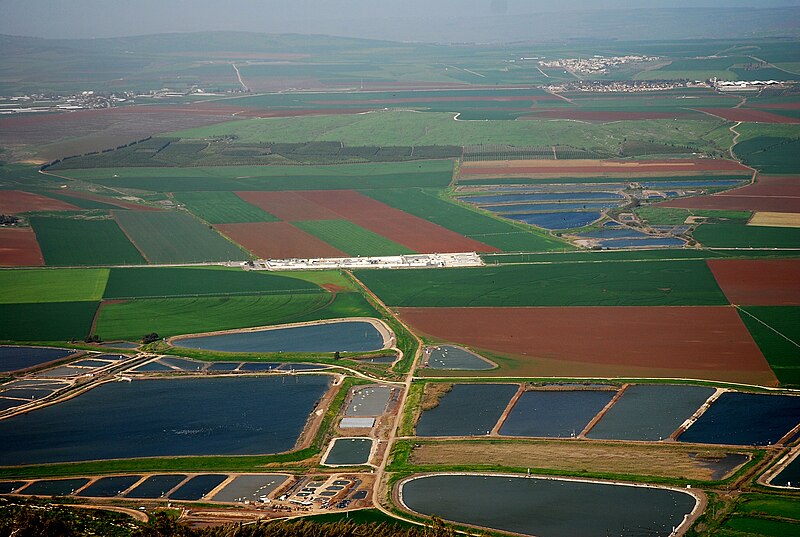
Jezreel Valley
valley in Israel

Zion
thumb|Zion (1903), Ephraim Moses Lilien
.jpg)
Shechem
Shechem ( ; , ; ), also spelled Sichem ( ; in the Septuagint, ) and other variants, was an ancient city in the Southern Levant. Described in ancient Egyptian inscriptions from the 19th century BC as a part of Retjenu, it is also recorded as a Canaanite city in the 14th century BCE Amarna letters.

Gezer
Gezer () is an archaeological site in the foothills of the Judaean Mountains at the border of the Shephelah roughly midway between Jerusalem and Tel Aviv in central Israel. It is now an Israeli national park. In the Hebrew Bible, Gezer is associated with Joshua and Solomon. Gezer rises to an elevation of above sea-level, and affords a commanding prospect of the plains to the west, north, and east.

Shephelah
The Shephelah () or Shfela (), or the Judaean Foothills (), is a transitional region of soft-sloping rolling hills in south-central Israel stretching over between the Judaean Mountains and the Coastal Plain. The different use of the term "Judean Plain", as either defining just the Coastal Plain segment stretching along the Judaean Mountains, or also including, or only referring to, the Shfela, often creates grave confusion.

Tarshish
Tarshish (; ; ) occurs in the Hebrew Bible with several uncertain meanings, most frequently as a place (probably a large city or region) far across the sea from Phoenicia and the Land of Israel. Tarshish was said to have exported vast quantities of important metals to Phoenicia and Israel. The same place name occurs in the Akkadian inscriptions of the Neo-Assyrian emperor Esarhaddon (died 669 BC) and also on the Phoenician inscription of the Nora Stone (around 800 BCE) in Sardinia; its precise location was never commonly known, and was eventually lost in antiquity. Legends grew up around
Gath
ancient city and archaeological site mentioned in the Bible and in Akkadian sources
Dan
ancient city in northern Israel
Kishon River
river in northern Israel

Ophir
Ophir (; ) is a port or region mentioned in the Bible, famous for its wealth. Its existence is attested to by an inscribed pottery shard found at Tell Qasile (in modern-day Tel Aviv) in 1946, dating to the eighth century BC, which reads "gold of Ophir to/for Beth-Horon [...] 30 shekels". The location of Ophir is unknown, though the find confirms it as a real place which exported gold.

Gilgal
thumb|Gilgal near the Israeli settlements in the west bank|Israeli settlement of [[Yafit]]

Pithom
Pithom (; ; or , and ) was an ancient city of Egypt. References in the Hebrew Bible and ancient Greek and Roman sources exist for this city, but its exact location remains somewhat uncertain. Some scholars identified it as the later archaeological site of Tell el-Maskhuta (). Others identified it as the earlier archaeological site of Tell El Retabeh ().
.jpg)
Sarepta
Sarepta (near modern Sarafand, Lebanon) was a Phoenician city on the Mediterranean coast between Sidon and Tyre, also known biblically as Zarephath. It became a bishopric, which faded, and remains a double (Latin and Maronite) Catholic titular see.

Penuel
200px|right|thumb|Depiction of Jacob wrestling with the angel at Penuel by [[Eugène Delacroix]]
Penuel () is a place described in the Hebrew Bible as being not far from Sukkot on the east of the Jordan River, south of the Zarqa in Jordan.
Desert of Paran
location mentioned in the Hebrew Bible
Mount Horeb
mountain at which the book of Deuteronomy in the Hebrew Bible states that the Ten Commandments were given to Moses
Tirzah
ancient Samarian town
Aram
historical region including several Aramean kingdoms covering much of the present-day Syria, southeastern Turkey, and parts of Lebanon and Iraq.
Dora
archaeological site
Tel Jezreel
achaeological site in Israel

Ezion-Geber
thumb|right|300px|Pharaoh's Island in the Gulf of Eilat/Aqaba
Mizpah in Benjamin
city of the tribe of Benjamin referred to in the Hebrew Bible

Tophet
In the Hebrew Bible, Tophet or Topheth (; ; ) is a location in Jerusalem in the Valley of Hinnom (Gehenna), where worshipers engaged in a ritual involving "passing a child through the fire", most likely child sacrifice. Traditionally, the sacrifices have been ascribed to a god named Moloch. The Bible condemns and forbids these sacrifices, and the tophet is eventually destroyed by king Josiah, although mentions by the prophets Jeremiah, Ezekiel, and Isaiah suggest that the practices associated with the tophet may have persisted.
%2C%20p.%20549%20in%20Thomson%2C%201859.jpg)
'Anata
Anata () is a Palestinian town in the Jerusalem Governorate of the State of Palestine, in the central West Bank, located four kilometers northeast of Jerusalem's Old City. According to the Palestinian Central Bureau of Statistics, 'Anata had a population of 16,919 in 2017. Its total land area is 30,603 dunams, of which over half now lies within the Israeli Jerusalem municipality and 1,654 is Palestinian built-up area. Since 1967, 'Anata has been occupied by Israel. Together with Shu'afat refugee camp, the village is almost surrounded by the Israeli West Bank barrier, cutting it off from Jerusa
Dothan
biblical city and archaeological site

Ramoth-Gilead
Ramoth-Gilead (, meaning "Heights of Gilead"), was a Levitical city and city of refuge east of the Jordan River in the Hebrew Bible, also called "Ramoth in Gilead" (; ; ) or "Ramoth Galaad" in the Douay–Rheims Bible. It was located in the tribal territorial allotment of the tribe of Gad.
Quwê
Ḫiyawa () or Adanawa () was a Luwian-speaking Neo-Hittite state which existed in southeastern Anatolia in the Iron Age.

Mahanaim
thumb|Territory of Gad on an 1852 map: Mahanaim can be seen in the northeast corner of the pink-shaded area of Gad
Mahanaim ( Maḥănayīm, "camps") is a place mentioned a number of times by the Bible said to be near Jabbok, in the same general area as Jabesh-gilead, beyond the Jordan River. Although two possible sites have been identified, the precise location of Mahanaim is uncertain. Tell edh-Dhahab el-Gharbi, the western one of the twin Tulul adh-Dhahab tells, is one proposed identification.

Beth Horon
thumb|Upper Bethoron, drawing from 1880
Bethoron (; ), also Beth-Horon, were two neighboring towns in ancient Israel, situated on the Gibeon–Aijalon road. They served as strategic points along the road, guarding the "ascent of Bethoron". While the Hebrew Bible sometimes distinguishes between the two towns—Upper and Lower Bethoron—it often refers to both simply as Bethoron. The towns are mentioned in the Bible and in other ancient sources: Upper Bethoron appears in Joshua, Lower Bethoron in Joshua, both in 1 Chronicles, and the ascent in I Maccabees.
Cave of Elijah
cave in Israel

Shunem
thumb|Amarna letter mentioning Shunem|right
Shunem or Shunaam ( Šūnēm; in LXX ) was a small village mentioned in the Bible in the possession of the Tribe of Issachar. It was located near the Jezreel Valley, north of Mount Gilboa ().
Libnah
Libnah or Lobana (, whiteness; ) was an independent city, probably near the western seaboard of Israel, with its own king at the time of the Israelite conquest of Canaan. It is thought to have been an important producer of revenue, and one that rebelled against the Judahite crown.

Jabesh-Gilead
Jabesh-Gilead ( Yāḇēš Gilʿāḏ), sometimes shortened to Jabesh, was an ancient Israelite town in Gilead, in northwest Jordan. Jabesh is mentioned several times in the Hebrew Bible primarily in connection with King Saul's battles against the Ammonites and Philistines.

Cherith
thumb|right|Ravens feed Elijah by the brook Cherith, from commons:Die Bibel in Bildern|Die Bibel in Bildern
Pharpar
Pharpar (or Pharphar in the Douay–Rheims Bible) is a biblical river in Syria. It is the less important of the two rivers of Damascus mentioned in the Book of Kings (2 Kings 5:12), now generally identified with the Nahr al-Awaj, also called Awaj (literally, 'crooked'), although if the reference to Damascus is limited to the city, as in the Arabic version of the Old Testament, Pharpar would be the modern Taura. In the early Baedeker Guides it was identified as the Al-Sabirani, a fairly downstream tributary of the Awaj. The stream runs from west to east, flowing from Hermon south of Damascus, and
Zaretan
Zaretan or Zarethan (), also known as Zeredathah, is a city mentioned in the Hebrew Bible as near the location where the Hebrews crossed the Jordan (). In the books of Joshua (, KJV "Zaretan") and 1 Kings ( KJV "Zartanah", "Zarthan"), it is called Zarethan, but in 2 Chronicles it is called Zeredathah (, KJV).
Sokho
thumb|right|Blue Lupines at Tel Socho
Sokho (alternate spellings: Sokhoh, Sochoh, Soco, Sokoh; ) is the name given to two ancient towns in the territorial domain of Judah as mentioned in the Hebrew Bible, west of the Judean hills. Both towns were given the name Shuweikah in Arabic, a diminutive of the Arabic shawk, meaning "thorn". The remains of both have since been identified.
Abel-meholah
thumb|Jordan Valley around Wadi al-Malih. Abel-meholah is believed to have been located in that area
Abel-meholah (, Avel Mehola) was an ancient city frequently mentioned in the Hebrew Bible (Old Testament of Christianity). It is best known for being the birthplace and residence of the prophet Elisha. It is traditionally located near the Jordan River, south of Beit-She'an.
Gath-hepher
Gath-hepher or Gat Hefer () was a border town in the Northern Kingdom of Israel around the 8th century BCE. According to the Deuteronomistic history, it was the home of the prophet Jonah.
Tel Bet Shemesh
hill in Jerusalem District, Israel
Tishbe
Tishbe, sometimes transliterated as Thisbe, is a town mentioned in the Hebrew Bible's First Book of Kings, , as the residence and possibly even birthplace of the prophet Elijah, known as the Tishbite (see that page for discussion of the term). It is placed by the biblical text in the historical region of Gilead, now in the western part of modern-day Jordan. However, the toponym may denominate another location, as discussed below.