
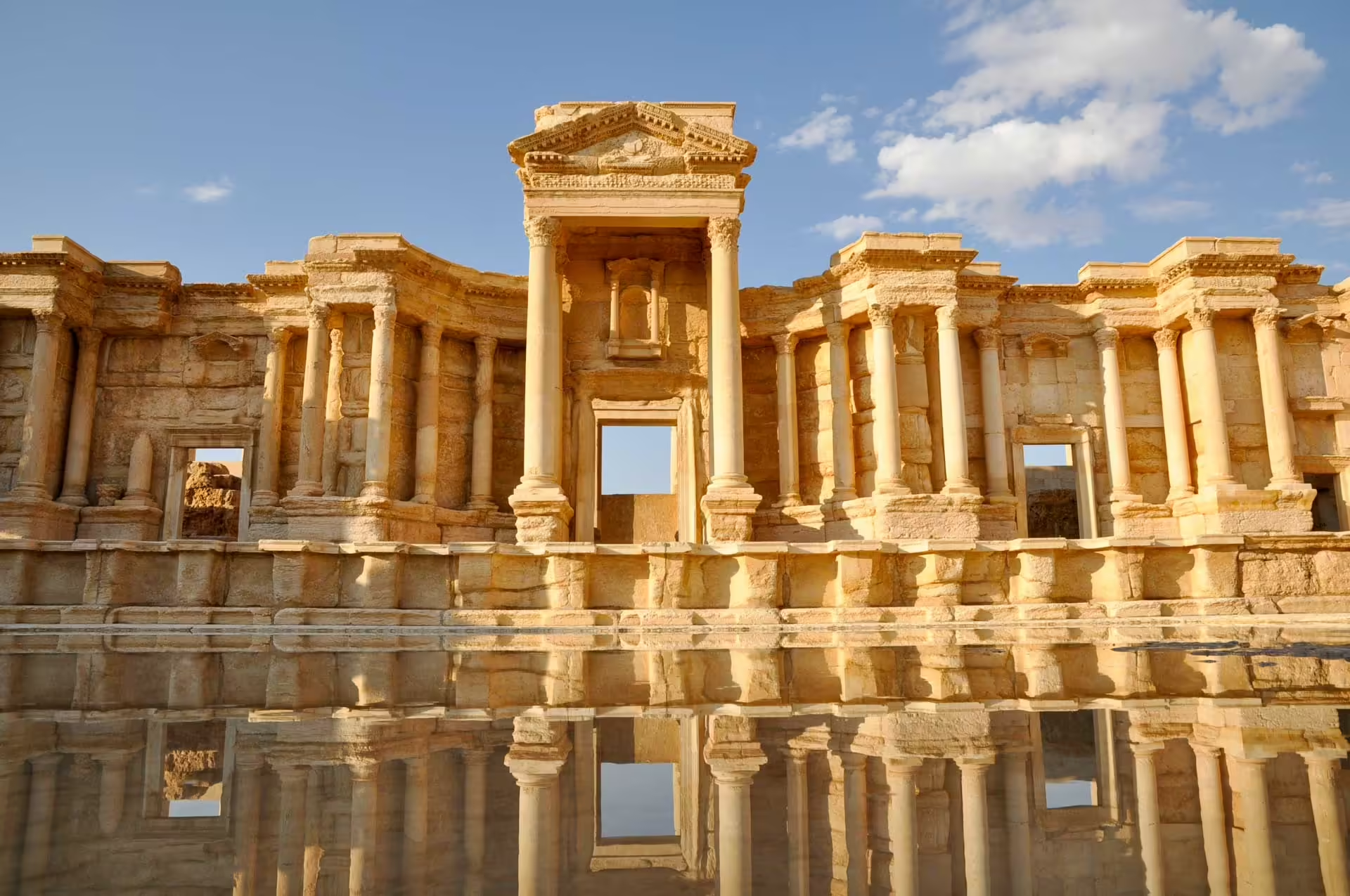
File:Palmyra_03.jpg · Wikimedia Commons · See Wikimedia Commons
Palmyra
Sign in to saveAlso known as Palmira, Tadmor
Palmyra (, ; ; ) is an ancient city in central Syria. It is located in the eastern part of the Levant, and archaeological finds date back to the Neolithic period, and documents first mention the city in the early second millennium BCE. Palmyra changed hands on a number of occasions between different empires before becoming a subject of the Roman Empire in the first century CE.
OverviewAI-generated
Palmyra is an ancient desert city located in Syria. It was once a center of power for Queen Zenobia. The site is recognized in the UNESCO World Heritage collection.
The area of Palmyra covers 16,800 units. The settlement was dissolved, abolished, or demolished on January 1, 1929. Information about the location is described at a URL on PlaceMania. The subject is referenced by 919 other encyclopedia articles.
Synthesized by Vinony from 12 facts across 4 sources: Wikidata, Firecrawl, Vinony collections, Vinony graph. Generated from structured data (not the Wikipedia text) and checked against those facts — may still contain errors.
Key facts
- Ancient site.name
- Palmyra
- Ancient site.alternate_name
- Tadmor
- Ancient site.image
- Palmyra 03.jpg
- Ancient site.alt
- Ruins of Palmyra
- Ancient site.caption
- The ruins of Palmyra in 2010
- Ancient site.map_type
- Syria#Mediterranean east#West Asia
- Ancient site.map_alt
- Palmyra is located in the center of Syria
- Ancient site.relief
- yes
- Ancient site.location
- Tadmur, Homs Governorate, Syria
- Ancient site.region
- Syrian Desert
- Ancient site.type
- Settlement
- Ancient site.part_of
- Palmyrene Empire
- Ancient site.built
- 3rd millennium BCE
- Ancient site.epochs
- Middle Bronze Age to Modern
- Ancient site.cultures
- Aramaic, Arabic, Greco-Roman
- Ancient site.condition
- Ruined
- Ancient site.ownership
- Public
- Ancient site.management
- Syrian Ministry of Culture
via Wikipedia infobox
Described at
Palmýra - Sýria - PlaceMania
Staroveké púštne mesto Palmýra, kedysi centrum moci kráľovnej Zenóbie
placemania.sk →Väčšinu posledných rokov bola Palmýra malým mestom, vedľa ktorého sa rozprestierala veľká a svieža oáza; ruiny starého mesta pokrývali rovinu v dĺžke dobrého štvorcového kilometra. Nádherné románske stĺpy vytesané z miestneho zlatého pieskovca pochodovali dlhými alejami; skoro ráno a podvečer žiarivo modrá obloha nápadne kontrastovala s teplými tónmi kameňa a dlhými hlbokými tieňmi. Bolo to neobyčajné miesto na návštevu, pripomienka tajomnej stratenej ríše, hodná pútavých románov. Žiaľ, v máji 2015 sa táto oblasť dostala pod kontrolu Islamského štátu v Iraku a Levante (Daeš) a jej chrámy, pamiatky a ďalšie budovy boli následne vyhodené do vzduchu, zrovnané so zemou alebo inak zničené. Koľko z nich zostane po skončení konfliktu, zatiaľ nie je známe. Zakladateľ projektu PlaceMania.sk a zodpovedá za jeho obsah, technické fungovanie a dlhodobý rozvoj. Cestovné zápisky na webe vychádzajú z vlastnej skúsenosti z ciest; faktografické záznamy o miestach vznikajú kombináciou verejných zdrojov, automatizovaného spracovania dát a redakčného overovania. Zameriava sa na netradičné lokality, ich historický a geografický kontext a menej známe súvislosti. Things to do near Palmýra, تدمر, Palmyre, Palmira, Palmyra, Palmüra, Пальмира, Múzeum, museum, Tadmor, Homs Governorate, Syria, الشام, Sýria, SY, SYR. Find tours, guided tours, local activities, attractions, tickets, excursions, sightseeing, day trips and travel experiences nearby. Coordinates: 34.5515375, 38.2680469. Táto synagóga zo šiesteho storočia bola najprv obnovená digitálne a potom aj reálne. Pozrite si ďalšie zaujímave miesta vo svete, ktoré stoja za naplánovanie ďalšej cesty. Norie v Hame: veľké drevené vodné kolesá na Oronte, dnes mestský symbol a pamiatka, ktorá prežila aj moderné zavlažovanie. Chcete vidieť ďalšie úchvatné miesta ako Palmýra? Nájdeš ich u nás na mape. Objav s nami ďalšie úžasné miesta na zemi.
Excerpt from a page describing this subject · 15,729 chars · not written by Vinony
Wikidata facts
- Has part
- Temple of Al-Lat
- Country
- Syria
- Located in
- Tadmur
- Area
- 16800
- Capital of
- Palmyrene Empire
- Image
- Palmira al capvespre (2495033007).jpg
Show 11 more facts
- Commons category
- Palmyra
- topic's main category
- Category:Palmyra
- dissolved, abolished or demolished date
- 1929-01-01
- located in/on physical feature
- Syrian Desert
- heritage designation
- World Heritage Site
- Commons gallery
- Palmyra
- culture
- Ancient Greece
- on focus list of Wikimedia project
- Wikipedia:Vital articles/Level/4
- P12749
- Irenäus Eibl-Eibesfeldt
- P8168
- Gammaherpesvirinae
- described at URL
- www.placemania.sk/svetova-zaujimavost/palmyra
via Wikidata · CC0
~79 min read
Encyclopedic overview
50 sectionsContents
- Etymology
- Region and city layout
- Layout
- Demographic history
- Bronze and Iron Ages
- Hellenistic to Byzantine periods
- Early Muslim to Late Ottoman periods
- Ethnicity of classical Palmyra
- Language
- Social organization
- Culture
- Art and architecture
- Site
- Cemeteries
- Notable structures
- Public buildings
- Temples
- Other buildings
- Destruction by IS
- Restoration
- History
- Bronze and Iron Ages
- Hellenistic and Roman periods
- Autonomous Palmyrene region
- Palmyrene kingdom
- Persian wars
- Palmyrene empire
- Later Roman and Byzantine periods
- Arab caliphates
- Umayyad and early Abbasid periods
- Decentralization
- Mamluk period
- Al Fadl principality
- Ottoman era
- 20th century
- Syrian civil war
- Government
- Military
- Relations with Rome
- Religion
- Malakbel and the Roman Sol Invictus
- Economy
- Commerce
- Research and excavations
- See also
- Notes
- References
- Citations
- Sources
- External links
Palmyra (, ; ; ) is an ancient city in central Syria. It is located in the eastern part of the Levant, and archaeological finds date back to the Neolithic period, and documents first mention the city in the early second millennium BCE. Palmyra changed hands on a number of occasions between different empires before becoming a subject of the Roman Empire in the first century CE.
The city grew wealthy from trade caravans; the Palmyrenes became renowned as merchants who established colonies along the Silk Road and operated throughout the Roman Empire. Palmyra's wealth enabled the construction of monumental projects, such as the Great Colonnade, the Temple of Bel, and the distinctive tower tombs. Ethnically, the Palmyrenes combined elements of Amorites, Arameans, and Arabs. Socially structured around kinship and clans, Palmyra's inhabitants spoke Palmyrene Aramaic, a variety of Western Middle Aramaic, while using Koine Greek for commercial and diplomatic purposes. The Hellenistic period of West Asia influenced the culture of Palmyra, which produced distinctive art and architecture that combined different Mediterranean traditions. The city's inhabitants worshiped local Semitic, Mesopotamian, and Arab deities.
Excerpted from Wikipedia’s “Palmyra” article, available under the CC BY-SA 4.0 licence.
Gallery (32)
On the map
2 mapped locations
Available in 95 languages
- Español
- Français
- Deutsch
- 中文
- 日本語
- Русский
- Português
- Italiano
- العربية
- हिन्दी
- Afrikaans
- Akan
- Akan
- Albanian
- Armenian
- Arpitan
- Asturian
- Azerbaijani
Show 76 more
- Bahasa Indonesia
- Bangla
- Bashkir
- Basque
- be_x_old
- Belarusian
- Bulgarian
- Burmese
- Catalan
- Cebuano
- Central Kurdish
- Chuvash
- Croatian
- Czech
- dag
- Danish
- Egyptian Arabic
- Esperanto
- Estonian
- Extremaduran
- Finnish
- Frafra
- Galician
- Georgian
- Greek
- Hebrew
- Hungarian
- hyw
- Icelandic
- Ido
- Irish
- Kazakh
- Kurdish
- Latin
- Latvian
- Lithuanian
- Luxembourgish
- Maithili
- Malagasy
- Malay
- Maltese
- Mazanderani
- Mingrelian
- Mossi
- Nederlands
- Nepali
- Norwegian
- Norwegian Nynorsk
- Occitan
- Pashto
- Polski
- Punjabi
- Romanian
- Scots
- Serbian
- Serbian (Latin)
- Sicilian
- simple
- Slovak
- Slovenian
- Svenska
- Tamil
- Tatar
- Tiếng Việt
- Türkçe
- Ukrainian
- Urdu
- Uzbek
- Waray
- Welsh
- Wu Chinese
- zh_min_nan
- zh_yue
- فارسی
- ไทย
- 한국어
via Wikidata sitelinks · CC0