Category
page 1Countries in Central Africa

Democratic Republic of the Congo
The Democratic Republic of the Congo (DRC), also known as the DR Congo, Congo-Kinshasa, or simply the Congo or less often Zaire, is a country in Central Africa. By land area, it is the second-largest country in Africa and the 11th-largest in the world. With a population of around 124 million people, the Democratic Republic of the Congo is the fourth-most populous country in Africa and the most populous Francophone country in the world. French is the official and most widely spoken language, though there are over 200 indigenous languages, of which Lingala is the most widely spoken. The capital, largest city, and economic center is Kinshasa. The DRC is bordered by the Republic of the Congo, the Cabinda exclave of Angola, and the South Atlantic Ocean to the west; the Central African Republic and South Sudan to the north; Uganda, Rwanda, Burundi, and Tanzania to the east; and Zambia and Angola to the south. Centered on the Congo Basin, most of the country's terrain is covered by dense rainforests and is crossed by many rivers, while the east and southeast are mountainous.

Angola
Angola, officially the Republic of Angola, is a country on the western coast of Southern Africa. It is the second-largest Portuguese-speaking (Lusophone) country after Brazil in both total area and population and is the seventh-largest country in Africa. It is bordered by Namibia to the south, the Democratic Republic of the Congo to the north, Zambia to the east, and the Atlantic Ocean to the west. Angola has an exclave province, the province of Cabinda, that borders the Republic of the Congo and the Democratic Republic of the Congo. The capital and most populous city is Luanda.

Cameroon
Cameroon, officially the Republic of Cameroon, is a country in Central Africa. It shares boundaries with Nigeria to the west and north, Chad to the northeast, the Central African Republic to the east, and Equatorial Guinea, Gabon, and the Republic of the Congo to the south. Its coastline lies on the Bight of Biafra, part of the Gulf of Guinea, and the Atlantic Ocean. Due to its strategic position at the crossroads between West Africa and Central Africa, it has been categorized as being in both geostrategic locations. Cameroon's population of nearly 31 million people speak 250 native languages,

Chad
Chad, officially the Republic of Chad, is a landlocked country in Central Africa. It is bordered by Libya to the north, Sudan to the east, the Central African Republic to the south, Cameroon to the southwest, Nigeria to the southwest (at Lake Chad), and Niger to the west. Chad has a population of 19 million, of which 1.6 million live in the capital and largest city of N'Djamena. With a total area of around , Chad is the fifth-largest country in Africa and the twentieth largest nation by area.

Central African Republic
The Central African Republic (CAR) is a landlocked country located in Central Africa. It is bordered by Chad to the north, Sudan to the northeast, South Sudan to the east, the Democratic Republic of the Congo to the south, the Republic of the Congo to the southwest, and Cameroon to the west. The Central African Republic covers a land area of about 620,000 square kilometres (240,000 sq mi). As of 2024, it has a population of 5,357,744, consisting of about 80 ethnic groups. Having been a French colony under the name Ubangi-Shari, French is its official language, with Sango, a Ngbandi-based creole language, as the national and co-official language. Its capital and largest city is Bangui, which is on the southern border with the Democratic Republic of the Congo.

Guinea
Guinea, officially the Republic of Guinea, is a coastal country in West Africa. It borders the Atlantic Ocean to the west, Guinea-Bissau to the northwest, Senegal to the north, Mali to the northeast, Ivory Coast to the southeast, and Sierra Leone and Liberia to the south. It is sometimes referred to as Guinea-Conakry, after its capital Conakry, to distinguish it from other territories in the eponymous region, such as Guinea-Bissau and Equatorial Guinea. Guinea has a population of 14 million and an area of .

Republic of the Congo
The Republic of the Congo, also known as Congo-Brazzaville, the Congo Republic or simply Congo, is a country located on the western coast of Central Africa to the west of the Congo River. It is bordered to the west by Gabon, to the northwest by Cameroon, to the northeast by the Central African Republic, to the southeast by the Democratic Republic of the Congo, to the south by the Angolan exclave of Cabinda, and to the southwest by the Atlantic Ocean.
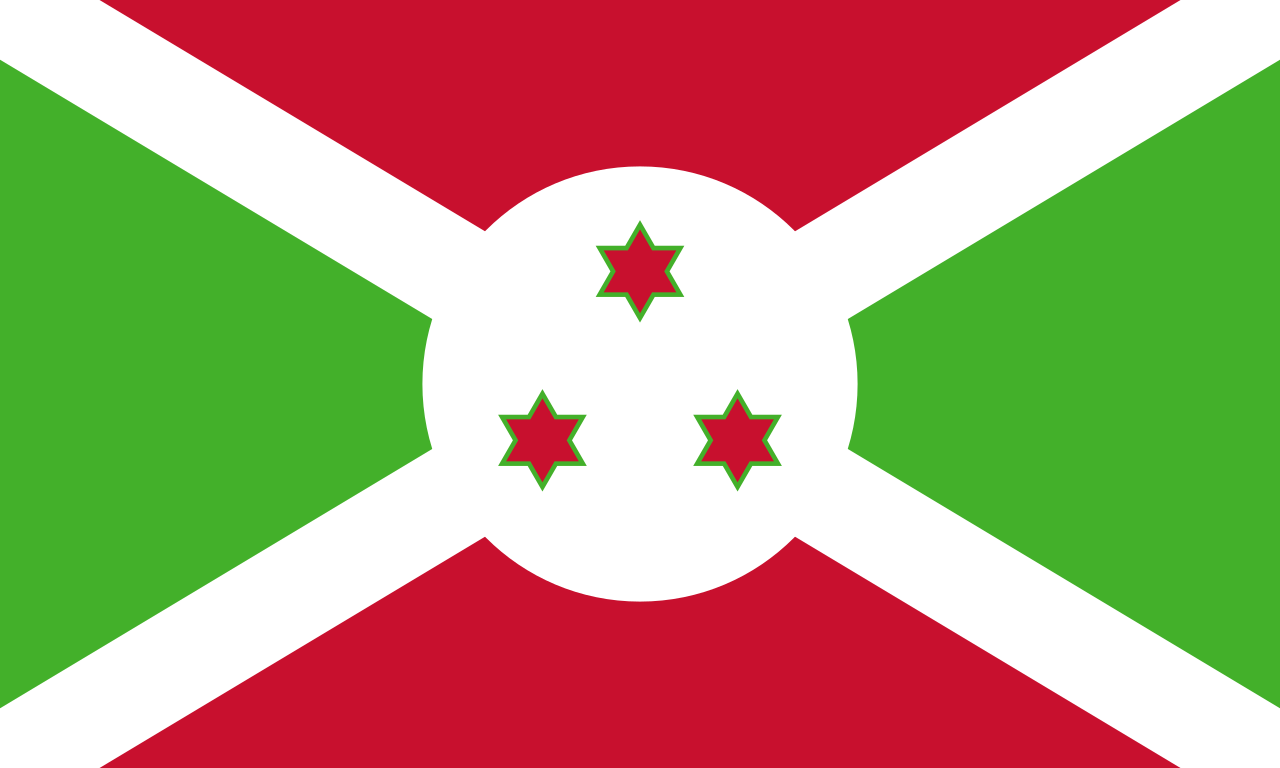
Burundi
Burundi, officially the Republic of Burundi, is a landlocked country in East Africa. It is located in the Great Rift Valley at the junction between the African Great Lakes region and Southeast Africa, with a population of over 14 million people. It is bordered by Rwanda to the north, Tanzania to the east and southeast, and the Democratic Republic of the Congo to the west; Lake Tanganyika lies along its southwestern border. The political capital city is Gitega and the economic capital and largest city is Bujumbura.

Gabon
Gabon ( ; ), officially the Gabonese Republic (), is a country on the Atlantic coast of Central Africa, on the equator, bordered by Equatorial Guinea to the northwest, Cameroon to the north, the Republic of the Congo to the east and south, and the Gulf of Guinea to the west. It has an area of and a population of million people. There are coastal plains, mountains (the Cristal Mountains and the Chaillu Massif in the centre), and a savanna in the east. Libreville is the country's capital and largest city.

South Sudan
South Sudan, officially the Republic of South Sudan, is a landlocked country in East Africa. It is bordered by Sudan to the north, Ethiopia to the east, the Democratic Republic of the Congo to the southwest, Uganda to the south, Kenya to the southeast and to the west by the Central African Republic. South Sudan's diverse landscape includes vast plains and plateaus, dry and tropical savannahs, inland floodplains, and forested mountains. The Nile River system is the defining physical feature of the country, running south to north across its center, which is dominated by a large swamp known as the Sudd. South Sudan has an estimated population of just over 12.7 million in 2024. Juba is the capital and largest city.
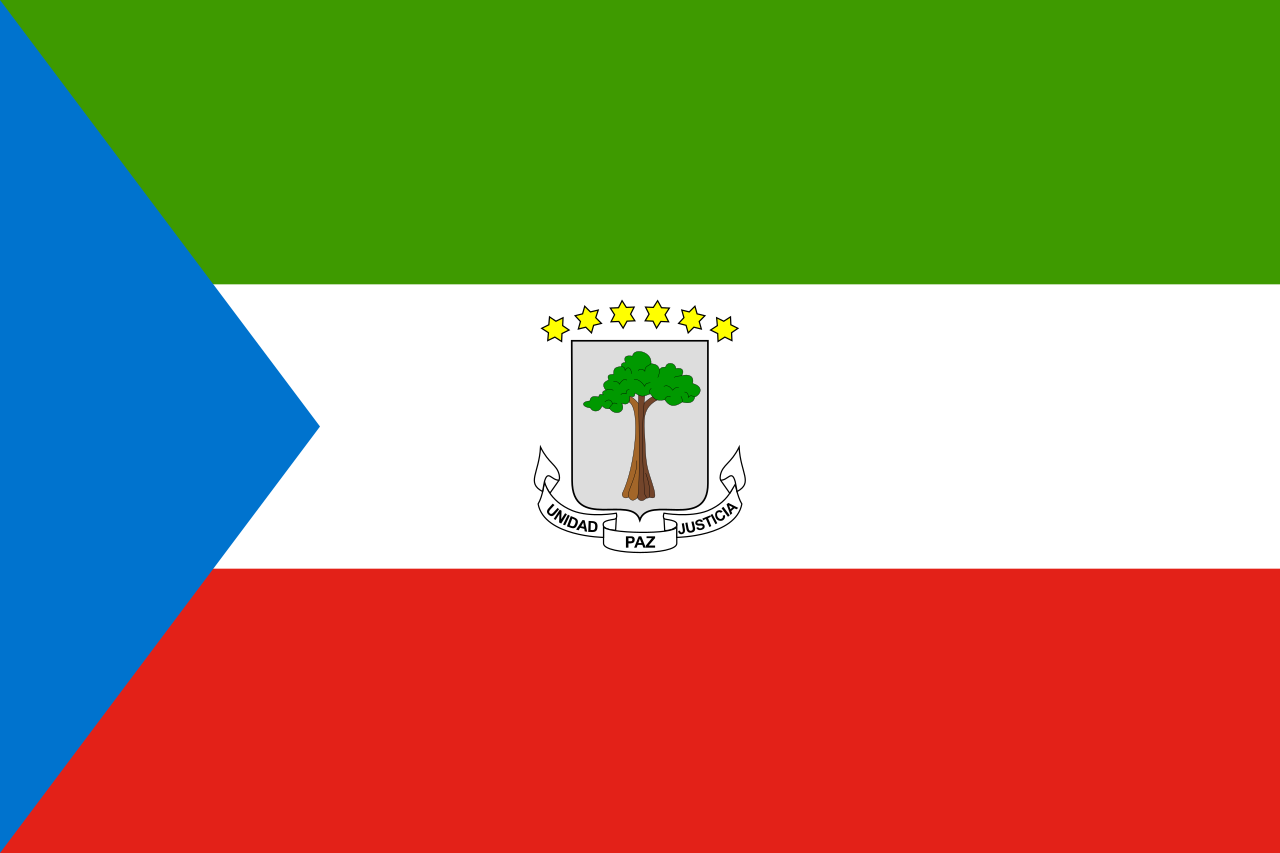
Equatorial Guinea
Equatorial Guinea, officially the Republic of Equatorial Guinea, is a country on the west coast of Central Africa. It has an area of 28,000 square kilometres (11,000 sq mi). Formerly the colony of Spanish Guinea, its post-independence name refers to its location both near the Equator and in the African region of Guinea. As of 2025, the country has a population of 1,853,559, over 85% of whom are members of the Fang people, the country's dominant ethnic group. The Bubi people, indigenous to Bioko, are the second largest group at approximately 6.5% of the population. Its capital is Ciudad de la Paz, replacing former capital Malabo in 2026, while its largest city is Bata.

São Tomé and Príncipe
São Tomé and Príncipe, officially the Democratic Republic of São Tomé and Príncipe, is an island country in the Gulf of Guinea, off the western equatorial coast of Central Africa. It consists of two archipelagos around the two main islands of São Tomé and Príncipe, about 81 nautical miles apart and about 135 and 121 nautical miles off the northwestern coast of Gabon. With a population of 201,800, São Tomé and Príncipe is the second-smallest and second-least populous African sovereign state after Seychelles.