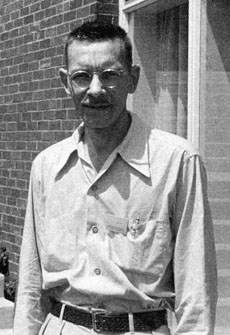
File:Alfred_Hershey.jpg · Wikimedia Commons · See Wikimedia Commons
OverviewAI-generated
Alfred D. Hershey was an American person who lived from 1908-12-04 to 1997-05-22. He is associated with five works and has received one Nobel Prize. His recognition includes membership in the American Academy Arts Sciences collection, the Nobel Laureates collection, and the Nobel Medicine collection.
Synthesized by Vinony from 12 facts across 6 sources: Wikidata, Crossref, MusicBrainz, Nobel Prize, Vinony collections, Vinony graph. Generated from structured data (not the Wikipedia text) and checked against those facts — may still contain errors.
Recent publications · Crossref
5 total works indexed
- Synthesis of graphene-based nanosheets via chemical reduction of exfoliated graphite oxide
· 2007 · cited 13,130x
- Mutation and Cancer: Statistical Study of Retinoblastoma
· 1971 · cited 5,402x
- G PROTEINS: TRANSDUCERS OF RECEPTOR-GENERATED SIGNALS
· 1987 · cited 4,999x
- Heart Disease and Stroke Statistics—2022 Update: A Report From the American Heart Association
· 2022 · cited 4,820x
- The Somatic Genomic Landscape of Glioblastoma
· 2013 · cited 4,482x
via Crossref · CC0
Nobel Prize
- The Nobel Prize in Physiology or Medicine1969
“for their discoveries concerning the replication mechanism and the genetic structure of viruses”
Shared · 1/3 portion
Wikidata facts
- Instance of
- human
- Given name
- Alfred
- Gender
- male
- Citizenship
- United States
- Place of birth
- Owosso
- Place of death
- Syosset
- Occupation
- microbiologist
- Educated at
- Michigan State University
- Languages spoken
- English language
- Field of work
- genetics
- Image
- Alfred Hershey.jpg
- Significant event
- Hershey–Chase experiment
Show 9 more facts
- manner of death
- natural causes
- date of birth
- 1908-12-04
- date of death
- 1997-05-22
- Commons category
- Alfred Hershey
- member of
- National Academy of Sciences
- nominated for
- Nobel Prize in Chemistry
- name in native language
- Alfred Day Hershey
- cause of death
- heart failure
- interested in
- genetics
via Wikidata · CC0
~3 min read
Encyclopedic overview
Alfred Day Hershey (December 4, 1908 – May 22, 1997) was an American Nobel Prize–winning bacteriologist and geneticist.
Early years
Excerpted from Wikipedia’s “Alfred Hershey” article, available under the CC BY-SA 4.0 licence.