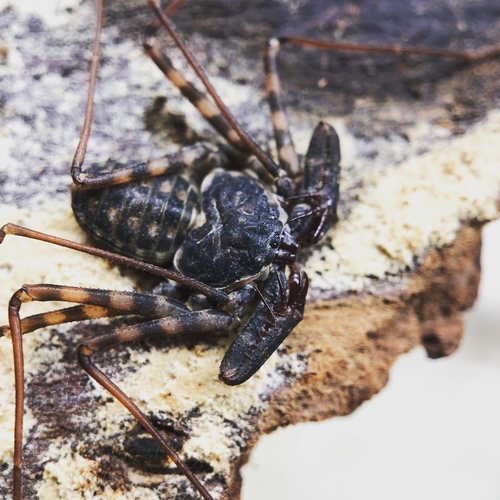
(c) Enzo Veloo, all rights reserved, uploaded by Enzo Veloo
Amblypygi
Sign in to saveAlso known as tailless whip scorpions, whip spiders, tailless whip scorpion
Amblypygi is an order of arachnids also known as whip-spiders or tailless whip-scorpions, not to be confused with whip-scorpions or vinegaroons that belong to the related order Uropygi. The name "amblypygid" means "blunt tail", a reference to a lack of the flagellum that is otherwise seen in whip-scorpions. Amblypygids possess no silk glands or venom. They rarely bite if threatened but can grab fingers with their pedipalps, resulting in thorn-like puncture-injuries.
Species
Tanzanian Whipspider
ORDER
- KingdomAnimalia
- PhylumArthropoda
- ClassArachnida
- OrderAmblypygi
via GBIF
Wikidata facts
- Image
- Amblypigid.jpg
Show 3 more facts
- Commons category
- Amblypygi
- taxon name
- Amblypygi
- taxon common name
- amblypyger
Sources (3)
via Wikidata · CC0
~8 min read
Article
9 sectionsContents
- Description
- Body-plan
- Pedipalps
- Exoskeleton
- Behavior
- As pets
- Genera
- References
- External links
Amblypygi is an order of arachnids also known as whip-spiders or tailless whip-scorpions, not to be confused with whip-scorpions or vinegaroons that belong to the related order Uropygi. The name "amblypygid" means "blunt tail", a reference to a lack of the flagellum that is otherwise seen in whip-scorpions. Amblypygids possess no silk glands or venom. They rarely bite if threatened but can grab fingers with their pedipalps, resulting in thorn-like puncture-injuries.
As of 2023, five families, 17 genera, and around 260 species had been discovered and described. They are found in tropical and subtropical regions worldwide, mainly in warm and humid environments. They like to stay protected and hidden within leaf litter, caves, or underneath bark. Some species are subterranean; all are nocturnal. Fossilized amblypygids have been found dating back to the Carboniferous period, such as Weygoldtina.