Encyclopedia of Life · EOL (see source)
Phrynidae
Sign in to savePhrynidae is a family of amblypygid arachnida arthropods also known as whip spiders and tailless whip scorpions. Phrynidae species are found in tropical and subtropical regions in North and South America. Some species are subterranean; all are nocturnal. At least some species of Phrynidae hold territories that they defend from other individuals.
Species
FAMILY
- KingdomAnimalia
- PhylumArthropoda
- ClassArachnida
- OrderAmblypygi
- FamilyPhrynidae
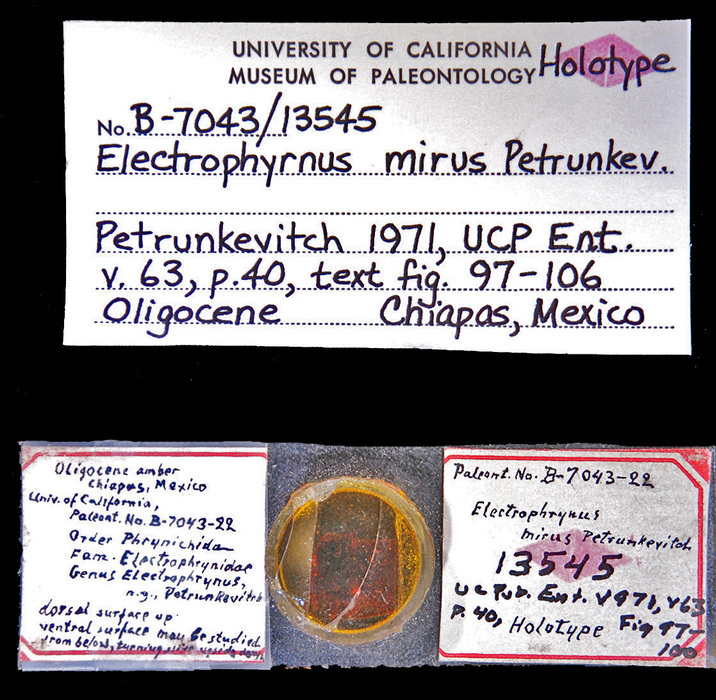
Phrynidae es una familia de Arachnida del orden Amblypygi. Las especies de Phrynidae habitan en regiones tropicales y subtropicales del norte y sur de América. Algunas especies son subterráneas; todas son nocturnas.[1] Algunas especies de Phrynidae poseen territorios que defienden frente a otros individuos.[2] Taxonomía Damon johnstonii de África Occidental Los siguientes géneros han sido reconocidos:[3] Phrynidae Blanchard, 1852 Acanthophrynus Kraepelin, 1899 (1 especie) †Britopygus Dunlop & Martill, 2002 (1 especie; Cretácico) †Electrophrynus Petrunkevich, 1971 (1 especie; Mioceno) Heterophrynus Pocock, 1894 (14 especies) Paraphrynus Moreno, 1940 (18 especies) Phrynus Lamarck, 1801 (28 especies, Oligoceno - Presente) Referencias ↑ Chapin, KJ; Hebets, EA (2016). «Behavioral ecology of amblypygids». Journal of Arachnology 44 (1): 1-14. ↑ Chapin KJ; Hill-Lindsay S (2015). «Territoriality evidenced by asymmetric intruder-holder motivation in an amblypygid». Behavioural Processes 122: 110-115. ↑ Mark S. Harvey (2003). «Order Amblypygi». Catalogue of the smaller arachnid orders of the world: Amblypygi, Uropygi, Schizomida, Palpigradi, Ricinulei and Solifugae. CSIRO Publishing. p
via GBIF
Museum specimens
- Specimen records
- 182
- Family
- Phrynidae
- Collections
- UNM, LACM
- Recorded in
- Peru, Nicaragua, Mexico, United States, Costa Rica, Venezuela, Panama
Wikidata facts
- Instance of
- taxon
- Parent taxon
- Phrynoidea
- Image
- Paraphrynus sobre el mármol.jpg
Show 4 more facts
- Commons category
- Phrynidae
- taxon rank
- family
- taxon name
- Phrynidae
- topic's main category
- Category:Phrynidae
Sources (2)
via Wikidata · CC0
~1 min read
Encyclopedic overview
3 sectionsContents
- Taxonomy
- References
- External links
Phrynidae is a family of amblypygid arachnida arthropods also known as whip spiders and tailless whip scorpions. Phrynidae species are found in tropical and subtropical regions in North and South America. Some species are subterranean; all are nocturnal. At least some species of Phrynidae hold territories that they defend from other individuals.
==Taxonomy== The following genera are recognised: Phrynidae Blanchard, 1852 Acanthophrynus Kraepelin, 1899 (1 species) †Britopygus Dunlop & Martill, 2002 (1 species; Crato Formation, Brazil, Early Cretaceous (Aptian)) †Electrophrynus Petrunkevich, 1971 Chiapas amber, Mexico, Miocene (nomen dubium) Heterophrynus Pocock, 1894 (17 species) Paraphrynus Moreno, 1940 (18 species) Phrynus Lamarck, 1801 (28 species, Oligocene - Recent)
Excerpted from Wikipedia’s “Phrynidae” article, available under the CC BY-SA 4.0 licence.