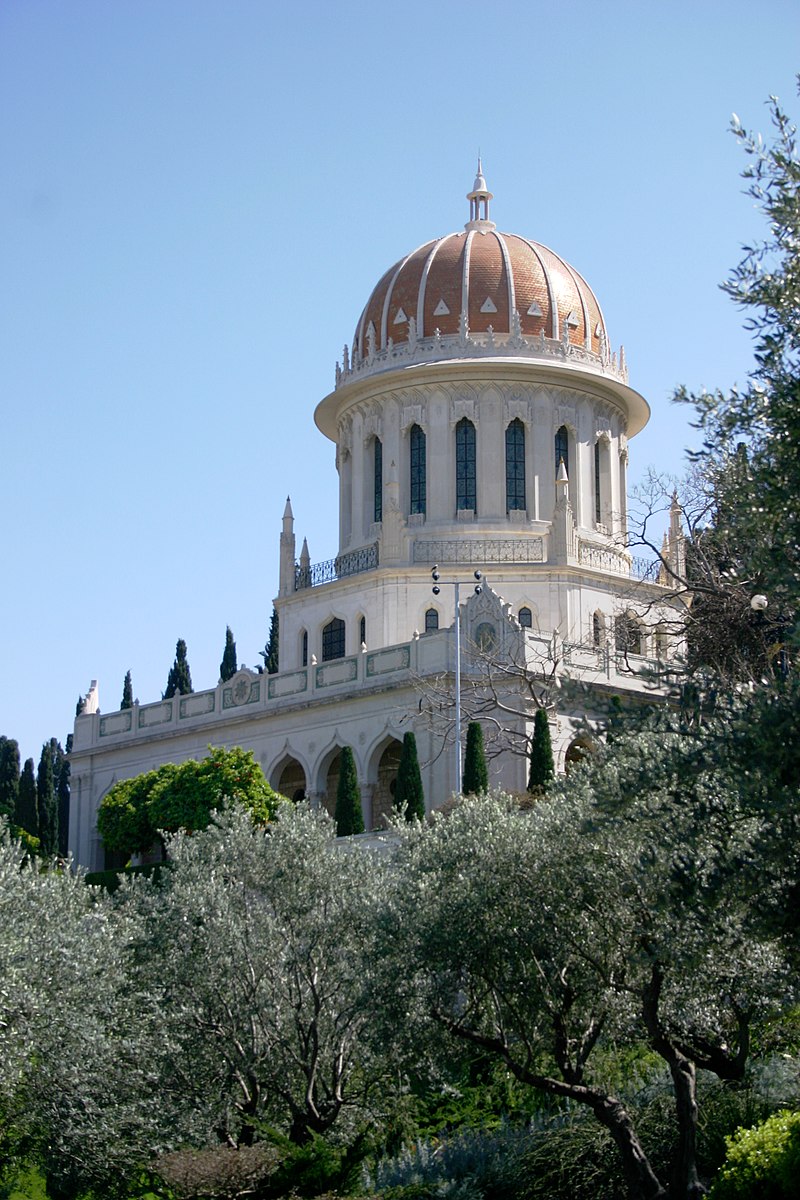
File:Shrine_Bab_North_West.jpg · Wikimedia Commons · See Wikimedia Commons
Also known as Bab, Nuqtah-i Ula, Ali Mukhamed Bab, Ali Muhammad ibn Rida al-Bazzazz, Ali Muhammad Rida al-Shirazi, the Báb, the Bab, ʻAlí-Muḥammad
profeta persiano, fondatore del bábismo
The Báb was a 19th-century Iranian religious leader who founded Bábism and claimed to be a Manifestation of God comparable to Moses, Jesus, and Muhammad, with revelations he believed would be as significant as the Torah, Gospel, and Quran. He is venerated as a central figure in the Baháʼí Faith, and his teachings emphasized that his new revelation would unlock the spiritual and creative forces needed to bring about global unity and peace.
AI-generated from the Wikipedia summary — may contain errors.
In the Vinony graph
Within Vinony's link graph, Báb is referenced by 854 other articles, and connects out to Bábism, Shia Islam and Baháʼí Faith.
The entry is geolocated on the map in landmark, across 2 mapped points.
Vinony files it under 1819 births, 1850 deaths and 19th-century Iranian writers.
Its subject is documented across 76 Wikipedia language editions.
Key facts
- Religious biography.name
- The Báb
- Religious biography.religion
- Bábism
- Religious biography.image
- Shrine Bab North West.jpg
- Religious biography.caption
- Shrine of the Báb in Haifa, Israel
- Religious biography.birth_name
- ʻAlí-Muḥammad
- Religious biography.birth_place
- Shiraz, Iran
- Religious biography.death_place
- Tabriz, Iran
- Religious biography.death_cause
- Execution by firing squad
- Religious biography.occupation
- MerchantReligious leader
- Religious biography.known_for
- Founder of BábismCentral figure in Baháʼí Faith
- Religious biography.nationality
- Iranian
- Religious biography.spouse
- Khadíjih-Sultán (1842–1850)
- Religious biography.children
- Ahmad (1843–1843)
- Religious biography.parents
- Mirzá Muhammad Ridá (father) Fátimih Bagum (mother)
- Religious biography.relatives
- Afnán
- Religious biography.disciples
- Notable students:
- Religious biography.successor
- Baháʼu'lláh (for Baháʼís)Subh-i-Azal (for Azalis)
via Wikipedia infobox
Wikidata facts
- Instance of
- human
- Gender
- male
- Citizenship
- Qajar Iran
- Place of birth
- Shiraz
- Place of death
- Tabriz
- Occupation
- poet
- Religion
- Bábism
- Image
- Bahai center Haifa 2.jpg
Show 9 more facts
- Commons category
- Báb
- date of birth
- 1819-01-01
- date of death
- 1849-00-00
- place of burial
- Shrine of the Báb
- cause of death
- gunshot wound
- name in native language
- الْبَاب
- manner of death
- capital punishment
- birth name
- عَلیمُحَمَّد شیرازی
- on focus list of Wikimedia project
- Wikipedia:Vital articles/Level/4
Sources (2)
via Wikidata · CC0
Article · Italiano
Mírzá `Alí Muḥammad, o Siyyid `Alí Muḥammad Shírází, noto anche con lo pseudonimo di Báb (La Porta) (in persiano سيد علی محمد شیرازی; Shiraz, 20 ottobre 1819 (primo giorno di Muharram del 1235 dell'Egira) – Tabriz, 9 luglio 1850), figlio di Siyyid Muhammad Ridá e di Fátimih Bagum, figlia di un noto mercante di Shiraz, fu profeta e fondatore del Bábismo, e una delle tre figure centrali della Fede bahá'í. Mausoleo del Báb a Haifa Mírzá `Alí Muḥammad discendeva da Maometto tramite l'Imam Husayn e sua moglie Fāṭima bint Muhammad da entrambi i genitori, per ciò era un Siyyid, denominazione che è parte del suo patronimico, per la discendenza dal Profeta dell'Islam. Portatore di una Rivelazione divina indipendente, Mírzá `Alí Muḥammad è noto con l'appellativo di Báb (parola araba che significa "Porta"). Egli dichiarò d'essere l'araldo di una nuova era di giustizia, l'Età d'oro predetta da Profeti e Messaggeri del passato. Il suo principale compito fu l'aprire la strada al nuovo Messaggero di Dio, e molti suoi scritti si riferiscono a "Colui Che Dio manifesterà". La sua Missione ebbe inizio il 23 maggio 1844, quando rivelò che ossia la 'Porta', un tramite tra Dio e gli uomini, un Messaggero divino. I Bahá'í considerano il Báb oltre che "Manifestazione Divina" anche come Profeta precursore della loro religione, che ha preparato la strada a Colui che Dio farà manifesto. Bahá'u'lláh, fu un suo seguace che dichiarò nel 1863 ad un gruppo di Babí il compimento della profezia del Báb, e d'essere lui
Abstract from DBpedia / Wikipedia · CC BY-SA
Gallery (18)
On the map
2 mapped locations
Available in 76 languages
- Español
- Français
- Deutsch
- 中文
- 日本語
- Русский
- Português
- Italiano
- العربية
- हिन्दी
- Afrikaans
- Albanian
- Angika
- Aragonese
- Armenian
- Asturian
- azb
- Azerbaijani
Show 57 more
- Bahasa Indonesia
- Bangla
- Bashkir
- Basque
- Bosnian
- Catalan
- Central Kurdish
- Croatian
- Czech
- Egyptian Arabic
- Esperanto
- Filipino
- Finnish
- Galician
- Georgian
- Greek
- Hausa
- Hebrew
- Hungarian
- Icelandic
- Interlingua
- Kazakh
- Latin
- Latvian
- Lithuanian
- Low German
- Luxembourgish
- Malagasy
- Malayalam
- Mirandese
- Nederlands
- Norwegian
- Norwegian Nynorsk
- Polski
- Punjabi
- Romanian
- Scots
- Serbian
- Serbian (Latin)
- simple
- Slovak
- Svenska
- Swahili
- Tajik
- Tiếng Việt
- Türkçe
- Ukrainian
- Urdu
- Uzbek
- Waray
- Western Panjabi
- Wu Chinese
- zh_min_nan
- zh_yue
- فارسی
- ไทย
- 한국어
via Wikidata sitelinks · CC0