Bolivia
Sign in to saveAlso known as Plurinational State of Bolivia, Republic of Bolivia, Bolivia (Plurinational State of)
Bolivia, officially the Plurinational State of Bolivia, is a landlocked country located in central South America. In simple terms, the country's geography consists of a western Andean region and tropical lowlands to the east and north. More in detail, the country features a diverse geography, including the vast Amazonian plain, the Gran Chaco, temperate valleys, the high-altitude Altiplano plateau, snow-capped peaks, and mountains, encompassing a wide range of climates and biomes across its regions and cities. It includes part of the Pantanal, the largest tropical wetland in the world, along i
OverviewAI-generated
Bolivia, officially the Plurinational State of Bolivia, is a landlocked sovereign state and republic located in South America. It shares borders with Argentina, Brazil, Chile, and Paraguay. The country is named after Simón Bolívar and gained independence in 1825. Its highest point is Nevado Sajama. The capital is Sucre, while La Paz also serves as a capital.
The official languages are Spanish, Aymara, Quechua, and Guarani, with other languages including Ese Ejja, Eastern Bolivian Guaraní, Western Bolivian Guaraní, and Uru spoken. The currency includes the boliviano, Bolivian peso, Bolivian sol, and Bolivian scudo. Bolivia is a member of the United Nations, Union of South American Nations, World Trade Organization, and Andean Community. It contains administrative entities such as the Beni, Chuquisaca, Cochabamba, and La Paz Departments. The head of state is Luis Arce, with Rodrigo Paz Pereira also listed.
Synthesized by Vinony from 68 facts across 9 sources: Wikidata, REST Countries, Openweathermap, Open Meteo, World Bank, OpenStreetMap, PubMed, Vinony graph, Geo. Generated from structured data (not the Wikipedia text) and checked against those facts — may still contain errors.
Weather now
cached 18h ago7-day forecast
via Open-Meteo
Country
- Capital
- Sucre
- Population
- 11,365,333
- Region
- Americas · South America
- Demonym
- Bolivian
- Currencies
- BOB (Bs.)
- Languages
- Aymara, Guaraní, Quechua, Spanish
- Calling code
- +591
- Drives on
- Right
- Gini
- 41.6 (2019)
- FIFA code
- BOL
- TLD
- .bo
- Timezones
- UTC-04:00
- Borders
- ARG, BRA, CHL, PRY, PER
via REST Countries
Indicators · World Bank
- GDP
- $54.9B(2024)
- Population
- 12,413,315(2024)
- Life expectancy
- 68.7 yrs(2024)
- Unemployment
- 3 %(2025)
- Urban population
- 71.2 %(2024)
- Internet users
- 79.7 %(2024)
- Forest area
- 46.3 %(2023)
- Renewable energy
- 12.8 %(2021)
via World Bank Open Data · CC BY 4.0
Wikipedia views (30d)
119,598 totalvia Wikimedia Pageviews API
Key facts
- .subbox
- yes
- Country.HDI_change
- increase
- Country.conventional_long_name
- Plurinational State of Bolivia
- Country.common_name
- Bolivia
- Country.image_flag
- Flag of Bolivia.svg
- Country.cctld
- .bo
- Country.flag_alt
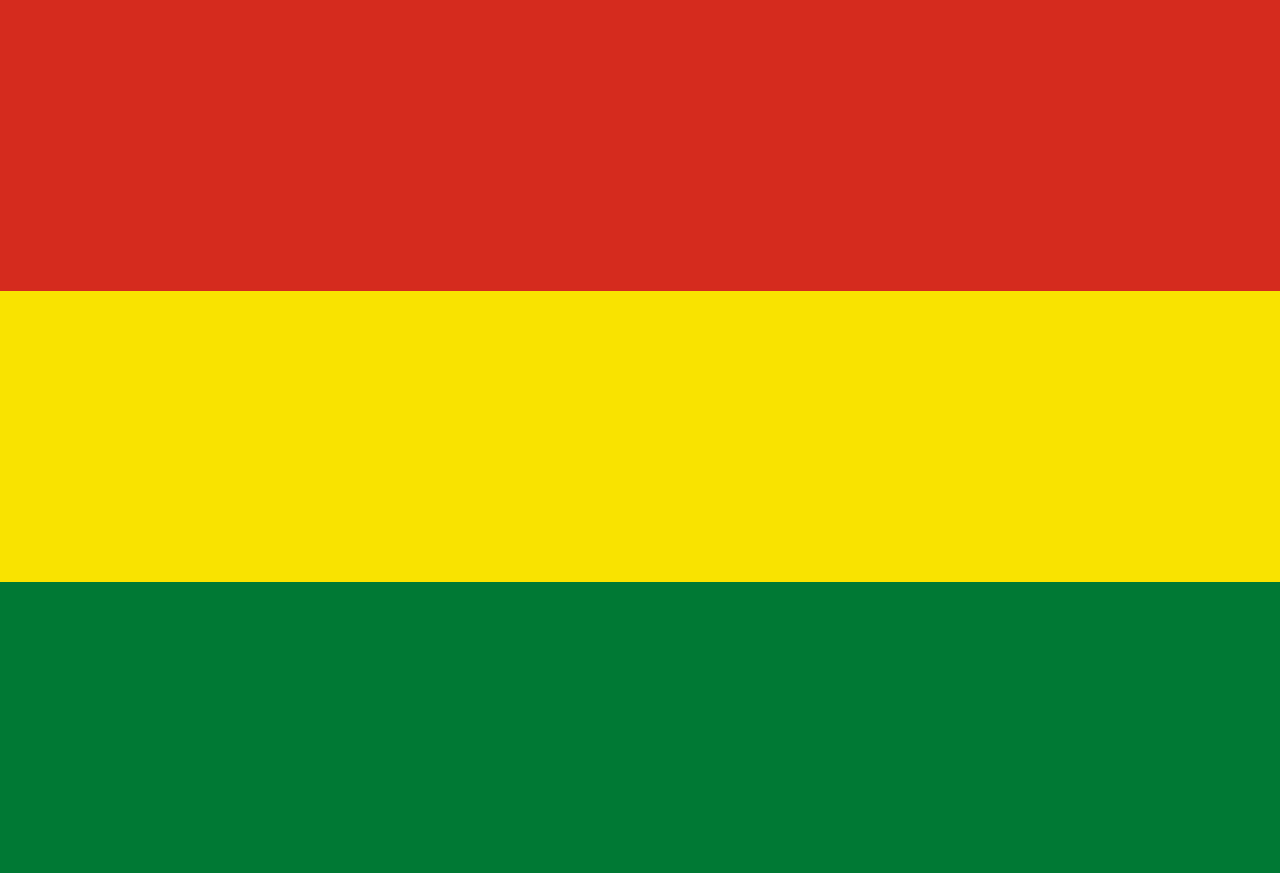
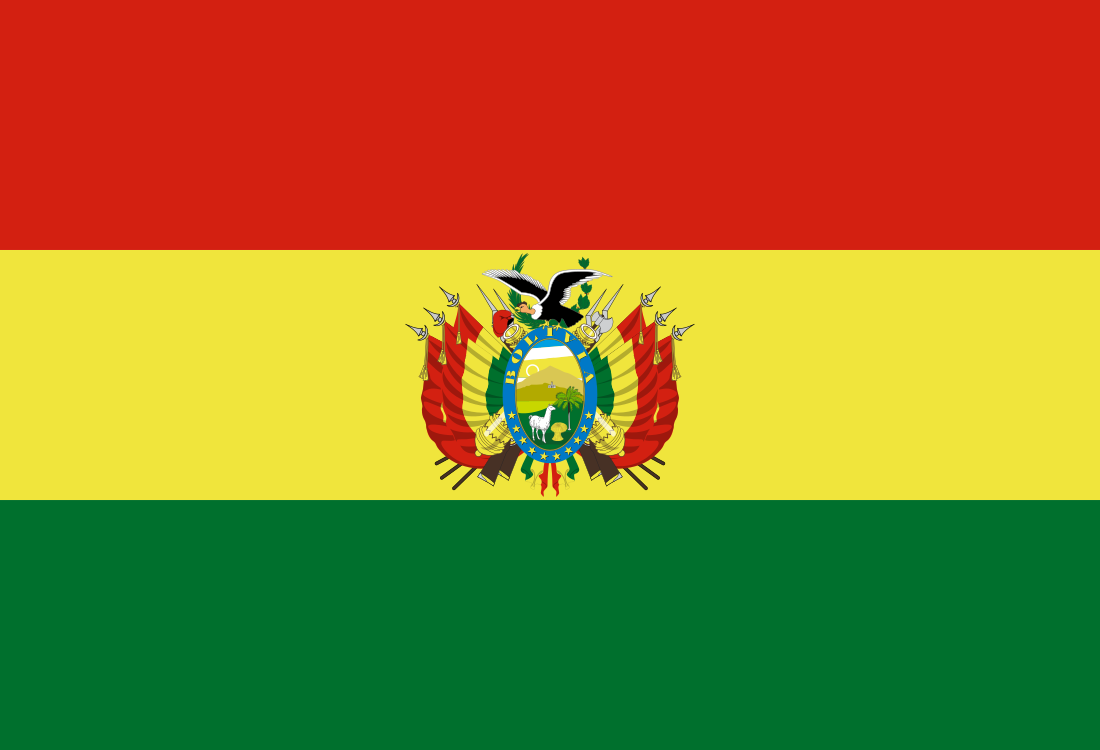
- Horizontal tricolor (red, yellow, and green from top to bottom)
- Country.flag_alt2
- 7 × 7 square patchwork with the (top left to bottom right) diagonals forming colored stripes (green, blue, purple, red, orange, yellow, white, green, blue, purple, red, orange, yellow, from top right to bottom left)
- Country.other_symbol
- 100px|
- Country.other_symbol_type
- Dual flag:
- Country.image_coat
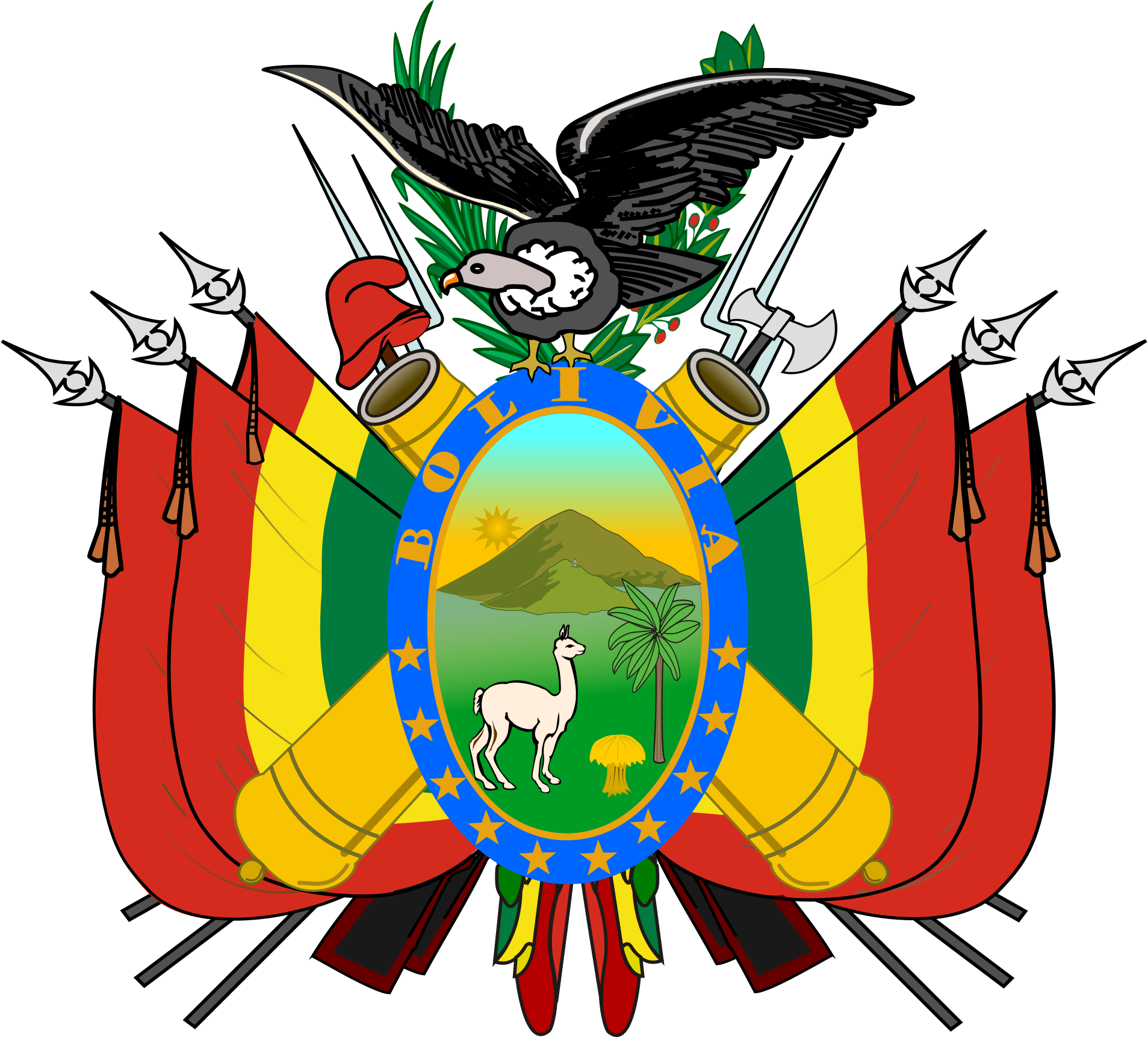
- Escudo de Bolivia.svg
- Country.coa_size
- 100
- Country.national_anthem
- "National Anthem of Bolivia"center
- Country.image_map
- BOL orthographic.svg
- Country.map_width
- 220px
- Country.capital
- Sucre
- Country.admin_center
- La Paz
- Country.largest_city
- Santa Cruz
via Wikipedia infobox
Research
7,518 papers- Past and present of cystic echinococcosis in Bolivia.ReviewPLoS neglected tropical diseases · 2021Ali V, Martinez E, Duran P et al.DOI: 10.1371/journal.pntd.0009426
- Bolivia.Department of State publication. Background notes series · 1986United States. Department of State. Bureau of Public Affairs
- Rio Negro Virus Infection, Bolivia, 2021.Emerging infectious diseases · 2023Loayza Mafayle R, Morales-Betoulle ME, Whitmer S et al.DOI: 10.3201/eid2908.221885
- Human Pesticide Exposure in Bolivia: A Scoping Review of Current Knowledge, Future Challenges and Research Needs.International journal of environmental research and public health · 2024Barrón Cuenca J, Dreij K, Tirado NDOI: 10.3390/ijerph21030305
- Primary health care research in Bolivia: systematic review and analysis.Health policy and planning · 2016Alvarez FN, Leys M, Mérida HE et al.DOI: 10.1093/heapol/czv013
- Leishmaniases in Bolivia: comprehensive review and current status.ReviewThe American journal of tropical medicine and hygiene · 2009García AL, Parrado R, Rojas E et al.
- Visceral Leishmaniasis in Bolivia: Current Status.Revista da Sociedade Brasileira de Medicina Tropical · 2020Mollinedo JS, Mollinedo ZA, Gironda WJ et al.DOI: 10.1590/0037-8682-0421-2019
- Lobomycosis in Amazon Region, Bolivia, 2022.Emerging infectious diseases · 2024Méndez MI, Colanzi R, Suárez JA et al.DOI: 10.3201/eid3012.241089
via PubMed
Wikidata facts
- Instance of
- country
- Part of
- Mercosur
- Named after
- Simón Bolívar
- Official name
- État plurinational de Bolivie
- Demonym
- Bolavach
- Country
- Bolivia
- Contains
- Pando Department
- Continent
- South America
- Capital
- La Paz
- Official language
- Guarani
- Currency
- boliviano
- Population
- 12244159
- Area
- 1098581.0
- Head of government
- Rodrigo Paz Pereira
- Head of state
- Rodrigo Paz Pereira
- Form of government
- parliamentary republic
- Legislature
- Plurinational Legislative Assembly
- Shares border with
- Peru
- Highest point
- Nevado Sajama
- Image
- LagunaChiarKhota2013.jpg
- Life expectancy
- 65
- Nominal GDP
- 2405900000
- Unemployment rate
- 3
Show 66 more facts
- Calling code
- +591
- Licence plate code
- BOL
- Electrical plug type
- Europlug
- Mains voltage
- 230
- Motto
- Cryfder yr Undeb
- Flag
- flag of Bolivia
- Coat of arms
- coat of arms of Bolivia
- language used
- Pauserna
- topic's main Wikimedia portal
- Portal:Bolivia
- top-level Internet domain
- .bo
- Commons category
- Bolivia
- topic's main category
- Category:Bolivia
- inception
- 1825-01-01
- category for people who died here
- Category:Deaths in Bolivia
- category for people born here
- Category:Births in Bolivia
- category for films shot at this location
- Category:Films shot in Bolivia
- category of associated people
- Category:Bolivian people
- described by source
- Encyclopædia Britannica 11th edition
- diplomatic relation
- Hungary
- history of topic
- history of Bolivia
- IPA transcription
- buˈliːʋɪɑ
- Commons gallery
- Bolivia
- mobile country code
- 736
- lowest point
- Paraguay River
- driving side
- right
- geography of topic
- Geography of Bolivia
- central bank
- Central Bank of Bolivia
- age of majority
- 18
- marriageable age
- 21
- office held by head of government
- president of Bolivia
- GS1 country code
- 777
- office held by head of state
- president of Bolivia
- number of out-of-school children
- 337516
- total fertility rate
- 2.968
- maritime identification digits
- 720
- Unicode character
- 🇧🇴
- native label
- Buliwya Achka nasyunkunap Mama llaqta
- literacy rate
- 92
- suicide rate
- 16.4
- culture
- culture of Bolivia
- VAT rate
- 13
- BTI Status Index
- 6.17
- BTI Governance Index
- 5.54
- economy of topic
- economy of Bolivia
- demographics of topic
- demographics of Bolivia
- Democracy Index
- 4.65
- topic has template
- Template:Infobox city in Bolivia
- Human Development Index
- 0.692
- P11012
- Maine
- hashtag
- Bolivia
- on focus list of Wikimedia project
- Wikipedia:Vital articles/Level/4
- Gini coefficient
- 43.6
- Happy Planet Index score
- 45
- Inequality-adjusted Human Development Index
- 0.549
- social media followers
- 26990
- P12749
- Germán Riesco
- birth rate
- 21.599
- male population
- 6126364
- death rate
- 9.062
- rural population
- 3565773
- female population
- 6097747
- urban population
- 8658337
- P8168
- Reinfeld
- located in/on physical feature
- Hispanic America
- different from
- Bolivia
Sources (15)
via Wikidata · CC0
Travel guide
Understand
Sometimes referred to as the Tibet of South America, Bolivia is one of the most "remote" countries in the Western Hemisphere; except for the navigable Paraguay River stretching to the distant Atlantic, Bolivia and Paraguay are the only two landlocked nations in the Americas. It is also the most indigenous country in the Americas, with 60% of its population being of predominantly Native American ancestry.
It shares control of Lake Titicaca (Lago Titicaca), the world's highest navigable lake (elevation 3,821 m), with Peru.
Bolivia's geographical composition can be easily divided in three major terrains or regions: Lowlands; valleys; and high plateau or altiplano. Because of this country's history, from the times when the first humans arrived up until today, population distribution and land surface is inversely proportional in these three regions. The altiplano is the smallest and has the biggest portion of the population, the lowlands occupy more than 1/2 of the country and have about 1/3 of its population. Original natives in all three areas are also of different ethnic origins. All this is explained simply because since colonial times, Bolivia was a mining country in which the economy was based in the mines that were high in the mountains and the valleys fed them. The rest was the frontier.
Get in
Unlike many countries on the continent, citizens of most countries can obtain a visa on arrival or visit the country without having to apply for a visa in advance.
See
thumb|Bolivia's highest mountain Nevado Sajama, 6,542m Bolivia has seven UNESCO World Heritage Sites. In the eastern department of Santa Cruz there are the Noel Kempff Mercado National Park, the Inca site El Fuerte in Samaipata and the Jesuit Missions of the Chiquitos. Near the capital there is Tiwanaku, an archeological site with the remains of a pre-Incan city. Finally there are Sucre and Potosí, two cities founded by the Spanish in the 16th century.
Furthermore Bolivia has the world's largest salt flat Salar de Uyuni, a portion of Lake Titicaca with Isla del Sol and being located in the middle of the Andes — mountain peaks higher than 6,000m.
Do
Yungas Road aka Death Road – From La Cumbre to Coroico. A mountain bike tour of 64 km where you'll be able to see the diversity of Bolivia. Leave from La Cumbre at 5,000 m, in a cold and windy environment, and get to Coroico, in a wet and tropical environment. Parts of the trail can also be hiked, or try the parallel and picturesque 3 day El Choro Trek to Coroico. Explore the Provinces – Bolivia is a place to explore, it is mostly still untouched. The people are friendly in the countryside. There are hundreds of places off the map, mostly out-of-the-guide places to go in Bolivia, and far more exciting than what the tour agencies and guide books offer. In the La Paz department for example you can easily catch transport to places like Pelechuco, Charazani, the east side of Lake Titicaca, Isla del Sol, or Quime, not to mention scores of other villages and small towns. The free government tour agencies at the Plaza Estudiantes or Prado can help you find transport anywhere and tell you about it.
Eat
The cuisine of Bolivia might be called the original "meat and potatoes" -- the latter (locally called papas from the Quechua) were first cultivated by the Inca before spreading throughout the world. The most common meat is beef, though chicken and llama are also easily found. Pork is relatively common. Deep frying (chicharron) is a common method of cooking all sorts of meat, and fried chicken is a very popular quick dish; at times the smell permeates the streets of Bolivian cities. Guinea pigs (cuy) and rabbits (conejo) are eaten in rural areas, though you can sometimes find them in urban restaurants as well. A common condiment served with Bolivian meals is ll'ajwa, a spicy sauce similar to Mexican salsa.
Almuerzo is very popular during the mid-day meal and usually consists of an appetizer (entrada), soup, main dish (segundo), and dessert. Walk around many streets around Bolivian cities and you'll see the day's menu for that restaurant. Most have at least 2 main dish options to choose from. Almuerzos run anywhere between Bs. 15-25 depending on the restaurant or 'pension'. thumb|Anticucho thumb|Salteñas Some notable Bolivian dishes: Pique a lo macho – grilled chunks of meat in a slightly spicy sauce with tomatoes and onion, on potatoes Silpancho – beef pounded to a thin, plate-sized patty, served on a bed of rice and potatoes, with a fried egg on top (Similar to wiener schnitzel). Picante de Pollo – the degree of spiciness depends on the cook/chef Fritanga (Bolivian style fri…
Drink
Juice bars appear at most markets. Shakes (either with water or milk) are 2 Bs. 2-3. Locals can be seen to drink Vitaminico, an egg, beer and sugar concoction, or "Vitima", which includes coca leaves.
Licuado – Water or milk blended with your favorite fruit combination. A big spoonful of sugar will be added unless you specifically ask them not to. Try the milk and papaya licuado. You should probably ask whether the water added is from botella (bottle) or from the tap (best avoided). Vitaminico – Don't ask what's in here. Many fruits, milk, sugar, a shot of beer, and, if you wish, a whole egg (with shell). Mocochinchi – A drink made by brewing peaches and spices together in water. Very good but some people are turned off by the shriveled peach which is typically served with each glass. Api – A traditional corn-based drink usually found in the open-air markets. If you didn't know it was corn you'd never guess it though because this stuff is good. thumb|A bottle of Paceña beer in La Paz
Sleep
Offering a favorable exchange for Western tourists, lodging can be found at very reasonable prices throughout the country, from hostals to luxury hotels. In simple accommodations WiFi is not common, only if they cater for tourists.
There are not many hostels in the common sense around, except for the typical tourist spots. But even in normal and basic places (often called hostal, hospedaje or alojamientos) you only pay per person (Bs. 30-60) and not per room. So, you might end up paying Bs. 40 for a room with 4 beds, one taken by you.
Outside of large cities, hostel prices are considerably cheaper when walking-in than online. In large cities however, you will find it hard to find a bargain and it is better to reserve online.
Stay safe
Apply common sense and take precautions that apply elsewhere. All tourists should be careful when selecting a travel guide and never accept medication from unverifiable sources. Female tourists should be cautious when travelling alone. At night try to use radio taxis, as fake cabs are common and robbery and even rape does occur. It is a good idea to register with the consulate of your country of residence upon entry into the country. And it is also helpful learn at least basic Spanish to keep yourself a little safe. When taking an interdepartmental bus (say from La Paz to Cochabamba), do not accept snacks or drinks from nearby passengers. Even though most likely they may just want to be nice, there have been instances that passengers being drugged and robbed during nighttime trips. Say "no, gracias". Always remain cautious and suspicious when approached by someone or get befriended by a stranger in the street. Bolivians are very closed towards foreigners. Even when you do business with them, e.g. buying something, they will rather prefer not to do so. Ask yourself, why would anyone even start a conversation with a tourist when their general mood is often far from friendly and open. There must be something wrong if it is not the owner of your hostel or another Westerner. You are better off to immediately walk away from such a situation, saying Lo siento. There are certainly better ways to find friends in Bolivia. In general, if you travel less touristy routes, you will mostly …
Stay healthy
thumb|View on the Choro Trail Some parts of Bolivia like La Paz (3,650 m), Potosí (4,010 m), Oruro (3,950 m) and the Lake Titicaca region (3,400 m) are high altitude, so adequate precautions against "sorojchi" altitude sickness should be taken.
At local pharmacies they sell sorojchi pills, that are supposed to help with altitude problems. It has painkillers as well as natural herbs to help cope with the symptoms of "sorojchi". In many parts of the Altiplano you can purchase coca leaves, which are reputed to be useful against soroche. Coca tea ("mate de coca") is available in tea bags in many markets.
However, severe cases of high altitude disease can be treated at the High Altitude Pathology Institute at Clinica IPPA. This clinic has the most advanced technology including a hyperoxic/hypoxic adaptation chamber. In addition, the sun's ultraviolet rays are much stronger, up to 20 times, than at sea level. A sun hat, sunglasses and skin protection (sunblock or long sleeves) are advised.
UV radiation is strong in La Paz and in mountainous areas. The use of high-factor sunscreen is recommended.
Yellow fever vaccination is recommended for those who plan on spending time in the Bolivian Amazon. It must be taken 10 days prior to the your arrival in the country if you plan to visit rural areas.
Malaria prophylaxis is recommended if the visitor plans to visit tropical-rural areas.
As a preventive measure, taking the following vaccines is recommended: Hepatitis A, Hepatitis B and …
Respect
Bolivians, like their counterparts on the continent, have a casual view of time. For example, you can expect your Bolivian counterparts to be a few minutes late for an appointment. This is completely normal. That said, you should be on time for business appointments.
Impatience is perceived poorly in Bolivian culture. Bolivians try to do things in a carefully planned manner. Raising your voice, losing your temper, or constantly following up with people is only going to make you look bad and insensitive.
Show respect and deference to authority figures and those older than you. If you come across someone who is older than you, give up your seat on public transportation for them. If you're waiting for a taxi, allow someone older to take your spot. If someone in a position of authority requests you to do something, do it. It's also customary to address elders with titles like Señor (sir) or Señora (madam).
Do not use the word "indio" in Bolivia to describe indigenous people. It is considered offensive. The term they use is "campesino" (which translates to peasant) or "indígena". A "cholo" is a campesino who moved to the city, and though originally derogatory, has become more of a symbol of indigenous power. Nevertheless, some locals still use the word cholo as a derogatory term.
It's customary to greet strangers and passersby wherever you go, even on the streets. A simple buenos días would do.
Travel guide from Wikivoyage (CC BY-SA 4.0)
~40 min read
Encyclopedic overview
51 sectionsContents
- Etymology
- History
- Pre-colonial
- Colonial period
- Independence and subsequent wars
- Early 20th century
- Late 20th century
- Democratic transition
- General Banzer presidency (1997–2002)
- Sánchez de Lozada and Mesa presidencies (2002–2005)
- Morales presidency (2005–2019)
- Áñez presidency (2019–2020)
- Luis Arce presidency (2020–2025)
- 2025 election and Rodrigo Paz presidency (2025–present)
- Geography
- Geology
- Climate
- Impact of climate change
- Biodiversity
- Environmental policy
- Government and politics
- Capital
- Administrative divisions
- Foreign relations
- Military
- Law and crime
- Economy
- Agriculture
- Mineral resources
- Tourism
- Transport
- Roads
- Air
- Technology
- Water supply and sanitation
- Demographics
- Largest cities and towns
- Ethnic groups
- Language
- Religion
- Education
- Health
- Women's rights
- Culture
- Media
- Sports
- See also
- Notes
- References
- Bibliography
- External links
Bolivia, officially the Plurinational State of Bolivia, is a landlocked country located in central South America. Its geography primarily consists of an Andean region to the west and tropical lowlands to the east and north. The country has a diverse environment, including the vast Amazonian plain, the Gran Chaco, temperate valleys, the high-altitude Altiplano plateau, snow-capped peaks, and mountains, encompassing a wide range of climates and biomes across its regions and cities. It includes part of the Pantanal, the largest tropical wetland in the world, along its eastern border. Bolivia is bordered by Brazil to the north and east, Paraguay to the southeast, Argentina to the south, Chile to the southwest, and Peru to the west. The seat of government is La Paz, which contains the executive, legislative, and electoral branches of government, while the constitutional capital is Sucre, the seat of the judiciary. While most population and urban centers lie in the Andean region, the largest city and principal industrial center is Santa Cruz de la Sierra, located in the eastern tropical lowlands.
The sovereign state of Bolivia is a constitutionally unitary state divided into nine departments. Bolivia's geographic Andean-lowland divide is matched by economic and cultural differences such as those associated with the camba and colla demonyms. One-third of the country is within the Andean mountain range. With an area of 1,098,581 square kilometers (424,164 sq mi), Bolivia is the fifth-largest country in South America after Brazil, Argentina, Peru, and Colombia, and, alongside Paraguay, is one of two landlocked countries in the Americas. It is the largest landlocked country in the Southern Hemisphere, and has inland ports accessing the Atlantic Ocean through two river systems: Acre-Purus-Amazon and Paraguay-Paraná. Bolivia had a population of 11.4 million as of the latest census in 2024. It is multiethnic, including Amerindians, Mestizos, and the descendants of Europeans and Africans. Spanish is the official and predominant language, although 36 indigenous languages also have official status, of which the most commonly spoken are Guaraní, Aymara, and Quechua.
Excerpted from Wikipedia’s “Bolivia” article, available under the CC BY-SA 4.0 licence.
Gallery (639)
On the map
60 mapped locations
Available in 268 languages
- Español
- Français
- Deutsch
- 中文
- 日本語
- Русский
- Português
- Italiano
- العربية
- हिन्दी
- Abkhazian
- abstract
- Achinese
- Adyghe
- Afrikaans
- Albanian
- Albanian
- Amharic
Show 249 more
- ami
- Angika
- Aragonese
- Armenian
- Arpitan
- Asturian
- Awadhi
- Aymara
- azb
- Azerbaijani
- Bahasa Indonesia
- Balinese
- Bambara
- Bangla
- Bashkir
- Basque
- bat_smg
- Batak Toba
- Bavarian
- be_x_old
- Belarusian
- Betawi
- Bhojpuri
- Bikol
- Bishnupriya
- Bislama
- Bosnian
- Breton
- Bulgarian
- Buriat
- Burmese
- Catalan
- cbk_zam
- cdo
- Cebuano
- Central Kurdish
- Chechen
- Cherokee
- Chuvash
- Cornish
- Corsican
- Crimean Tatar
- Croatian
- Czech
- dag
- Danish
- Divehi
- dty
- Dzongkha
- Egyptian Arabic
- eml
- Erzya
- Esperanto
- Estonian
- Ewe
- Extremaduran
- Faroese
- Fiji Hindi
- Filipino
- Finnish
- fiu_vro
- Friulian
- Fula
- Gagauz
- Galician
- gcr
- Georgian
- Gilaki
- Goan Konkani
- Gothic
- Greek
- Guarani
- Gujarati
- Haitian Creole
- Hakka Chinese
- Hausa
- Hawaiian
- Hebrew
- Hungarian
- hyw
- Iban
- Icelandic
- Ido
- Igbo
- Iloko
- Inari Sami
- Interlingua
- Interlingue
- Irish
- Jamaican Creole English
- Javanese
- Kabyle
- Kannada
- Kanuri
- Kara-Kalpak
- Karachay-Balkar
- Kashmiri
- Kashubian
- Kazakh
- kbp
- Khmer
- Kikuyu
- Kinyarwanda
- Kongo
- Kotava
- Kurdish
- Kyrgyz
- Ladino
- Lao
- Latgalian
- Latin
- Latvian
- Lezghian
- Ligurian
- Limburgish
- Lingala
- Lingua Franca Nova
- Lithuanian
- lld
- Lojban
- Lombard
- Low German
- Lower Sorbian
- Luxembourgish
- Macedonian
- Madurese
- Malagasy
- Malay
- Malayalam
- Maltese
- Manipuri
- Manx
- Māori
- map_bms
- Marathi
- Mari
- Mazanderani
- Minangkabau
- Mingrelian
- Mirandese
- Moksha
- Mongolian
- Moroccan Arabic
- Navajo
- nds_nl
- Neapolitan
- Nederlands
- Nepali
- Newari
- Northern Frisian
- Northern Sami
- Norwegian
- Norwegian Nynorsk
- Novial
- Occitan
- Old English
- olo
- Oromo
- Ossetic
- Palatine German
- Pampanga
- Pangasinan
- Papiamento
- Pashto
- Picard
- Piedmontese
- Polski
- Punjabi
- Quechua
- Romanian
- Romansh
- Romany
- Rundi
- Rusyn
- Samoan
- Sanskrit
- Santali
- Sardinian
- Saterland Frisian
- Scots
- Scottish Gaelic
- Serbian
- Serbian (Latin)
- Shan
- Shona
- Sicilian
- Silesian
- simple
- Sindhi
- Sinhala
- Slovak
- Slovenian
- Somali
- Standard Moroccan Tamazight
- Sundanese
- Svenska
- Swahili
- Swati
- szy
- Tachelhit
- Tajik
- Talysh
- Tamil
- Taroko
- Tatar
- tay
- Telugu
- Tetum
- Tibetan
- Tiếng Việt
- Tigrinya
- Tok Pisin
- Toki Pona
- Tongan
- Tumbuka
- Türkçe
- Turkmen
- Udmurt
- Ukrainian
- Upper Sorbian
- Urdu
- Uyghur
- Uzbek
- Venetian
- Veps
- Volapük
- Walloon
- Waray
- Wayuu
- Welsh
- West Flemish
- Western Frisian
- Western Mari
- Western Panjabi
- Wolof
- Wu Chinese
- Xhosa
- Yakut
- Yiddish
- Yoruba
- Zaza
- Zeelandic
- zh_classical
- zh_min_nan
- zh_yue
- Zhuang
- فارسی
- ไทย
- 한국어
via Wikidata sitelinks · CC0