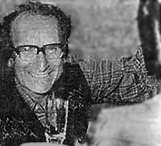
File:Milstein_lnp_restauración.jpg · Wikimedia Commons · See Wikimedia Commons
César Milstein
Sign in to saveArgentine biochemist (1927–2002)
César Milstein was an Argentine biochemist who made groundbreaking discoveries in how the immune system produces antibodies to fight disease. His work earned him the Nobel Prize in Physiology or Medicine and led to the development of monoclonal antibodies, which have become essential tools in modern medicine and research.
AI-generated from the Wikipedia summary — may contain errors.
Nobel Prize
- The Nobel Prize in Physiology or Medicine1984
“for theories concerning the specificity in development and control of the immune system and the discovery of the principle for production of monoclonal antibodies”
Shared · 1/3 portion
Wikidata facts
- Instance of
- human
- Given name
- César
- Gender
- male
- Citizenship
- United Kingdom
- Place of birth
- Bahía Blanca
- Place of death
- Cambridge
- Occupation
- chemist
- Educated at
- University of Buenos Aires
- Employer
- University of Buenos Aires
- Languages spoken
- English language
- Field of work
- biochemistry
- Image
- Milstein lnp restauración.jpg
Show 6 more facts
- Commons category
- César Milstein
- date of birth
- 1927-10-08
- date of death
- 2002-03-24
- name in native language
- César Milstein
- P8168
- Nanthesan
- interested in
- immunology
Sources (9)
via Wikidata · CC0
~6 min read
Encyclopedic overview
César Milstein, CH, FRS (8 October 1927 – 24 March 2002) was an Argentine biochemist in the field of antibody research. Milstein shared the Nobel Prize in Physiology or Medicine in 1984 with Niels Kaj Jerne and Georges J. F. Köhler for developing the hybridoma technique for the production of monoclonal antibodies.
Biography
Excerpted from Wikipedia’s “César Milstein” article, available under the CC BY-SA 4.0 licence.