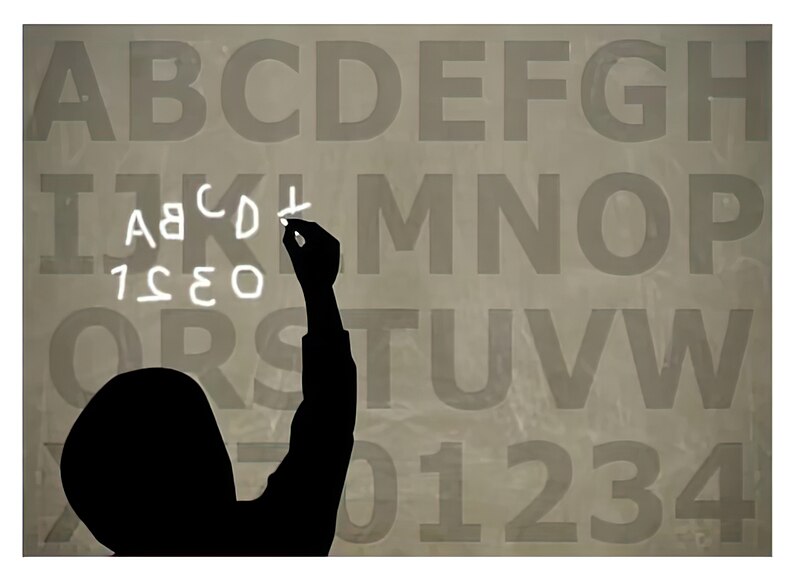
File:Dislexia_nens.jpg · Wikimedia Commons · See Wikimedia Commons
dyslexia
Sign in to saveAlso known as reading/writing disorder
I don't see any context provided in your message. Could you please share the context or source material you'd like me to base the overview on? Once you provide that, I'll write a 2-sentence plain-language overview of dyslexia based solely on the information you've given me.
AI-generated from the Wikipedia summary — may contain errors.
Key facts
- Medical condition (new).name
- Dyslexia
- Medical condition (new).synonyms
- Reading disorder
- Medical condition (new).image
- File:Dislexia nens.jpg
- Medical condition (new).caption
- Dyslexia involves difficulties in processing letters and words.
- Medical condition (new).types
- Surface dyslexia
- Medical condition (new).field
- Neurology, pediatrics
- Medical condition (new).symptoms
- Trouble reading
- Medical condition (new).onset
- School age
- Medical condition (new).causes
- Genetic and environmental factors
- Medical condition (new).risks
- Family history, attention deficit hyperactivity disorder
- Medical condition (new).diagnosis
- Series memory, spelling, vision, and reading test
- Medical condition (new).differential
- Hearing or vision problems, insufficient teaching
- Medical condition (new).treatment
- Adjusting teaching methods
- Medical condition (new).frequency
- 3–7%
via Wikipedia infobox
Research
12,554 papers- Developmental dyslexia.ReviewAnnual review of clinical psychology · 2015Peterson RL, Pennington BFDOI: 10.1146/annurev-clinpsy-032814-112842
- Dyslexia in the 21st century.ReviewCurrent opinion in psychiatry · 2021Shaywitz SE, Shaywitz JE, Shaywitz BADOI: 10.1097/YCO.0000000000000670
- Understanding Dyslexia in the Context of Developmental Language Disorders.ReviewLanguage, speech, and hearing services in schools · 2018Adlof SM, Hogan TPDOI: 10.1044/2018_LSHSS-DYSLC-18-0049
- Revisiting the definition of dyslexia.Annals of dyslexia · 2024Catts HW, Terry NP, Lonigan CJ et al.DOI: 10.1007/s11881-023-00295-3
- Dyslexia.ReviewThe New England journal of medicine · 1998Shaywitz SEDOI: 10.1056/NEJM199801293380507
- The Modularity of Dyslexia.ReviewPediatrics and neonatology · 2021Rahul DR, Ponniah RJDOI: 10.1016/j.pedneo.2021.03.001
- Developmental dyslexia and creativity: A meta-analysis.Dyslexia (Chichester, England) · 2021Majeed NM, Hartanto A, Tan JJXDOI: 10.1002/dys.1677
- Acquired dyslexia.ReviewSeminars in neurology · 2000Coslett HBDOI: 10.1055/s-2000-13174
via PubMed
Wikidata facts
- Subclass of
- disease
- Image
- Dyslexia handwriting Greek.jpg
Show 12 more facts
- Commons category
- Dyslexia
- topic's main category
- Category:Dyslexia
- opposite of
- hyperlexia
- NCI Thesaurus ID
- C96410
- ICPC 2 ID
- P24
- health specialty
- pediatrics
- exact match
- identifiers.org/doid/DOID:4428
- on focus list of Wikimedia project
- WikiProject Medicine
- has cause
- genetic disease
- medical examination
- functional magnetic resonance imaging
- symptoms and signs
- reading disorder and écrites disorder
Sources (14)
via Wikidata · CC0
~27 min read
Encyclopedic overview
25 sectionsContents
- Classification
- Signs and symptoms
- Associated conditions
- Causes
- Neuroanatomy
- Genetics
- Gene–environment interaction
- Language
- Pathophysiology
- Dual route theory
- Diagnosis
- Assessment
- Assessment tests
- Screening
- Management
- Prognosis
- Epidemiology
- History
- Society and culture
- Stigma and success
- Research
- See also
- References
- Further reading
- External links
Dyslexia, also known as "word blindness", is a learning disability that affects either reading or writing. Different people are affected to different degrees. Problems may include difficulties in spelling words, reading quickly, writing words, "sounding out" words in the head, pronouncing words when reading aloud and understanding what one reads. Often these difficulties are first noticed at school. The difficulties are involuntary, and people with this disorder have a normal desire to learn. People with dyslexia have higher rates of attention deficit hyperactivity disorder (ADHD), developmental language disorders, and difficulties with numbers.
Dyslexia is believed to be caused by the interaction of genetic and environmental factors. Some cases run in families. Dyslexia that develops due to a traumatic brain injury, stroke, or dementia is sometimes called "acquired dyslexia" or alexia. The underlying mechanisms of dyslexia result from differences within the brain's language processing. Dyslexia is diagnosed through a series of tests of memory, vision, spelling, and reading skills. Dyslexia is separate from reading difficulties caused by hearing or vision problems or by insufficient teaching or opportunity to learn.
Excerpted from Wikipedia’s “dyslexia” article, available under the CC BY-SA 4.0 licence.
Gallery (12)
Available in 85 languages
- Español
- Français
- Deutsch
- 中文
- 日本語
- Русский
- Português
- Italiano
- العربية
- हिन्दी
- Afrikaans
- Albanian
- Armenian
- Asturian
- azb
- Azerbaijani
- Bahasa Indonesia
- Bangla
Show 66 more
- Basque
- Bulgarian
- Catalan
- Central Kurdish
- Cherokee
- Croatian
- Czech
- Danish
- Egyptian Arabic
- Esperanto
- Estonian
- Filipino
- Finnish
- Galician
- Georgian
- gpe
- Greek
- Gujarati
- Hausa
- Hebrew
- Hungarian
- Icelandic
- Ido
- Igbo
- Irish
- Javanese
- Kannada
- Kashubian
- Kazakh
- Khmer
- Latvian
- Limburgish
- Lithuanian
- Macedonian
- Malay
- Malayalam
- Mingrelian
- Nederlands
- Norwegian
- Norwegian Nynorsk
- Occitan
- Odia
- Polski
- Punjabi
- Romanian
- Serbian
- Serbian (Latin)
- simple
- Sinhala
- Slovak
- Slovenian
- Svenska
- Tamil
- Telugu
- Tiếng Việt
- Türkçe
- Ukrainian
- Urdu
- Uzbek
- Welsh
- Wu Chinese
- Yiddish
- zh_yue
- فارسی
- ไทย
- 한국어
via Wikidata sitelinks · CC0