Encyclopedia of Life · EOL (see source)
Escherichia
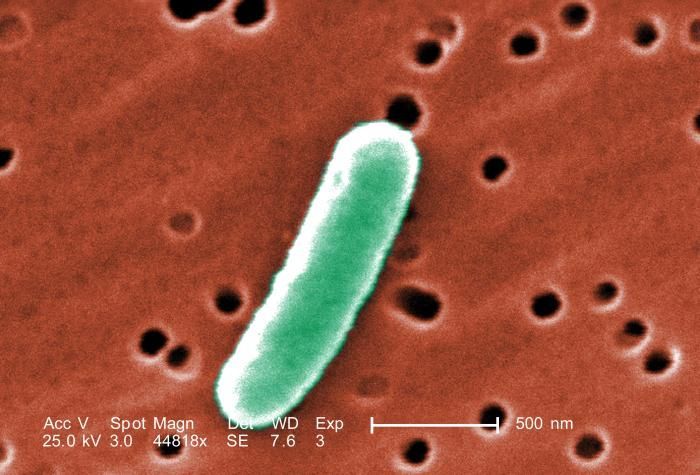
Sign in to saveEscherichia ( ) is a genus of Gram-negative, non-spore-forming, facultatively anaerobic, rod-shaped bacteria from the family Enterobacteriaceae. In those species which are inhabitants of the gastrointestinal tracts of warm-blooded animals, Escherichia species provide a portion of the microbially derived vitamin K for their host. A number of the species of Escherichia are pathogenic. The genus is named after Theodor Escherich, the discoverer of Escherichia coli. Escherichia are facultative aerobes, with both aerobic and anaerobic growth, and an optimum temperature of 37 °C. Escherichia are
Species
GENUS
- KingdomBacteria
- PhylumProteobacteria
- ClassGammaproteobacteria
- OrderEnterobacterales
- FamilyEnterobacteriaceae
Escherichia est un genre de bactéries de la famille des Enterobacteriaceae, qui colonise l'intestin de l'homme et d'autres animaux. L'espèce la plus répandue est E. coli.
via GBIF
Research
469,974 papers- Recombinant Protein Expression in Escherichia coli (E.coli): What We Need to Know.Current pharmaceutical design · 2018
- Escherichia fergusonii.Veterinary microbiology · 2014
- Vaccines Against Escherichia coli.Current topics in microbiology and immunology · 2018
- Escherichia coli--a review.The journal of the Royal Society for the Promotion of Health · 2000
- The "Cryptic" Escherichia.EcoSal Plus · 2015
via PubMed
Wikidata facts
- Instance of
- taxon
- Parent taxon
- Enterobacteriaceae
- Named after
- Theodor Escherich
- Image
- Esch coli.jpg
Show 8 more facts
- Gram staining
- gram-negative bacteria
- taxon rank
- genus
- taxon name
- Escherichia
- topic's main category
- Category:Escherichia
- LPSN URL
- lpsn.dsmz.de/genus/escherichia
- taxonomic type
- Escherichia coli
- Commons category
- Escherichia
- studied by
- wastewater surveillance
via Wikidata · CC0
~2 min read
Encyclopedic overview
4 sectionsContents
- Pathogenesis
- See also
- References
- External links
Escherichia ( ) is a genus of Gram-negative, non-spore-forming, facultatively anaerobic, rod-shaped bacteria from the family Enterobacteriaceae. In those species which are inhabitants of the gastrointestinal tracts of warm-blooded animals, Escherichia species provide a portion of the microbially derived vitamin K for their host. A number of the species of Escherichia are pathogenic. The genus is named after Theodor Escherich, the discoverer of Escherichia coli. Escherichia are facultative aerobes, with both aerobic and anaerobic growth, and an optimum temperature of 37 °C. Escherichia are usually motile by flagella, produce gas from fermentable carbohydrates, and do not decarboxylate lysine or hydrolyze arginine. Species include E. albertii, E. fergusonii, E. hermannii, E. ruysiae, E. marmotae and most notably, the model organism and clinically relevant E. coli. Formerly, Shimwellia blattae and Pseudescherichia vulneris were also classified in this genus.
==Pathogenesis== While many Escherichia are commensal members of the gut microbiota, certain strains of some species, most notably the pathogenic serotypes of E. coli, are human pathogens, and are the most common cause of urinary tract infections, significant sources of gastrointestinal disease, ranging from simple diarrhea to dysentery-like conditions, as well as a wide range of other pathogenic states classifiable in general as colonic escherichiosis. While E. coli is responsible for the vast majority of Escherichia-related pathogenesis, other members of the genus have also been implicated in human disease. Escherichia are associated with the imbalance of microbiota of the lower reproductive tract of women. These species are associated with inflammation.
Excerpted from Wikipedia’s “Escherichia” article, available under the CC BY-SA 4.0 licence.